Inclusion and Family-Owned Enterprise: Case Studies on the ‘S’ in ESG
24 November 2026
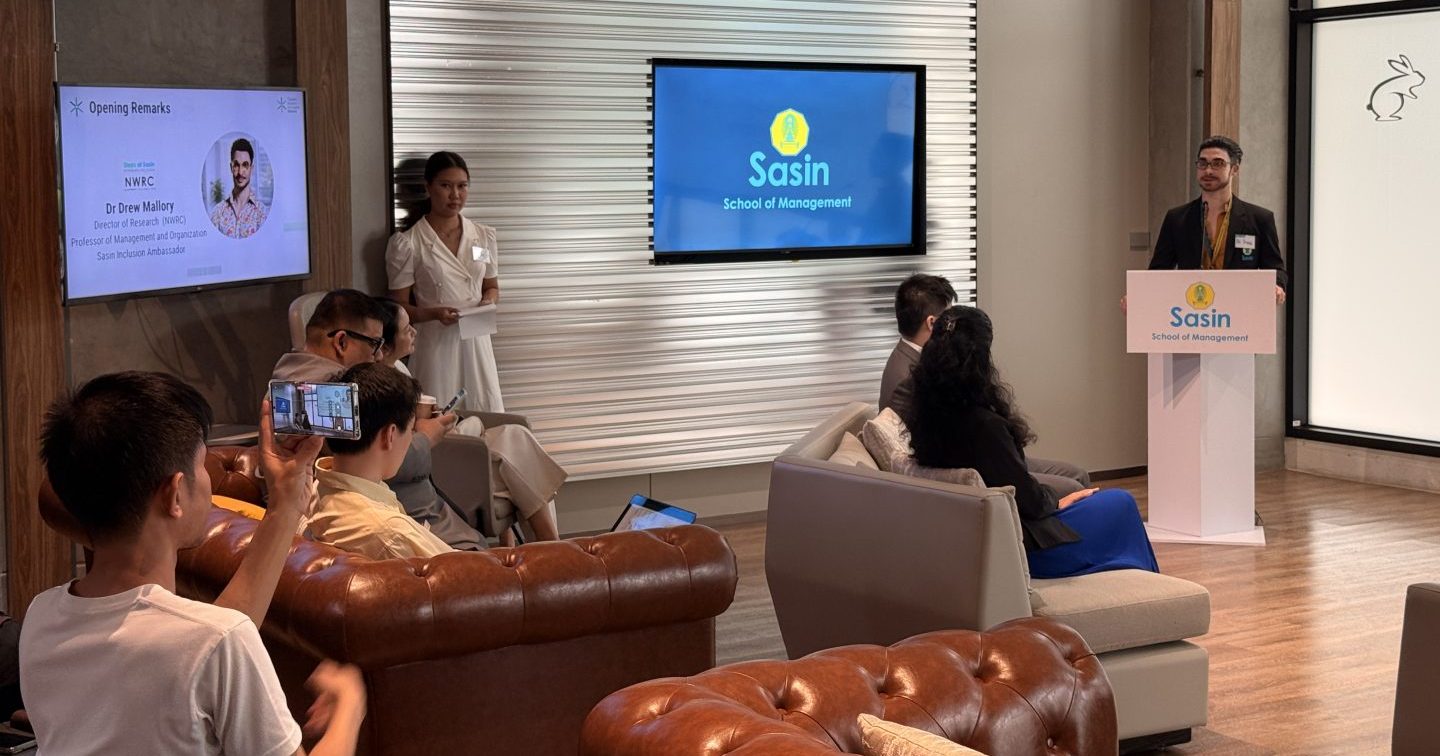
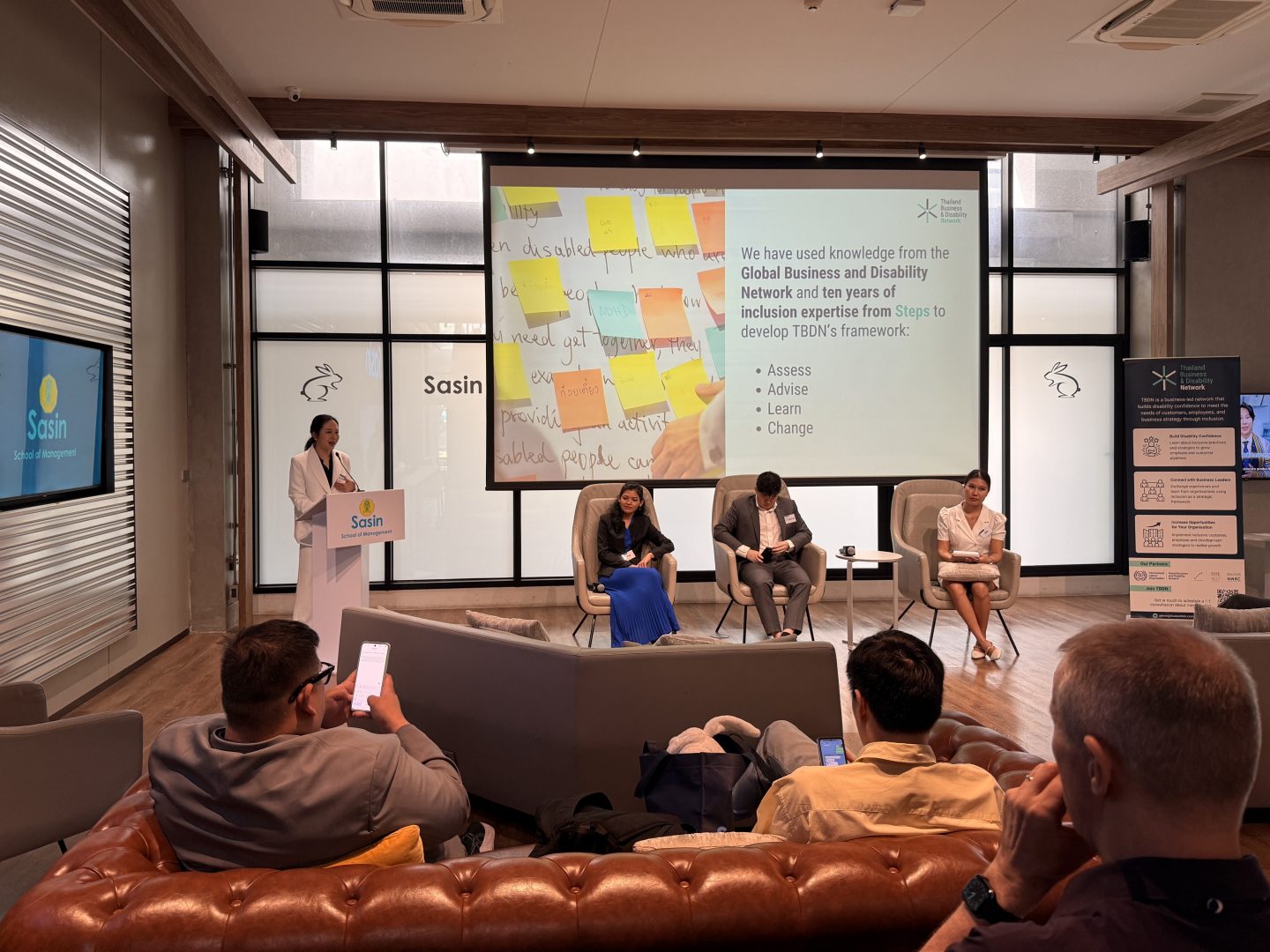
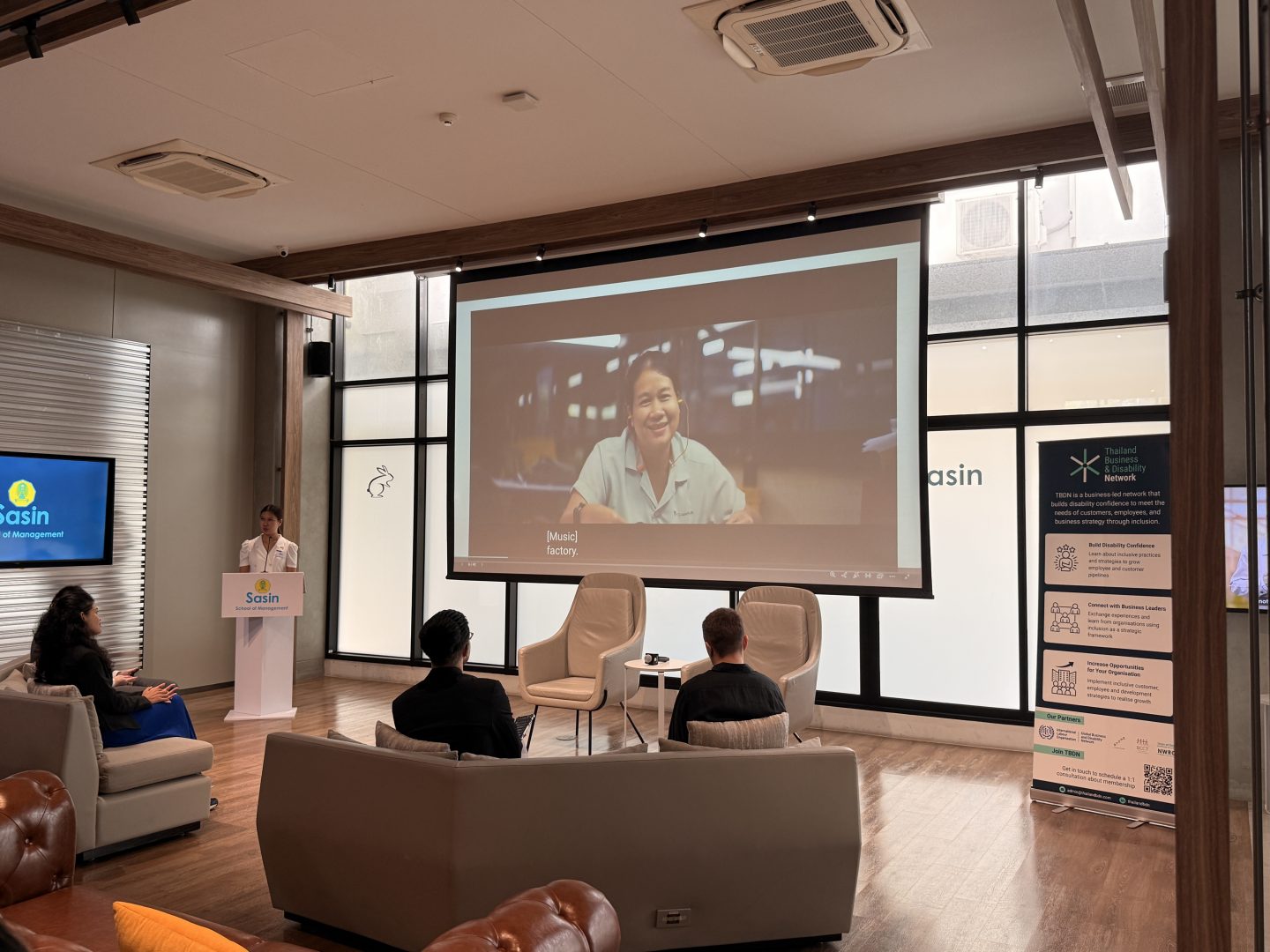
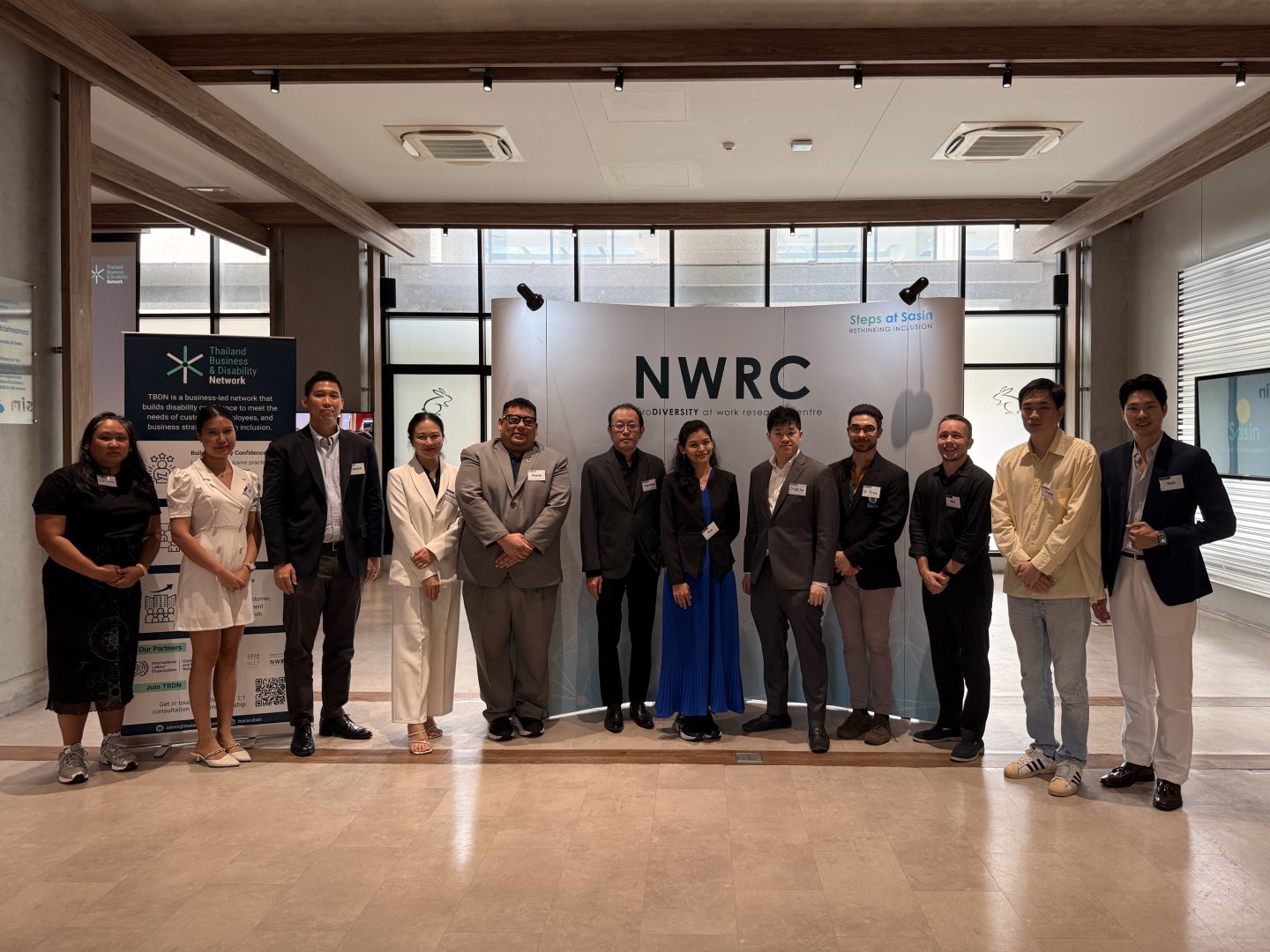
Sasin collaborated with the Thailand Business and Disability Network (TBDN) and Steps on the event “Inclusion and Family-Owned Enterprise: Case Studies on the ‘S’ in ESG.” Business owners and inclusion leaders gathered to discuss how family businesses can add the social part of ESG (Environmental, Social, Governance) to their strategy and improve workplace accommodations for people with disabilities, with two case studies from VT Garment and S.Silpa showing how to make the workplace more inclusive for everyone.
Some businesses still believe that improving workplace accommodations is a burden, with too many costs and changes required. However, evidence and the experience of inclusive organizations, including TBDN and Steps, show that when people are supported to learn and develop, workplaces are accessible, managers respond to individual needs, and organizations allow everyone to contribute their strengths, the organization improves immeasurably.
“We want to see real improvements, not just good intentions. Businesses don’t have to go to every stage alone; you can start wherever makes sense for you,” said Dr. Aroonchat Fuwongcharoen, Director of TBDN. TBDN helps organizations move from commitment to action by linking disability inclusion to business strategy, operations, and the social pillar of ESG.
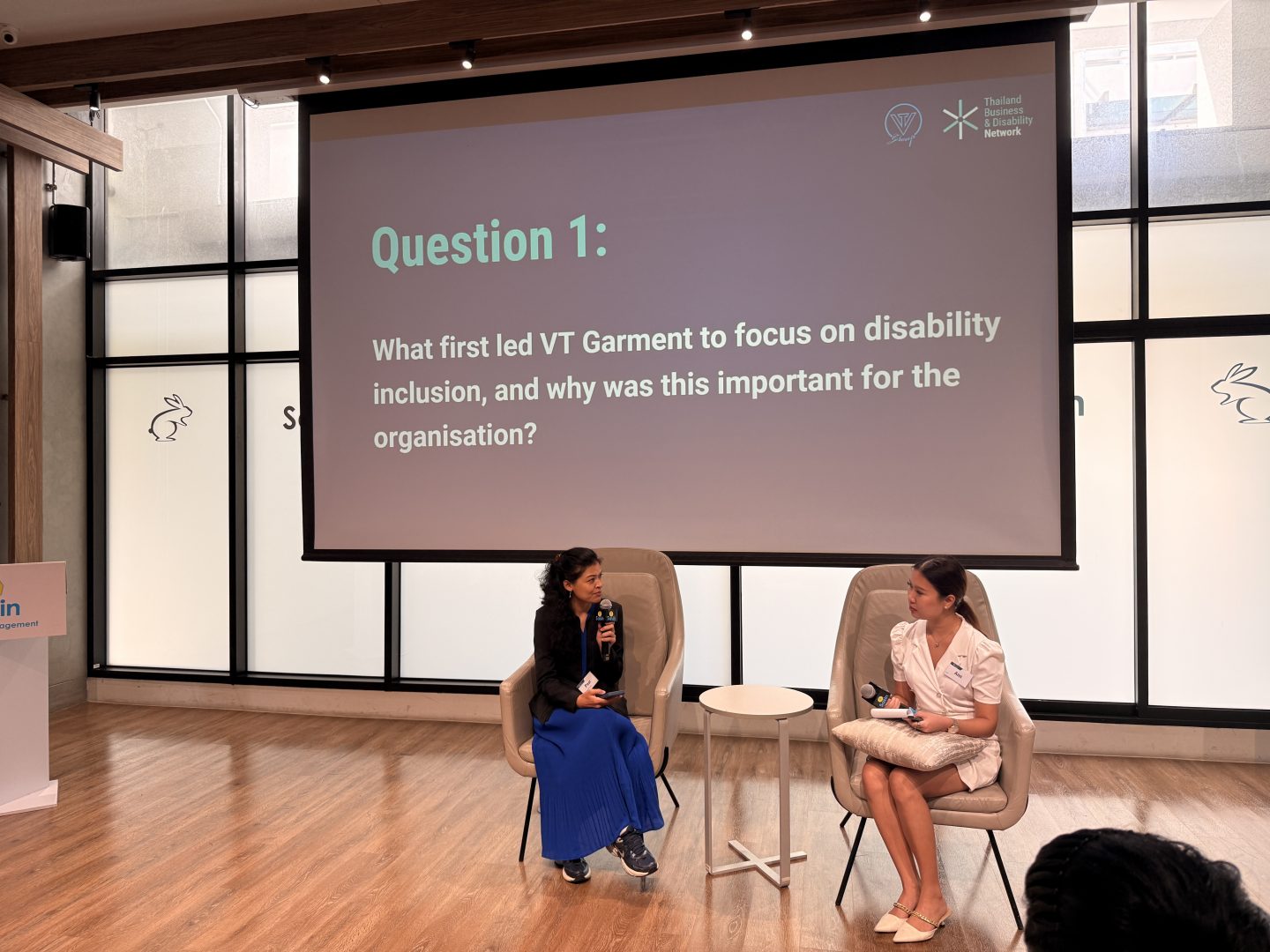
VT Garment is a Thai family-owned garment manufacturer established in 1982 that puts into practice the Social part of ESG by removing barriers to employment for people with disabilities. What they discovered is that accommodating people with disabilities and removing workplace barriers for them also improved satisfaction among existing employees.
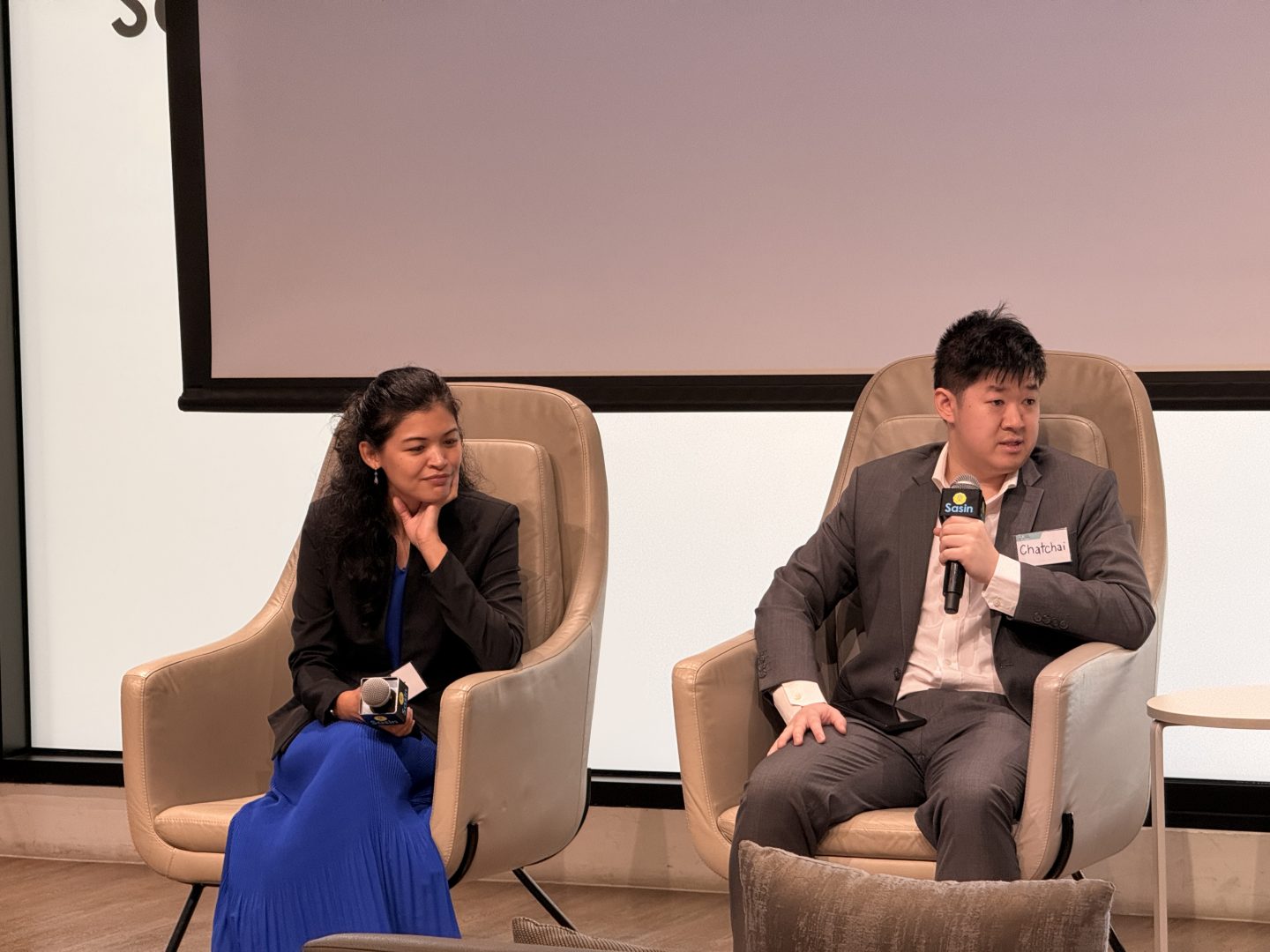
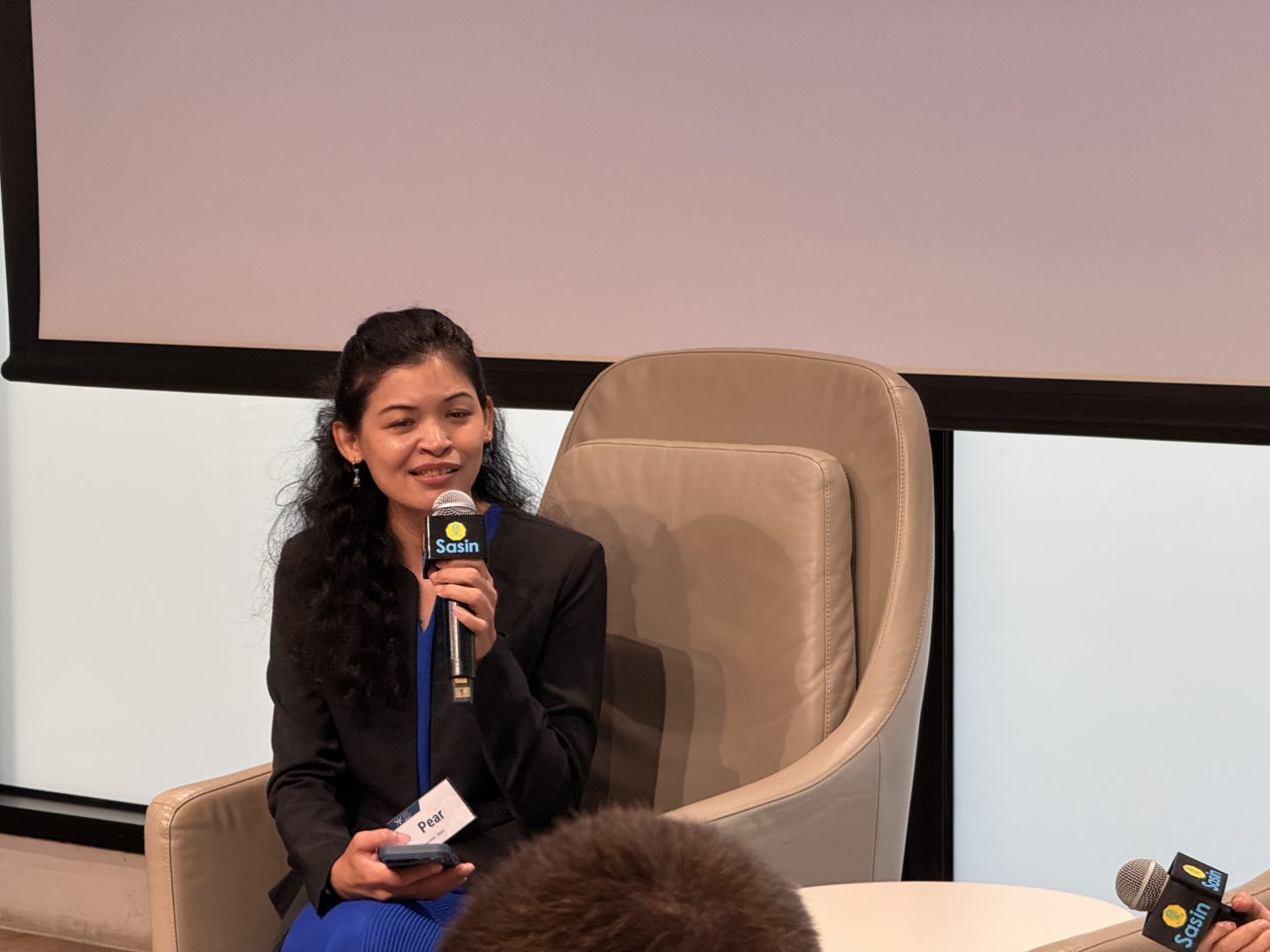
Pear Chainares, Inclusion Specialist at Steps, shared some statistics after VT underwent an accessibility and accommodation training from Steps: management confidence in implementing workplace accommodations increased from 21% to 82%, and understanding of workplace accommodations rose from 50% to 91%. Onboarding also became more efficient, with onboarding time reduced by 40% and 98% of new employees understanding key onboarding content.
The training covered VT Garment’s culture, communication, and sensory aspects.
“Communication is a key part of the workplace culture. When communication is more accessible, everyone can access the same information, which supports understanding of how to work together and of the workplace policies,” she said.
The training accessibility and accommodation training included topics such as what inclusion is and how to create a recruitment process so that Human Resources (HR) and department heads could make the workplace more accessible for everyone. Pear commented that HR may not have known which policies to implement, but they understood the reasons behind them, which makes implementation sustainable in their recruitment process.
Some of the changes VT Garment made included providing workplace instructions in video format. For safety, it introduced a color-coded walkway, not just stickers, with clear signs explaining what each color means, and it uses visuals in all signage to remove barriers. Interviews can be challenging because talking alone doesn’t show whether someone is the right candidate, so they can go through a work trial, which is more inclusive and shows whether the candidate is suitable. Onboarding materials were also redesigned to be visual, so employees can use them for reference whenever they want to review the instructions again.
Learning from VT Garment, the disability inclusion journey doesn’t have to begin with something new and extra. It can be built on the existing system, starting with the work processes in the HR system and anything that can be made more inclusive, then growing bigger over time. There is no right or wrong way to approach inclusion.
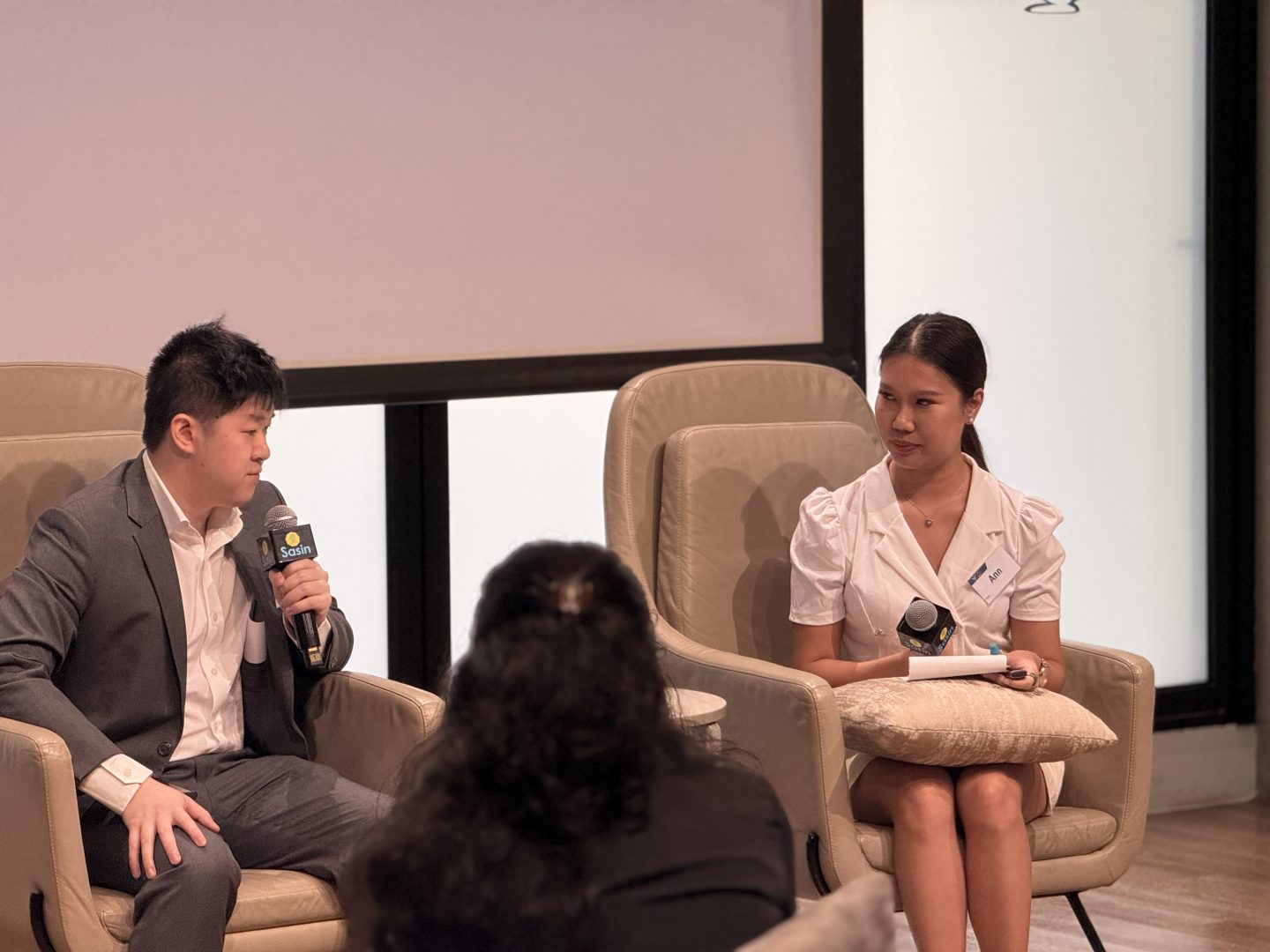
Chatchai Fuwongcharoen (Sasin MBA 2017), Assistant Director of S.Silpa, believes that everyone in an organization needs to be treated equally. When hiring people with disabilities, he made sure their rights did not infringe on those of existing employees and that everyone is treated with dignity and fairness. The best practice is to match each person with a position that aligns with their abilities, integrating them into the work culture without making them a “special case.”
“People with disabilities can do many things just like anyone else. Open up and give them a chance, and you will discover what they are capable of,” he said.
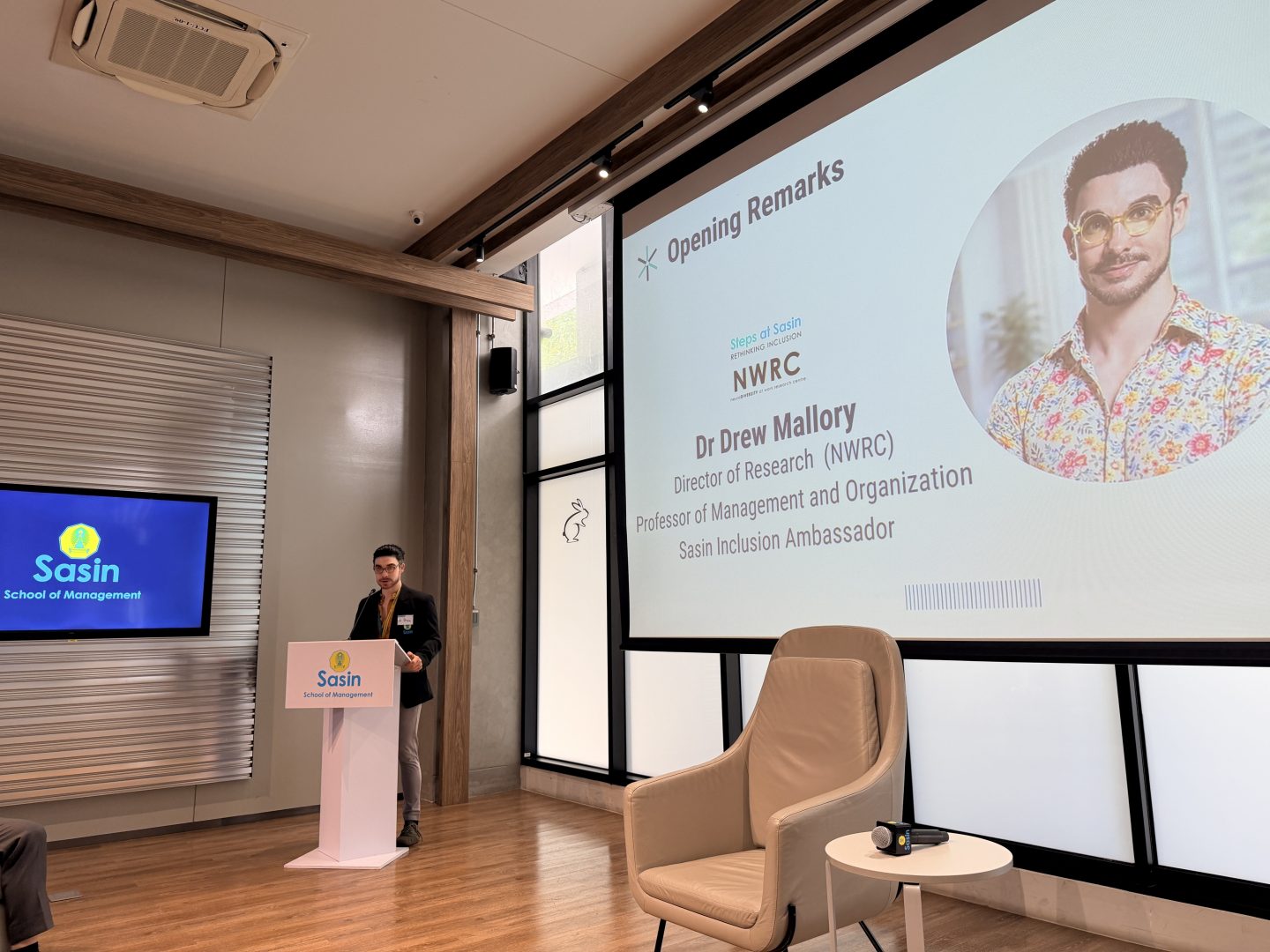
In the opening speech, Dr. Drew Mallory, Director of Research at the Neurodiversity at Work Research Center (NWRC), Sasin Professor of Management and Organization, and Sasin Inclusion Ambassador, remarked that family-owned enterprises play a vital role in Thailand’s economy and society, creating employment opportunities, building long-term relationships with communities, and often carrying values across generations. They also face real questions about how to grow, remain competitive, develop their people, and protect the legacy of the business.
He added that when it comes to putting the ‘S’ in ESG, it can sometimes feel broad or abstract. But the ‘S’ becomes meaningful through everyday business decisions.”
“When businesses make systems clearer, workplaces more accessible and management practices more inclusive, they can improve communication, strengthen retention, widen their talent pool and create a stronger culture for everyone,” said Dr. Drew.
Share this article
You might be interested in...