Sasin ESG Program
Empowering Responsible Leadership for a Sustainable Future
The Environmental, Social, and Governance (ESG) Program at Sasin School of Management empowers current and future leaders to integrate sustainability, ethics, and resilience into business practice. Located in the heart of Bangkok, Thailand, and serving the ASEAN region, the program is designed to respond to the growing demand for responsible leadership in the face of climate change, biodiversity loss, and social inequality. Through a unique blend of ESG-integrated education, faculty-led research, real-world consulting, and sustainability-focused startup development, Sasin’s ESG Program bridges the gap between theory and action. It equips MBA students, executives, and organizations with the tools to lead sustainable transformations in their industries and communities. This is more than a program—it’s a platform for innovation, collaboration, and measurable impact.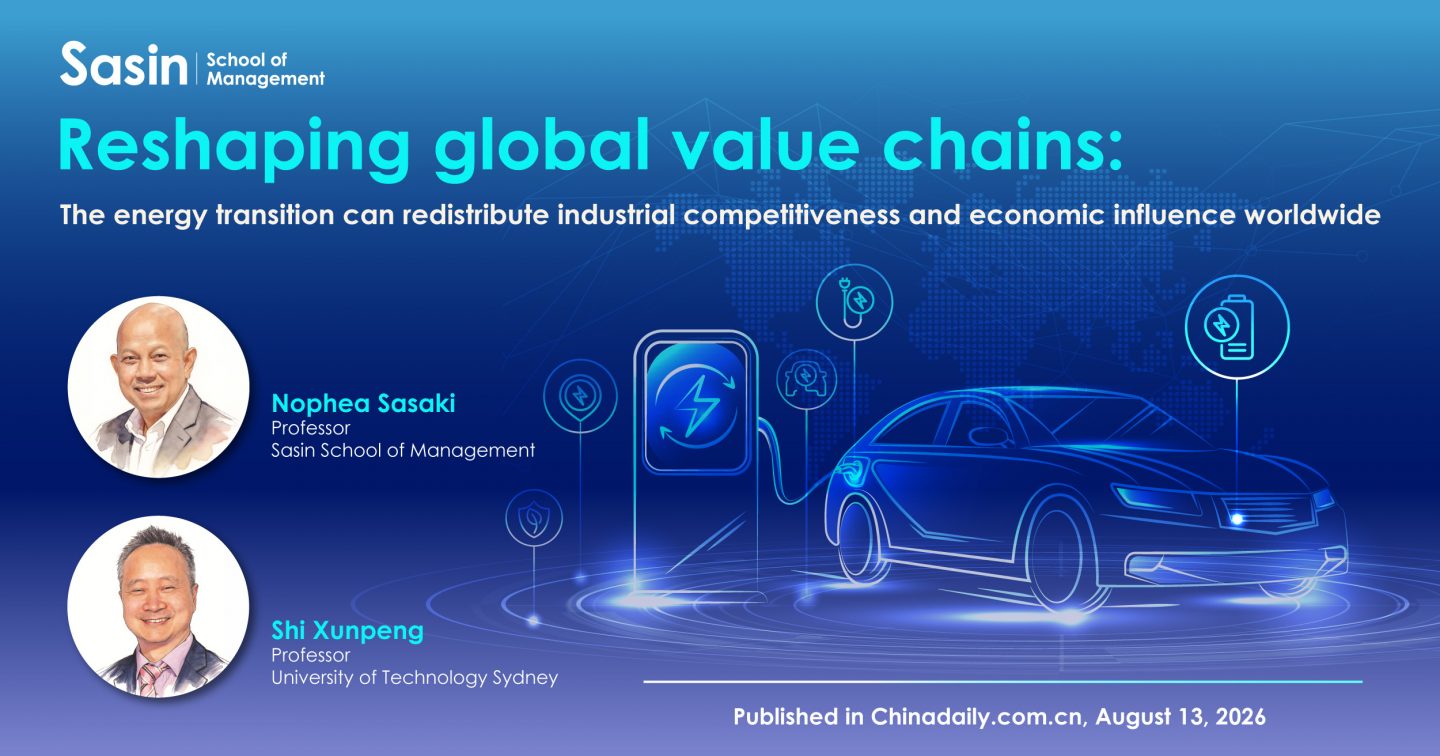
Reshaping global value chains
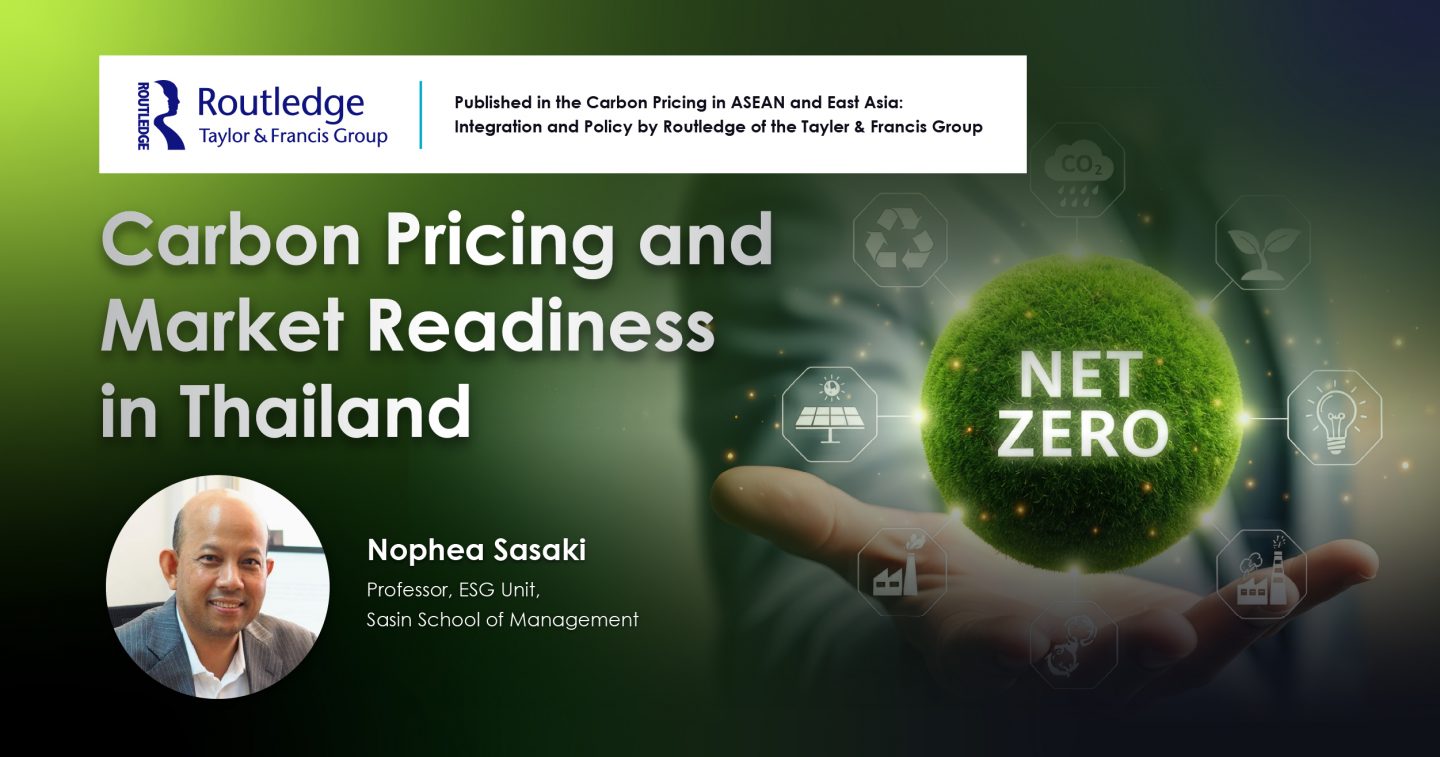
Carbon Pricing and Market Readiness in Thailand
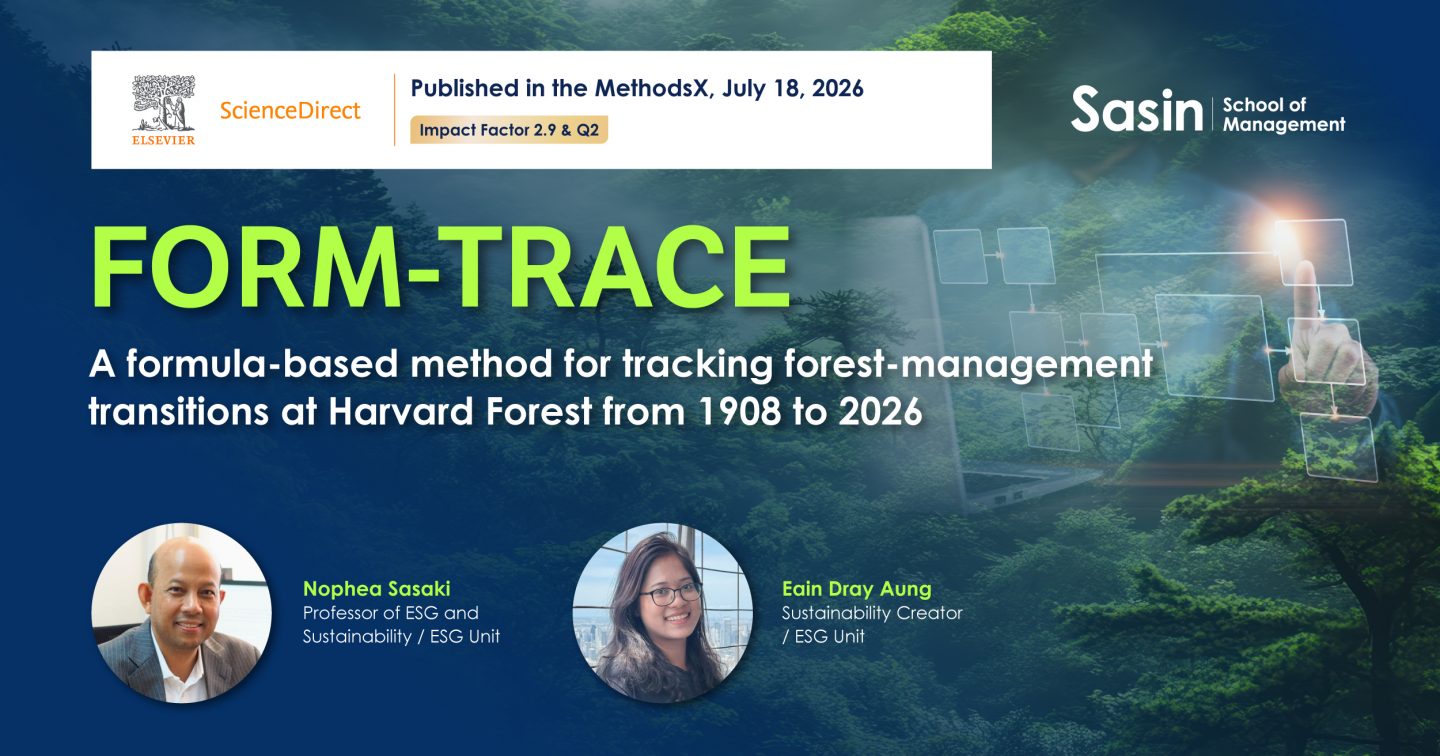
FORM-TRACE
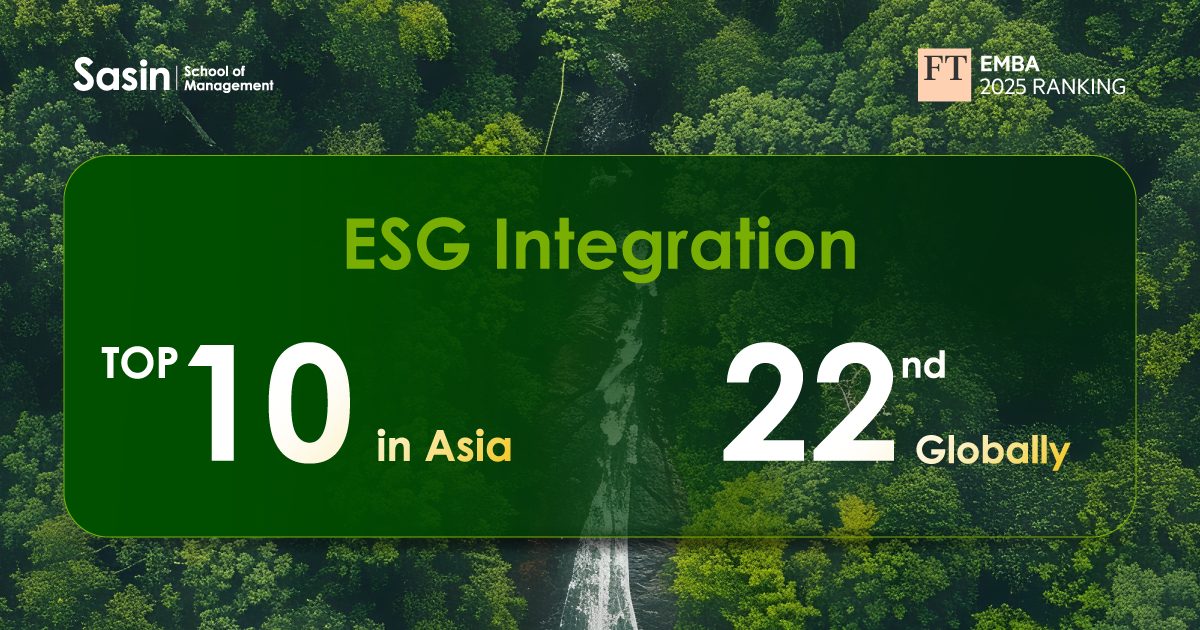
A Focus on Sustainability
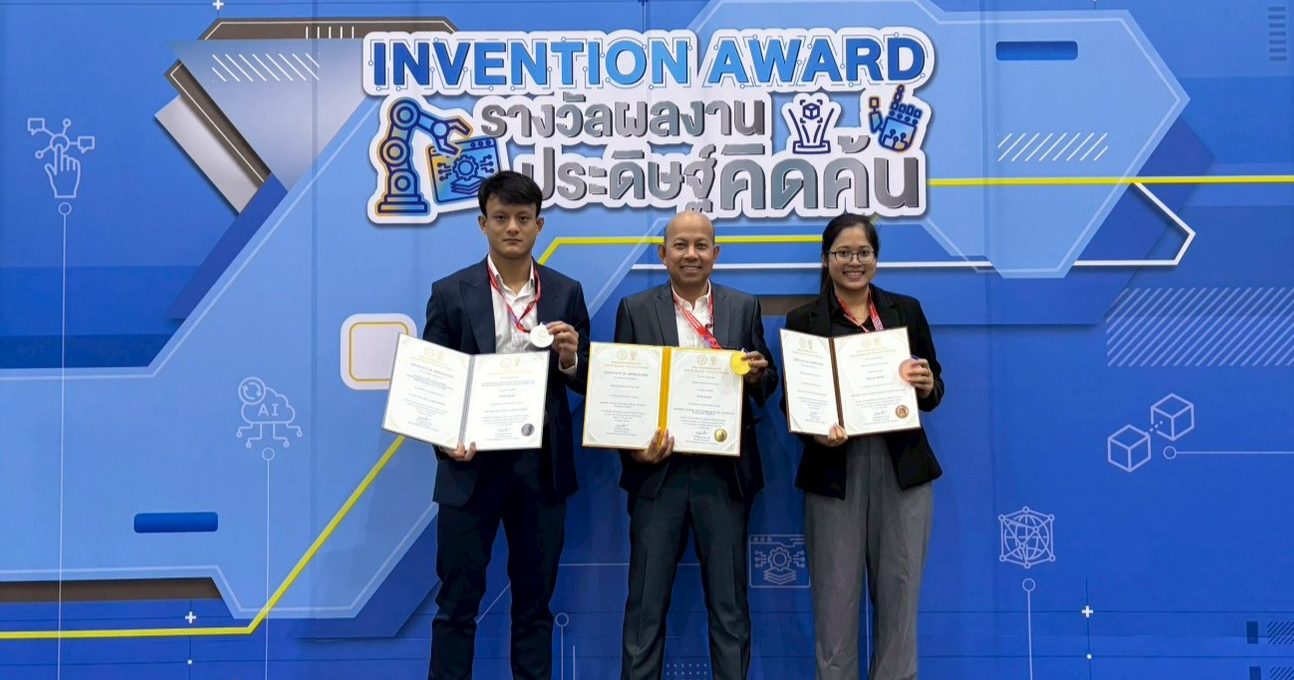
Three Medals, One Mission

A Digital Twin Architecture for Forest Restoration
The ESG program at Sasin School of Management is redefining the role of business education in Southeast Asia by embedding Environmental, Social, and Governance (ESG) principles into academic learning, research, and industry collaboration. The program serves as a catalyst for organizations and individuals seeking to align their strategies with sustainability, compliance, and long-term impact.
Through integrated education, applied research, and strategic partnerships, the ESG program supports a new generation of business leaders equipped to navigate complex sustainability challenges in the ASEAN region and beyond.
What ESG Means at Sasin
At Sasin, ESG is not a label—it’s a strategic framework that connects education to real-world action. The program cuts across core courses, executive training, startup incubation, and policy engagement, creating a multi-level ecosystem for ESG leadership. Key themes include:- ESG compliance and reporting
- Carbon neutrality and net-zero strategies
- Sustainable finance and corporate transformation
- Digital innovation for ESG monitoring and transparency
Program Leadership
The ESG program is guided and supported by an interdisciplinary team that brings together academic depth, technical innovation, and operational coordination. This growing team is designed to ensure that the program remains agile, applied, and future-ready in response to emerging ESG challenges and opportunities.Engage with ESG at Sasin
Whether you’re a company navigating ESG risks, a policymaker addressing regulatory gaps, or a student driven by purpose, Sasin provides opportunities to collaborate, co-develop, and lead. Opportunities include:- Joint research and case studies
- ESG and sustainability reporting partnerships
- Executive training and advisory services
- Participation in ESG events, hackathons, and fellowships
- Co-founding sustainability-focused student startups
Sasin School of Management integrates Environmental, Social, and Governance (ESG) principles into every level of its academic programs and executive education offerings. Our goal is to develop leaders who not only understand ESG but can apply it strategically in real-world business contexts. Sasin’s curriculum emphasizes practical engagement, rigorous analysis, and systems thinking—preparing future business leaders to align profitability with purpose.
Core ESG Courses
ESG Factors for Business (Core Course – MBA & Executive MBA) in June This foundational course equips students with the essential frameworks, tools, and trends in ESG integration. It covers regulatory landscapes, ESG materiality, sustainability standards, and the role of ESG in risk management and long-term value creation. Students explore real cases from Thai banks, energy firms, and regional companies to understand how ESG strategies are transforming Southeast Asian businesses. Sustainability Lab: Action Learning Course (Elective – MBA) Delivered by the Sasin Sustainability Lab, this hands-on elective allows students to consult directly with companies, NGOs, and government partners. Teams work on live projects addressing sustainability reporting (GRI, SASB, TCFD), carbon neutrality strategies, stakeholder engagement, and ESG communications. Past clients have included companies seeking to navigate Thailand’s evolving regulatory environment and global net-zero expectations.Executive & Professional ESG Training
Sasin offers specialized ESG training for executives, policymakers, and professionals through short courses, certifications, and custom-designed workshops. These programs are tailored to specific sectors and organizational needs, focusing on areas such as:- ESG risk management and disclosure
- Corporate sustainability strategy
- Carbon markets and net-zero transition planning
- ESG metrics and impact reporting
Corporate Training & Advisory
For organizations seeking deeper transformation, Sasin provides customized ESG training and advisory services. We work directly with companies to:- Build ESG literacy across teams
- Develop internal ESG frameworks and KPIs
- Align with international sustainability reporting standards
- Craft carbon neutrality and climate action roadmaps
The ESG program at Sasin is a regional leader in applied research, combining business strategy with advanced technologies to address climate, sustainability, and governance challenges across Thailand and ASEAN. The program fosters interdisciplinary research that integrates environmental science, policy, and innovation to support ESG adoption in both corporate and public sectors.
Recent projects led by faculty include:
Faculty-Led ESG Research
The ESG program faculty conduct and supervise research across diverse ESG topics, including:- Corporate ESG strategy and reporting practices
- Carbon market mechanisms and pricing in Southeast Asia
- Climate risk assessment and disclosure frameworks
- ESG performance metrics and investment decision-making
- Technology-driven ESG solutions (AI, blockchain, IoT for ESG monitoring)
Policy Research in ASEAN
The ESG program plays an active role in informing policy development across the region. Our researchers collaborate with corporations, government agencies, NGOs, and international organizations to:- Analyze ESG regulatory trends and compliance challenges
- Develop policy briefs on carbon pricing, biodiversity offsets, and sustainable finance
- Support cross-border ESG alignment in ASEAN, including Thailand’s leadership role in regional sustainability goals
Case Studies and White Papers
The ESG program produces practical, evidence-based white papers and case studies that:- Document successful ESG transformations in Thai and ASEAN businesses
- Examine sector-specific challenges in integrating sustainability
- Highlight best practices in ESG disclosures and stakeholder engagement
The ESG program at Sasin supports companies and organizations in navigating the transition toward responsible and sustainable business practices. Through research-backed advisory services and executive education, we help corporate partners build ESG strategies that align with global standards, stakeholder expectations, and long-term business value.
Our approach combines academic insight, market knowledge, and hands-on implementation to ensure meaningful ESG outcomes.
ESG Strategy Development
We work closely with corporate clients to develop integrated ESG strategies that support competitive advantage and regulatory compliance. Our services include:- ESG materiality assessments
- Stakeholder mapping and engagement
- Goal-setting and roadmap development (e.g., net-zero, SDGs)
- ESG performance indicators and KPIs
Risk Management and Compliance
Our faculty and advisors support companies in identifying and managing ESG-related risks, particularly those linked to environmental impact, supply chain transparency, and emerging regulatory frameworks such as:- EU Deforestation Regulation (EUDR)
- Corporate Sustainability Reporting Directive (CSRD)
- Thailand’s ESG disclosure requirements
- ASEAN green finance and taxonomy developments
ESG Disclosures and Reporting
ESG at Sasin provides expert guidance on ESG reporting practices aligned with:- Global Reporting Initiative (GRI)
- Sustainability Accounting Standards Board (SASB)
- Task Force on Climate-related Financial Disclosures (TCFD)
- Thailand’s SEC disclosure standards
Executive Programs and Workshops
To support internal capacity building, we offer targeted training for senior leaders, sustainability teams, and boards of directors. Topics include:- ESG integration across operations
- Carbon neutrality and decarbonization strategies
- Sustainable finance and impact measurement
- Navigating ESG ratings and indices
The ESG program at Sasin is designed not only to educate but also to incubate innovation. By equipping students and researchers with the tools, knowledge, and mentorship to launch sustainability-focused ventures, the program helps shape a new generation of ESG entrepreneurs. These startups aim to solve real-world challenges in climate resilience, net-zero transitions, biodiversity conservation, and ESG data infrastructure.
Our mission is to cultivate impact-driven ventures that emerge from coursework, research, and field-based action learning—accelerating both environmental outcomes and business opportunities.
 Krumap is a faculty-mentored startup developed within the Sasin ESG program that showcases how advanced technologies can address urgent ESG needs. It is a real-time carbon monitoring and compliance platform that integrates AI, remote sensing, and blockchain (Sui-based DePin architecture) to:
Supporting ESG-Focused Startups
Under the ESG program, Sasin provides a structured path for students and professionals to explore and launch their ideas through:- Faculty-led mentorship and business model validation
- Access to research labs and ESG case partners
- Integration of startup development into ESG electives and projects
- Post-course support for high-potential ideas via the Sasin Sustainability Lab
Startup Highlight: Krumap
Krumap is a faculty-mentored startup developed within the Sasin ESG program that showcases how advanced technologies can address urgent ESG needs. It is a real-time carbon monitoring and compliance platform that integrates AI, remote sensing, and blockchain (Sui-based DePin architecture) to:
- Track emissions and carbon sequestration across forests and agricultural lands
- Facilitate carbon credit development aligned with international standards
- Support EUDR and CSRD compliance through geolocation, land verification, and proof-of-measurement protocols
- Enable ESG data integration into corporate reporting systems via API access — and more
The ESG program at Sasin plays a catalytic role in shaping regional conversations on sustainability, responsible business, and climate action. Through strategic events, public dialogues, and knowledge-sharing platforms, the program connects academia, industry, government, and civil society to accelerate ESG transformation in Thailand and across ASEAN.
These initiatives reflect Sasin’s belief that credible thought leadership and collaborative problem-solving are essential to achieving a just, low-carbon future.
Thought Leadership Contributions
Faculty members regularly contribute to national and regional policy dialogues, including:- Advising on Thailand’s carbon market development and climate disclosures
- Publishing articles and white papers on ESG integration and corporate strategy
- Presenting at global ESG and sustainability conferences
- Supporting industry efforts to align with EUDR, CSRD, and other frameworks
As part of its strong commitment to sustainability, and in close collaboration with relevant departments, the ESG program at Sasin is leading the transition toward a net-zero carbon campus. This initiative represents both an institutional transformation and a replicable model for organizations seeking to integrate ESG principles into their operations, infrastructure, and community engagement.
The Net-Zero Campus Initiative goes beyond a climate pledge; it serves as a dynamic platform for student learning, corporate collaboration, applied research, and system-wide innovation.
Roadmap to Net-Zero
Sasin is developing a staged, measurable plan to achieve carbon neutrality through:- Comprehensive greenhouse gas (GHG) emissions measurement (Scope 1, 2, and key Scope 3)
- Energy efficiency upgrades and on-site renewable energy adoption
- Low-carbon transportation and mobility policies
- Waste minimization, circular practices, and composting systems
- Campus-wide water and biodiversity conservation efforts
- Carbon offsetting aligned with internationally recognized standards
Campus as a Living Lab
The net-zero transformation is integrated into the learning environment. Students and researchers use the campus as a living laboratory to:- Conduct carbon footprint assessments
- Design behavioral interventions for energy and waste reduction
- Pilot smart building and IoT-based monitoring tools
- Apply ESG reporting standards in a real-world institutional context
- Collaborate with businesses seeking to replicate similar transitions
Stakeholder Involvement
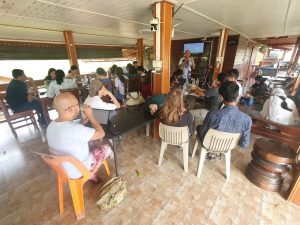
The success of the initiative depends on the active involvement of all campus stakeholders. The ESG program coordinates engagement opportunities for: Students: through coursework, sustainability clubs, and innovation challenges Faculty: through research integration, advisory roles, and emissions tracking Corporate partners: through sponsorships, pilot technologies, and knowledge exchange Sasin invites companies and policymakers to work alongside its team to prototype and scale net-zero strategies that can be replicated across the ASEAN region.The ESG program at Sasin serves as a hub for high-impact research, case development, and thought leadership across a wide range of sustainability and governance issues. Through journal publications, conference papers, white papers, and industry reports, the program contributes to advancing ESG knowledge both within academia and in business practice.
Our publications reflect the program’s commitment to applied, interdisciplinary research that informs real-world decision-making and supports the global sustainability transition.
Academic Research
A core focus of the ESG program’s research agenda is the advancement of carbon monitoring technologies and frameworks to support high-integrity climate action, prevent double counting, reduce fraud in carbon markets, and align with emerging policies such as carbon taxation and international compliance mechanisms. Faculty affiliated with the ESG program regularly publish in peer-reviewed journals and policy outlets on topics including:- Corporate ESG strategy and reporting practices
- Net-zero and carbon market design
- Sustainable finance and ESG investment trends
- Environmental risk, biodiversity offsets, and climate policy
- Digital tools for ESG data, monitoring, and verification
Case Studies and Field-Based Insights
As part of its action learning model, the ESG program produces original case studies and reports based on student-client engagements. These documents explore challenges and solutions in areas such as:- Carbon footprint analysis and net-zero planning
- Governance risk and supply chain compliance (e.g., EUDR, CSRD)
- ESG reporting and materiality assessment
- Stakeholder engagement and sustainability communications
Policy Briefs and Industry Reports
Sasin ESG faculty also contribute to policy research, working with government agencies, multilateral organizations, and NGOs to:- Produce policy briefs and working papers on ESG regulation and incentives
- Offer insights into carbon pricing, green finance, and climate risk disclosure
- Provide technical input on regional ESG frameworks in ASEAN
We welcome collaboration with business leaders, researchers, students, and changemakers.
Professor Nophea Sasaki, Ph.D.
Core Faculty, ESG and Sustainability
ESG Group
Email: [email protected]
Location: Sasin School of Management, Chulalongkorn University, Soi Chula 12, Phyathai Road, Bangkok 10330, Thailand
Share this article