Action Learning in the Age of AI: Insights from the Sasin x MIT Conference 2026
02 April 2026
What Is Action Learning?
Action Learning came from the MIT motto, Mens et Manus, a Latin phrase meaning “mind and hand.” Action Learning integrates thinking, acting, and reflecting in real-world contexts where accountability to reality replaces theoretical neatness. (MIT Sloan) Action Learning courses foster experiential learning. Students work in teams, define project scope rigorously, conduct research, and present recommendations to real host organizations. The learning comes not only from solving problems, but from navigating ambiguity, stakeholder complexity, and tacit knowledge, elements that are difficult to codify or automate.Keynote: How to Revamp Management Education in the Age of AI
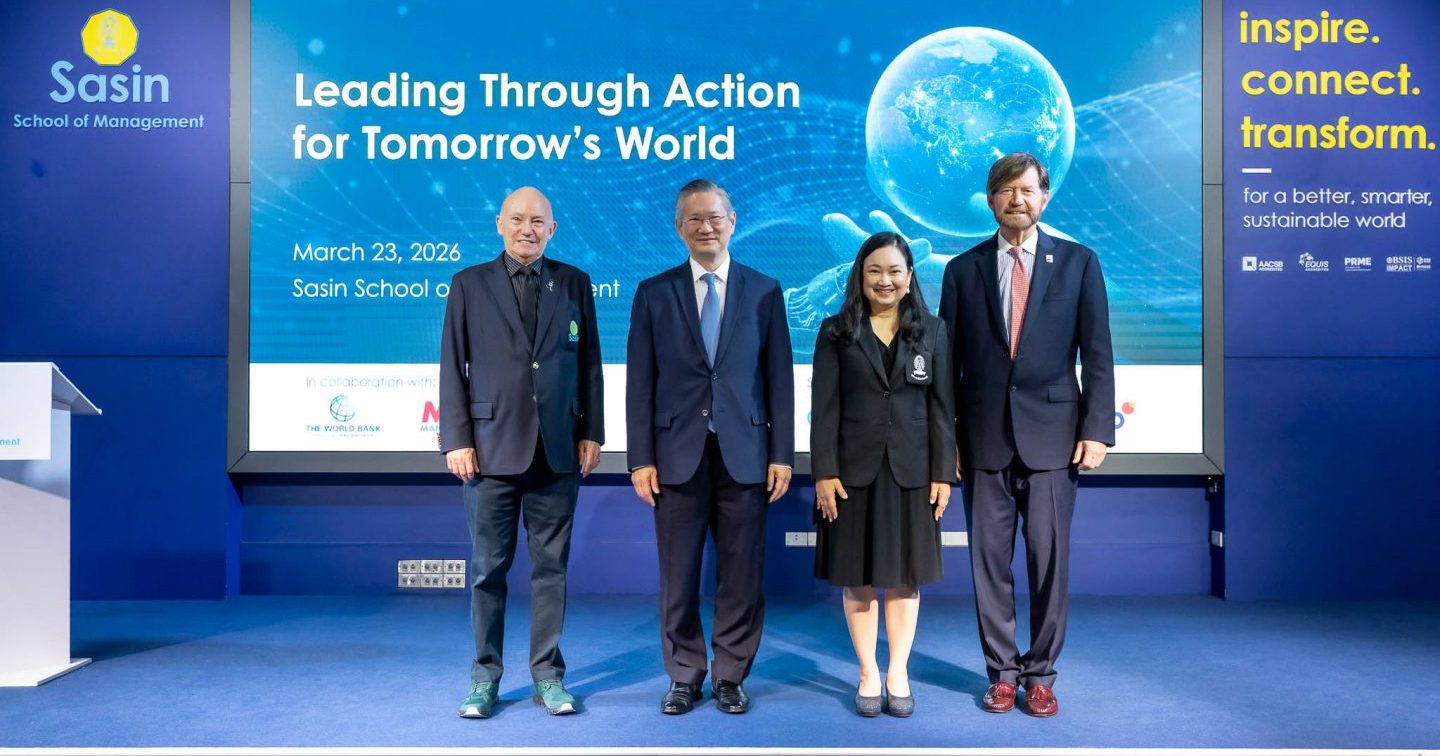
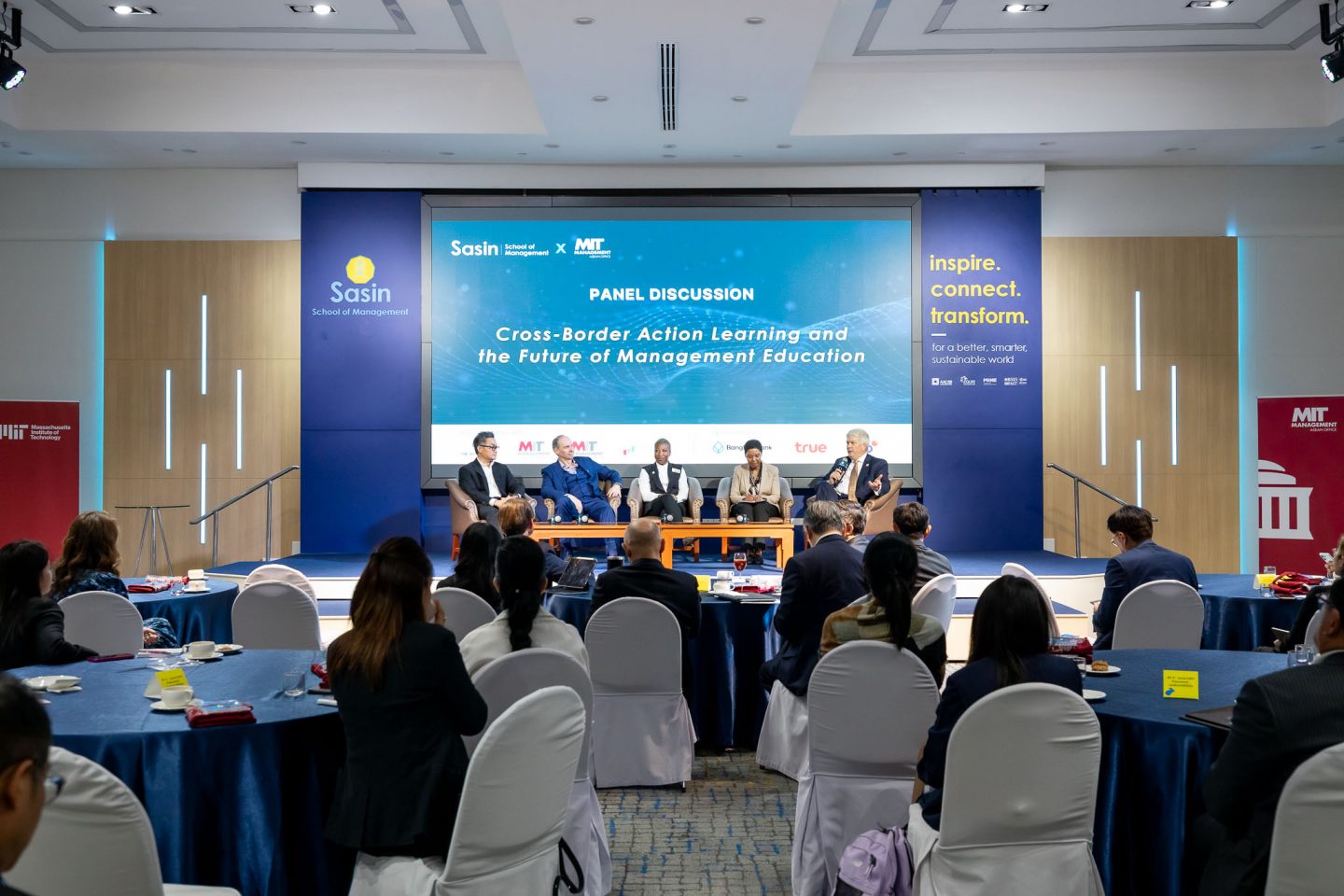
At the Sasin x MIT Conference 2026: Leading Through Action for Tomorrow’s World, MIT academics spoke on the value proposition of Action Learning in the age of AI. Professor Yasheng Huang, Epoch Foundation Professor of International Management at MIT Sloan School of Management, delivered a keynote speech on “Action Learning in the Age of AI.” Drawing from a comprehensive study of the impact of Action Learning at the Sloan School based on insights from educational leaders, 502 résumés, 288 surveys, and 19 in-depth interviews, he shared insights on the value proposition of Action Learning and how to revamp management education in the age of AI. Professor Huang noted that Action Learning is uniquely positioned to enhance learning in areas of intangible skills and capabilities that AI cannot replace. Codified knowledge is more easily subject to AI disruption than intangible skills, capabilities, and personal traits. Moreover, the most important value that students gain through Action Learning lies in conceptualization and implementation rather than narrow career advancement. These intangible skills include:- Judgment
- Making sense of the world
- Reinforcing learning through experience
- Teamwork and collaboration
- Applying knowledge in a world of diversity and uncertainty
Experiential Learning as a Hedge Against AI
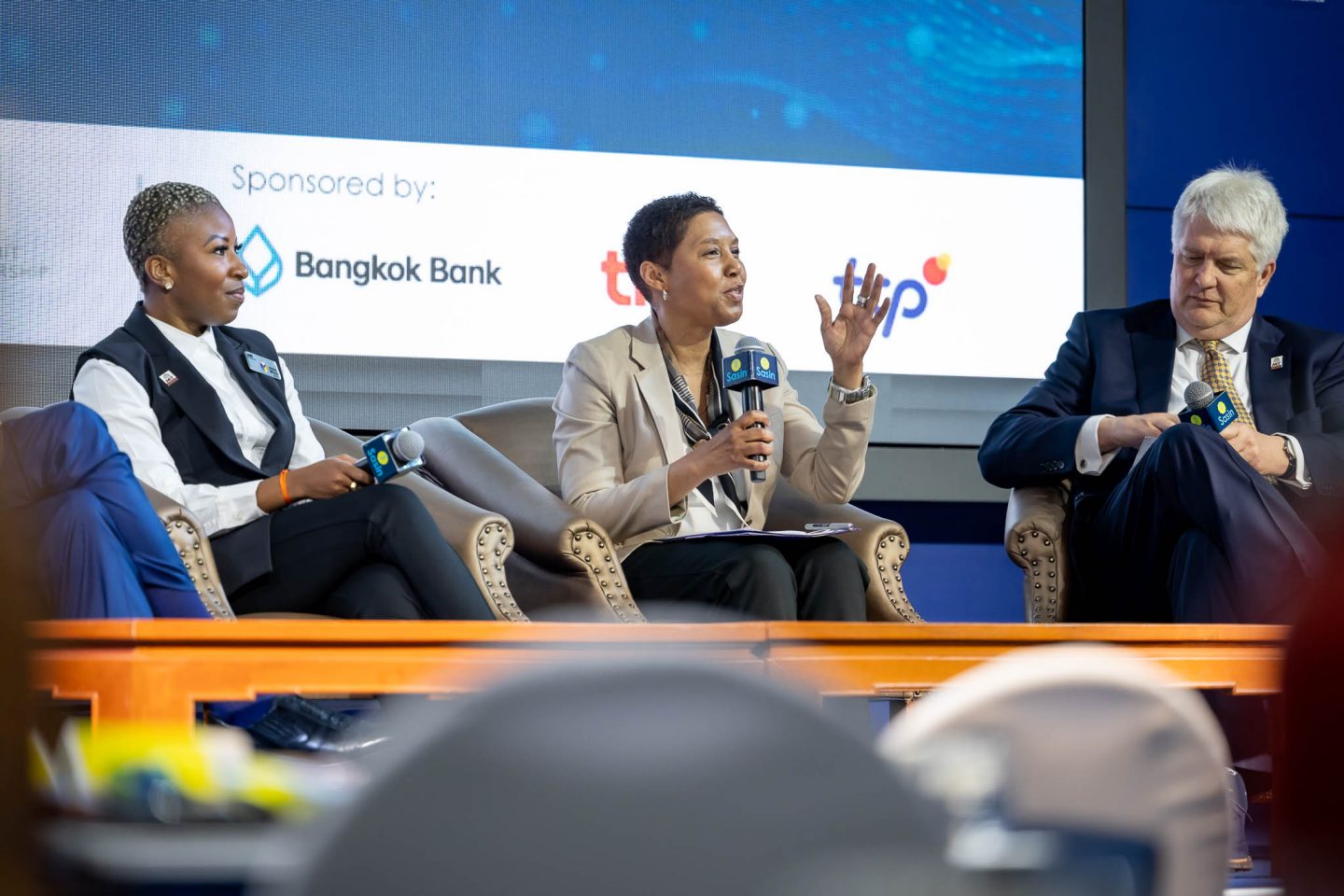
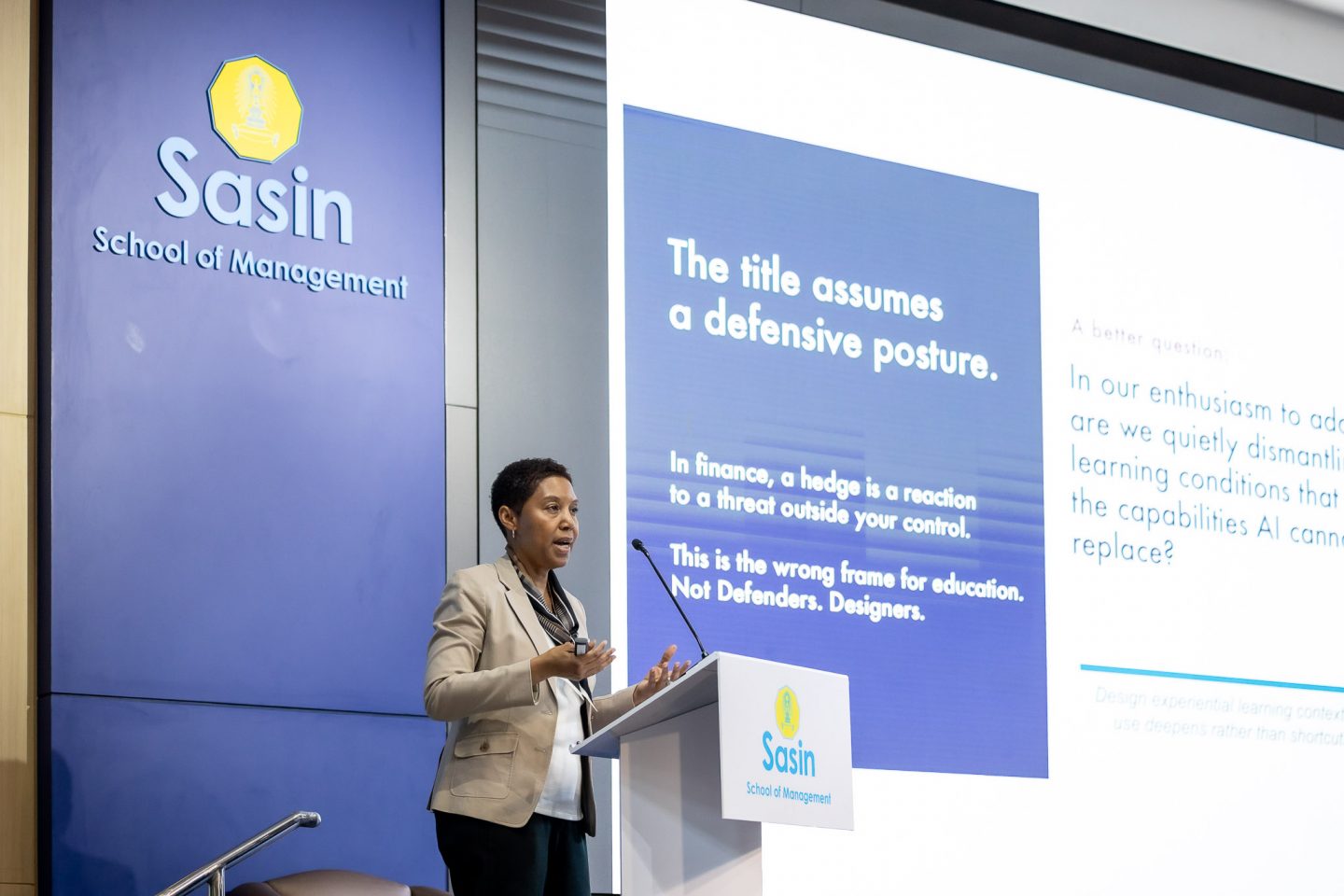
Dr. Michellana Jester, Senior Lecturer at MIT Sloan School of Management, gave a talk on the session “Experiential Learning as a Hedge Against AI,” sharing how to design learning contexts where AI deepens rather than shortcuts learning. Here are three key insights from Dr. Michellana:- AI as Reflective Collaborator: Use AI not just as a productivity tool, but as a tool for interrogating your own reasoning. Asking questions such as “What am I assuming? What am I not seeing?” flips AI from a threat to learning into something that deepens it.
- Protect the Productive Struggle: The question is not whether students should use AI. The question is at what point does AI use undermine the developmental goal, and at what point does it amplify it? Using market data to understand a client’s organizational dynamics is less about analysis and more about students truly understanding the organization.
- Design for Human Presence Design experiences where the human being has to show up in learning, leadership, and judgment.
What’s on the Horizon: AI and Experiential Learning
Dr. Michellana also shared emerging ideas at the intersection of AI and Experiential Learning that can be applied in Action Learning Lab: Creating AI-Simulated Host Environments: Students run a full live engagement with an AI-powered company before ever meeting their real host company sponsor — an AI host that pushes back and shifts priorities in real time, operating across different cultural environments. The “AI Shadow” Assignment: Students complete a task independently, then have AI complete the same task, and then write a rigorous analysis of the differences. AI becomes a mirror for metacognitive awareness. For example, teams write their learning objectives and how they plan to work together, then use ChatGPT to identify strengths and weaknesses, and then discuss as a team whether they agree with the analysis. Credentialing the Uncodifiable: As AI handles more codifiable work, institutional momentum is building around badging for adaptive, relational, and ethical competencies, which are the things AI cannot replicate.
















Share this article