Reshaping global value chains: The energy transition can redistribute industrial competitiveness and economic influence worldwide
26 August 2026
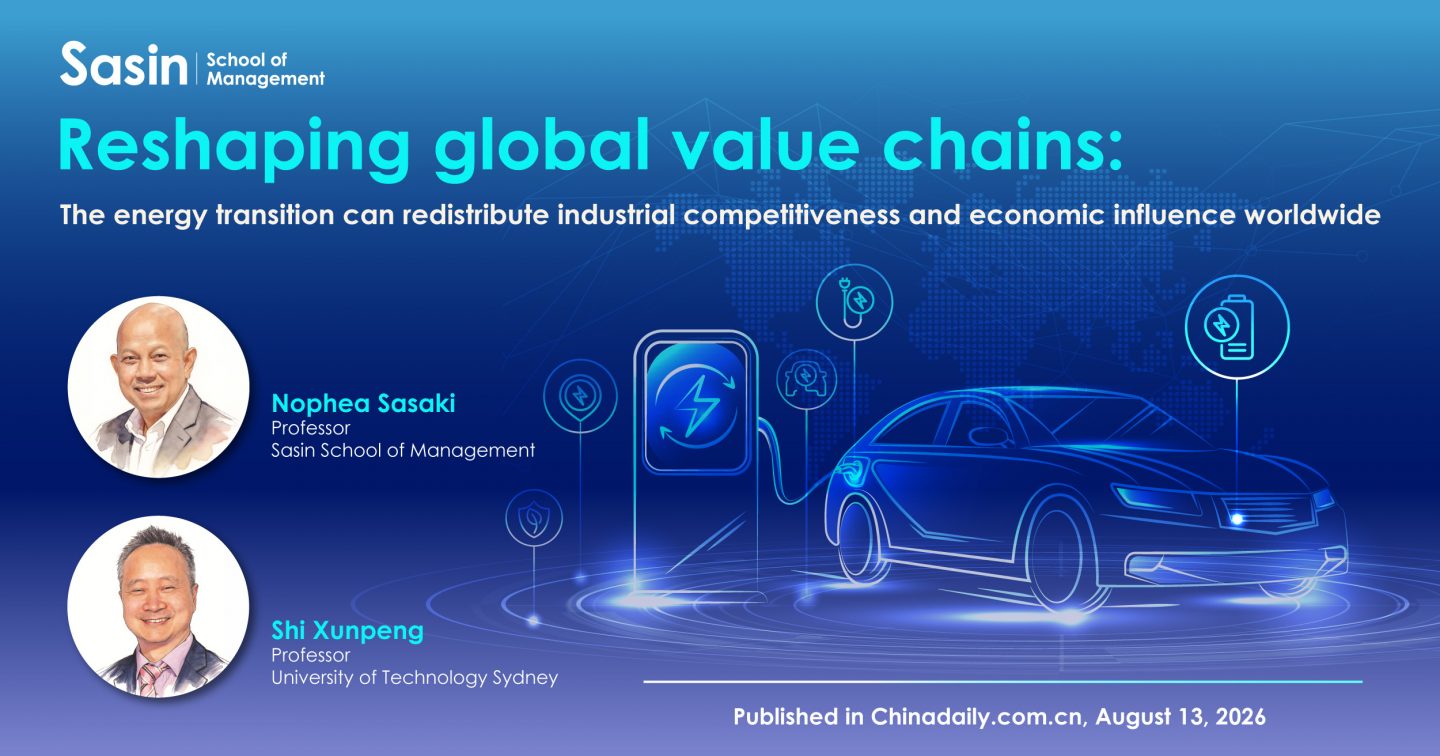
Sasin Professor Dr. Nophea Sasaki explores how the global energy transition is reshaping industrial competitiveness, trade, investment, and global value chains by shifting economic advantage from conventional manufacturing toward batteries, electronics, software, clean energy, and integrated technological ecosystems.
Thailand’s rapidly expanding electric vehicle market illustrates this transformation, with Chinese automakers gaining significant market share and investment while Japanese manufacturers adapt their long-established production networks. Similar restructuring is taking place across renewable energy, battery storage, critical minerals, and emerging hydrogen industries.
Countries that combine clean electricity, technology, manufacturing, infrastructure, processing capacity, and intellectual property are likely to capture greater economic value, while technology-importing economies risk developing new forms of industrial dependence.
The full article is available through chinadaily.com.cn
Share this article
You might be interested in...