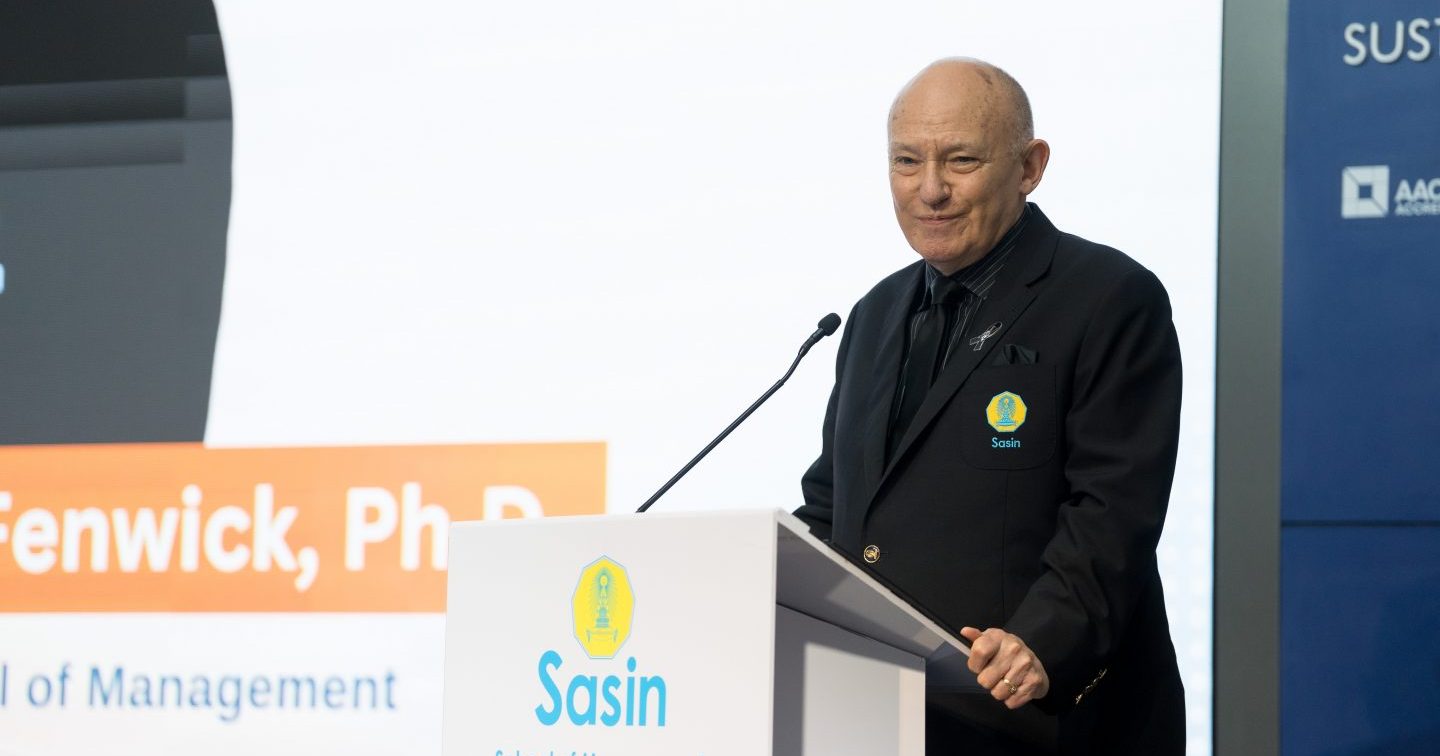
International Day of People with Disabilities 2025
03 December 2025

The Neurodiversity at Work Research Centre (NWRC), a collaboration between Sasin and Steps, marked the “International Day of People with Disabilities 2025” with discussions on actions and strategies to empower neurodivergent individuals and people with disabilities leading to full participation in education and employment. Policymakers, educators, and advocates emphasized that inclusion requires recognizing the strengths and skills of neurodivergent individuals and people with disabilities while accommodating the needs of all learners and employees.
Speakers agreed that inclusion is about bringing together the best minds with different strengths and abilities—a key to sustainable prosperity for all companies. Thitiphorn “Mind” Prawatsrichai, Head of Community and Skills Development at Vulcan Coalition, shared her own experience as a person with disabilities since facing an accident 13 years ago.
“The accident changed the way I moved through the world but it did not change who I am or what I am capable of,” she said, speaking for many people who have disabilities and are still capable of participating and contributing. “Leading in inclusion is not a charity, it’s a smart business strategy, when businesses or organizations exclude people with disabilities, they are choosing intentionally to exclude 1.3 billion individuals.”
“I am defined not by my disabilities but my resilience , just as the world is not defined by its barriers, but limitless opportunities.” – Mind Prawatsrichai, Head of Community and Skills Development at Vulcan Coalition
Max Simpson, Founder and CEO at Steps, states that it is crucial to build the right policies and systems that are inclusive and accessible for everyone, with a focus on intersectionality. “When we build the right system for people, inclusion is a natural shift,” said Max. He added that neurodivergent people and people with disabilities need a sense of psychological safety, which goes hand in hand with the need for belonging. Tingting Chen, Social Affairs Officer of the United Nations Economic and Social Commission for Asia and the Pacific (UNESCAP), shares how data is important in making policies inclusive as having data and evidence is crucial for advocacy and creates action. One key insight emerging from data is that workplace accommodations are not expensive and can be used to improve the working conditions of all employees in an organization. “Moreover, workplace accommodations for neurodivergent people like remote work, flexible hours, quiet zones, does not only benefit them, but they rather end up benefitting the entire workplace,” said Tingting.Inclusive Education and Opportunities in Thailand
Inclusive education remains a significant barrier due to stigma. Nantanoot “Apple” Suwannawut, Ph.D., Vice President of the Association of Thailand for the Blind, and Director of the International Cooperation Section, Ministry of Social Development and Human Security, spoke about how educators and parents often fail to recognize the strengths of children who are neurodivergent due to the stigma surrounding disabilities. Rosalina Alexander McKay, Co-Founder of The Rainbow Room Foundation, shared how crucial medical professionals are in shaping the lives of neurodivergent children. Upon diagnosing her child with Down syndrome, the doctor did not deem her child incompetent. “What I received from the doctor was that my child would grow like any other child… this was the best thing I heard,” she said. She added that alternative education, where educational programs are tailored to the strengths and needs of each child, is crucial. Max shared his experience as a parent of a 17-year-old autistic child, stressing that the medical and educational world often focuses on “fixing” children instead of “fixing” the world around them. He advocates for inclusive classrooms where teachers are compassionate leaders who understand what is best for neurodivergent children and children with disabilities, rather than relying solely on policies and checklists.Corporate Sponsorship for Innovation in Inclusion
The Corporate Sponsorship panel, featuring Yim Minchainant, Head of Inclusion & Co-Founder at Steps; Louise Boyle, Executive Director at NWRC; Wiyada Srinaganand, Managing Director and General Counsel at 3M and Allison Morris, Director of Partnerships at Kenan Foundation Asia, discussed how digital literacy can uplift the entire labor market. Yim highlighted Steps’ digital programs tailored for neurodivergent individuals, offering recognized qualifications and helping learners gain independence through skills like Microsoft Office, mobile banking, and e-commerce. Louise added that digital interdependence and life skills, like navigating maps and using applications, were found to significantly boost self-esteem for neurodivergent individuals. Wiyada Srinaganand from 3M emphasized the importance of adapting to digital changes and supporting employees in acquiring the necessary digital skills. She noted that supporting neurodivergent employees through inclusive programs is vital to improving their employment opportunities. Allison Morris from Kenan Foundation Asia shared valuable tips on corporate giving strategies, emphasizing the importance of aligning expectations between donors and partners. She suggested that donors set aside a portion of their budget for inclusion (at least 15%) and engage in multi-year programs for sustained impact. Jeffry Johary, President and Managing Director at OCS, Indonesia, and Chalumpon “Plawan” Lotharukpong, Managing Director at VT Garment, discussed the importance of neurodiversity and inclusion in the workplace. Chalumpon stressed that inclusivity is essential, especially when employing both Thai and Burmese workers, ensuring everyone is valued equally and can reach their potential. Jeffry highlighted that innovation is not just about technology, but perspective. By diversifying decision-making and problem-solving to include everyone, companies can foster better solutions and creativity. Dr. Drew Mallory, Director of Research at the Neurodiversity at Work Research Centre (NWRC) at Sasin, Inclusion Ambassador, and Professor of Organizational Behavior and Management, shared milestones including NWRC’s MOU Signing with OCS Indonesia, a leading facilities services company—where organizations and individuals teach each other how to embed disability and neuroinclusion into their policies and processes, how to communicate in more efficient culturally grounded ways, and how to ensure that the changes implemented starting today, last until tomorrow and beyond. But this is only the beginning. Dr. Drew added that future projects are in the works, including Steps facilitating the Thailand Business and Disability Network and launching the AccessMe community accessibility mapping project in 2026. ”It’s advocacy that truly requires all of us, and we hope you will be involved,” he said in the closing speech.


Share this article