Inspiring Sasin
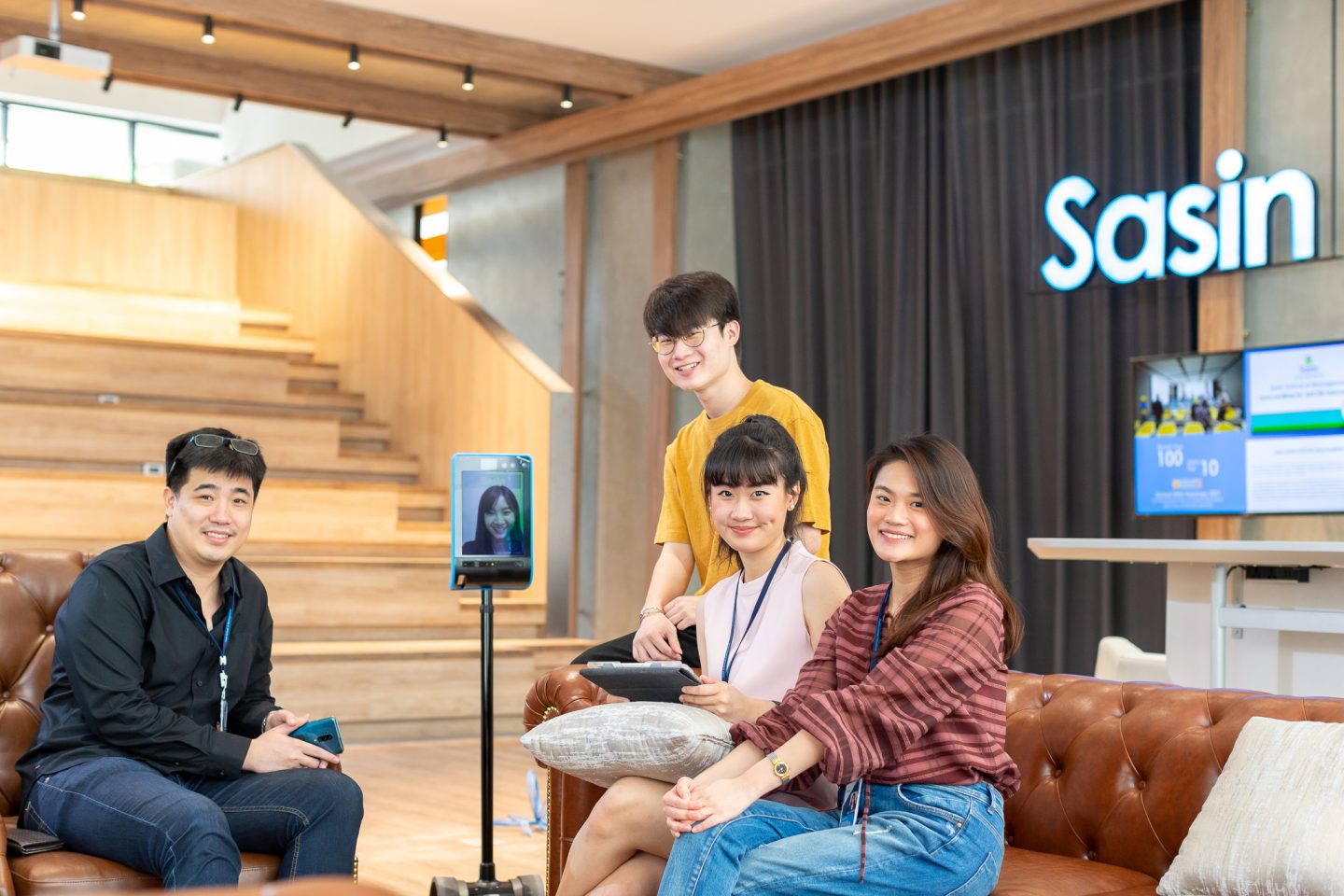
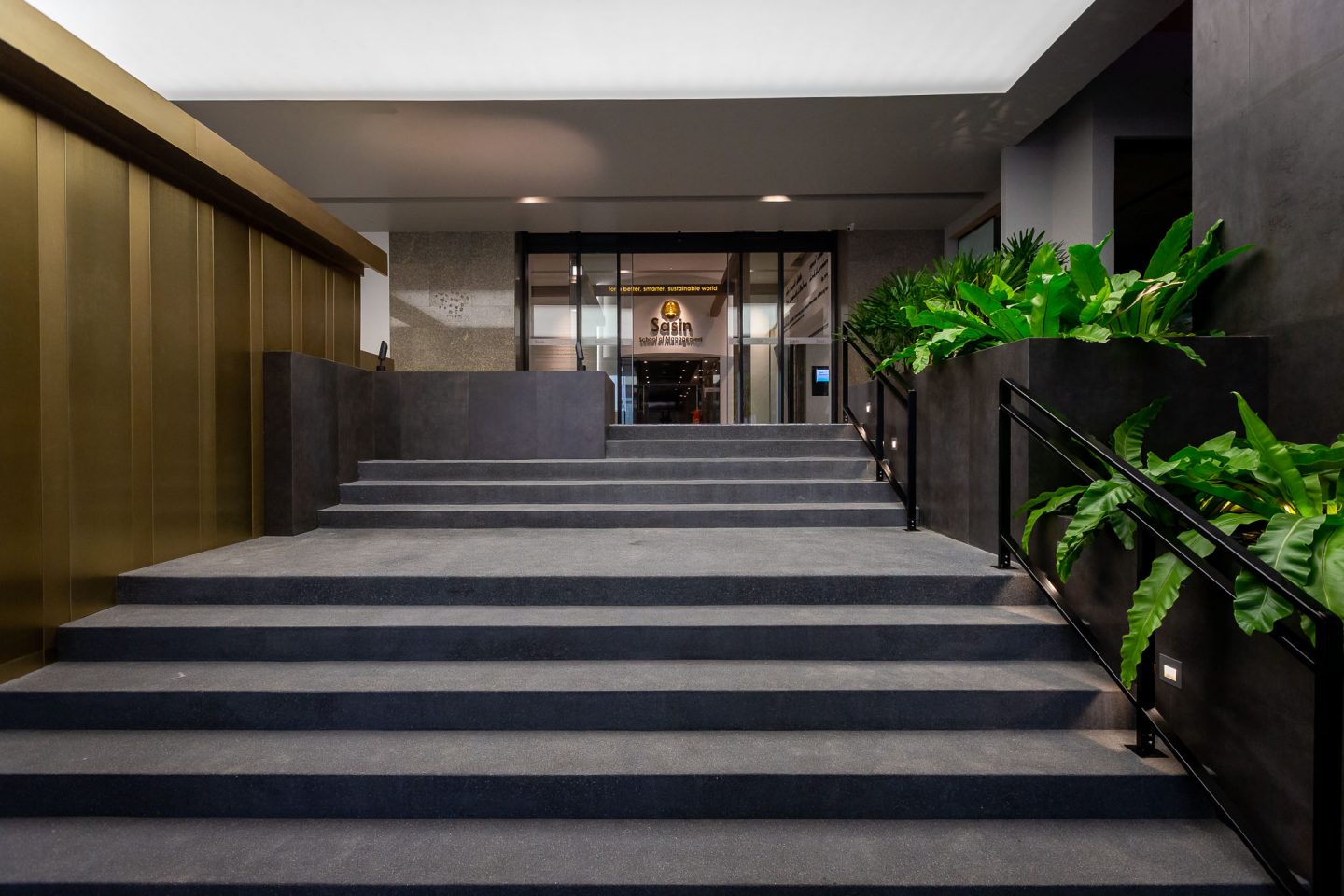
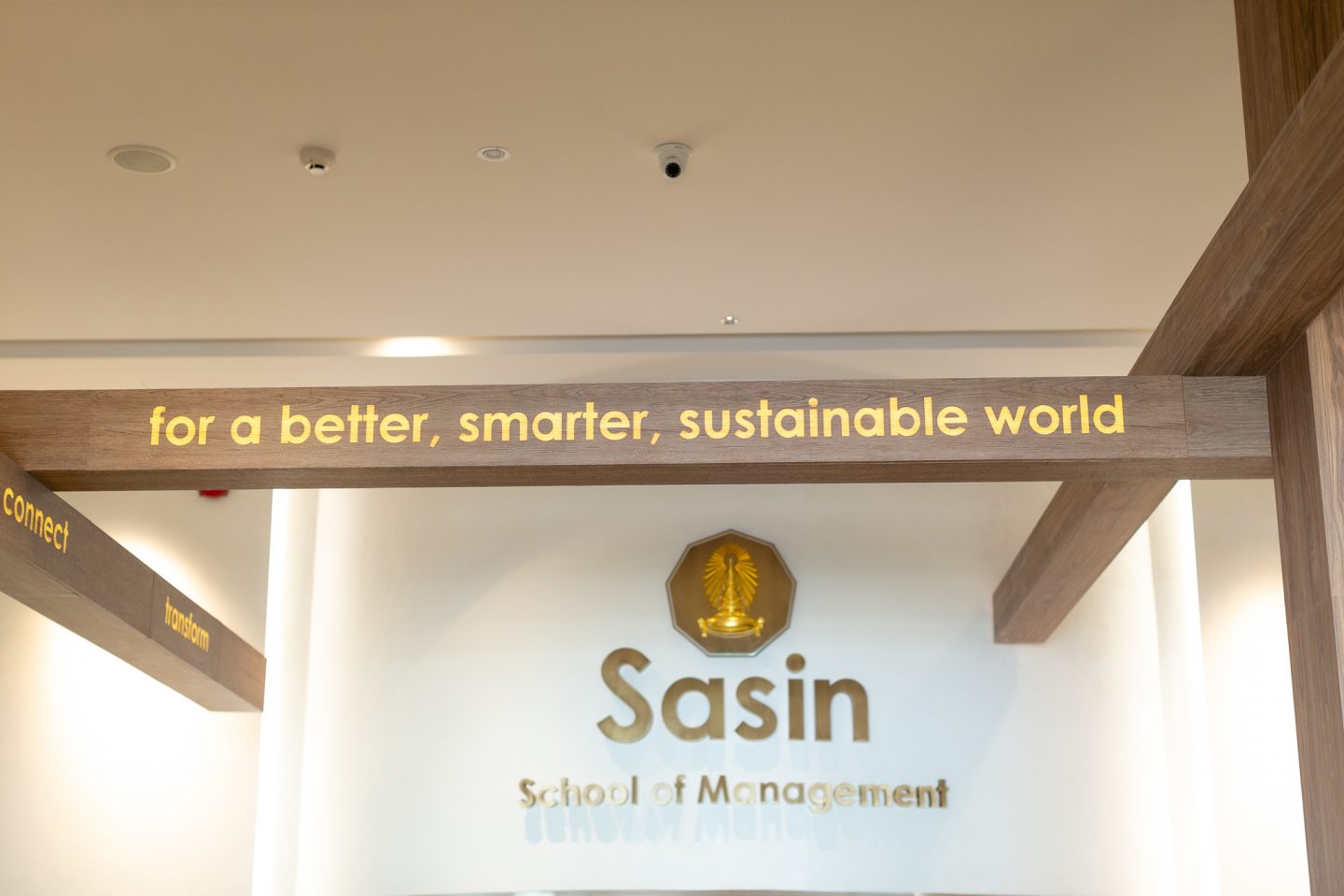
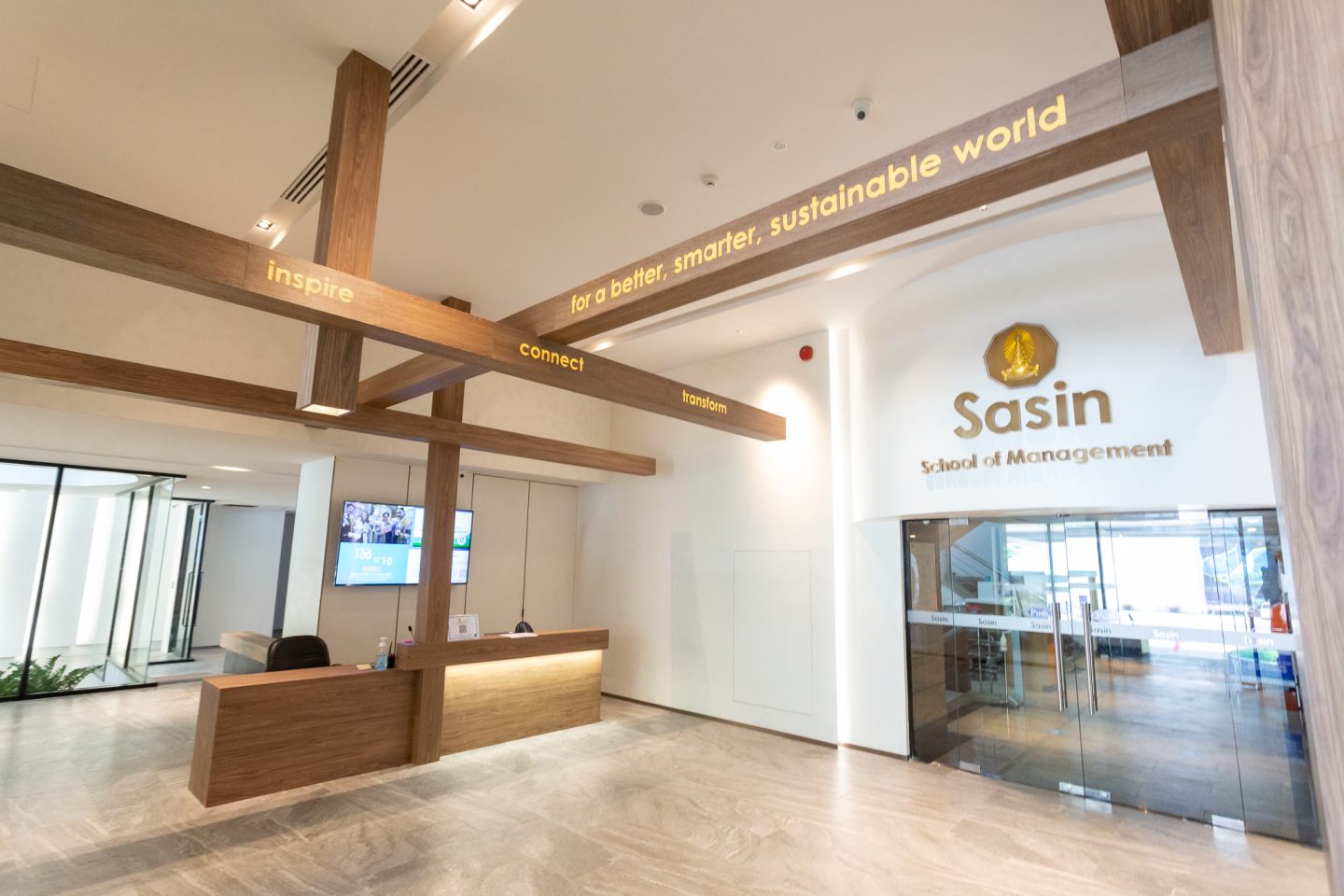
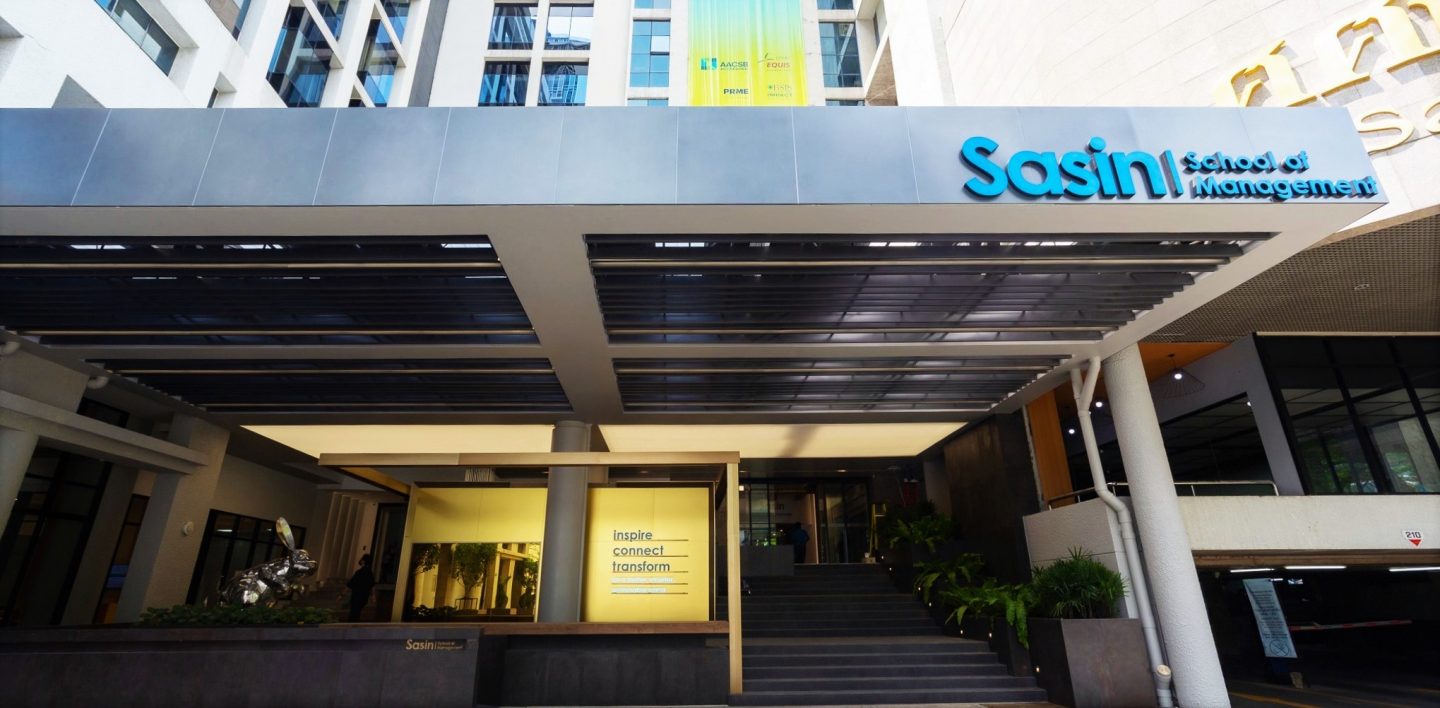 Sasin School of Management, the first internationally accredited business school in Thailand, renovated the entire first and second floors of its main building, Sasa Patasala Building. The new world-class, participant-oriented facilities provide a series of flexible working spaces that will complement Sasin’s classrooms. The areas are flexible, reconfigurable, to meet the needs of the entire Sasin community. The renovation were made possible by a generous donation from an anonymous alumnus.
Professor Ian Fenwick, Director of Sasin School of Management said “Our new, flexible spaces, created to foster inspiration, connection, and transformation, are the most visible signs of the many recent changes at Sasin. Exponential technologies ensure we will face a world of perpetual disruption in business, in society and, of course, in education. Education, especially business education, is transforming and becoming much more digitally-oriented. The global pandemic has put all this into fast forward. In a very real sense, the pandemic has laid the groundwork for blended learning: complementing online teaching of frameworks with small face-to-face group applications of those frameworks, or action learning. Sasin students now have a range of flexible workspaces, from more formal study rooms to totally informal ‘niches’ – small areas with seating, power and screens. These will complement our classrooms, just as action learning complements their learning. Our Mission and Vision are not about awarding degrees but about developing leaders who understand and implement sustainable business practices. Sustainability is the driving force of Gen S or Generation Sasin who can create wider impact for a better, smarter, sustainable world”
The renovation includes Royal Hall Exhibition, Bancha Lamsam Suite, Toemsakdi Krishnamra Hall, Speakers’ Corner, Workshops, Sustainability & Entrepreneurship Center (SEC), Sasa Commons (by FOODLAB) and Café Doitung. After the official opening on March 22, Sasin will be holding series of events aimed at bringing more diverse people into Sasin.
Sasin School of Management, the first internationally accredited business school in Thailand, renovated the entire first and second floors of its main building, Sasa Patasala Building. The new world-class, participant-oriented facilities provide a series of flexible working spaces that will complement Sasin’s classrooms. The areas are flexible, reconfigurable, to meet the needs of the entire Sasin community. The renovation were made possible by a generous donation from an anonymous alumnus.
Professor Ian Fenwick, Director of Sasin School of Management said “Our new, flexible spaces, created to foster inspiration, connection, and transformation, are the most visible signs of the many recent changes at Sasin. Exponential technologies ensure we will face a world of perpetual disruption in business, in society and, of course, in education. Education, especially business education, is transforming and becoming much more digitally-oriented. The global pandemic has put all this into fast forward. In a very real sense, the pandemic has laid the groundwork for blended learning: complementing online teaching of frameworks with small face-to-face group applications of those frameworks, or action learning. Sasin students now have a range of flexible workspaces, from more formal study rooms to totally informal ‘niches’ – small areas with seating, power and screens. These will complement our classrooms, just as action learning complements their learning. Our Mission and Vision are not about awarding degrees but about developing leaders who understand and implement sustainable business practices. Sustainability is the driving force of Gen S or Generation Sasin who can create wider impact for a better, smarter, sustainable world”
The renovation includes Royal Hall Exhibition, Bancha Lamsam Suite, Toemsakdi Krishnamra Hall, Speakers’ Corner, Workshops, Sustainability & Entrepreneurship Center (SEC), Sasa Commons (by FOODLAB) and Café Doitung. After the official opening on March 22, Sasin will be holding series of events aimed at bringing more diverse people into Sasin.In the early 1980s, finding an internationally renowned MBA program in Southeast Asia was a challenge. So Founding Director of Sasin, Professor Toemsakdi Krishnamra, set about creating one!
Building on an idea from Khun Bancha Lamsam, the President of Thai Farmers Bank (now Kasikornbank), Professor Toemsakdi sent a team to the United States to identify potential partners and create Asia’s leading business school in Bangkok, Thailand.
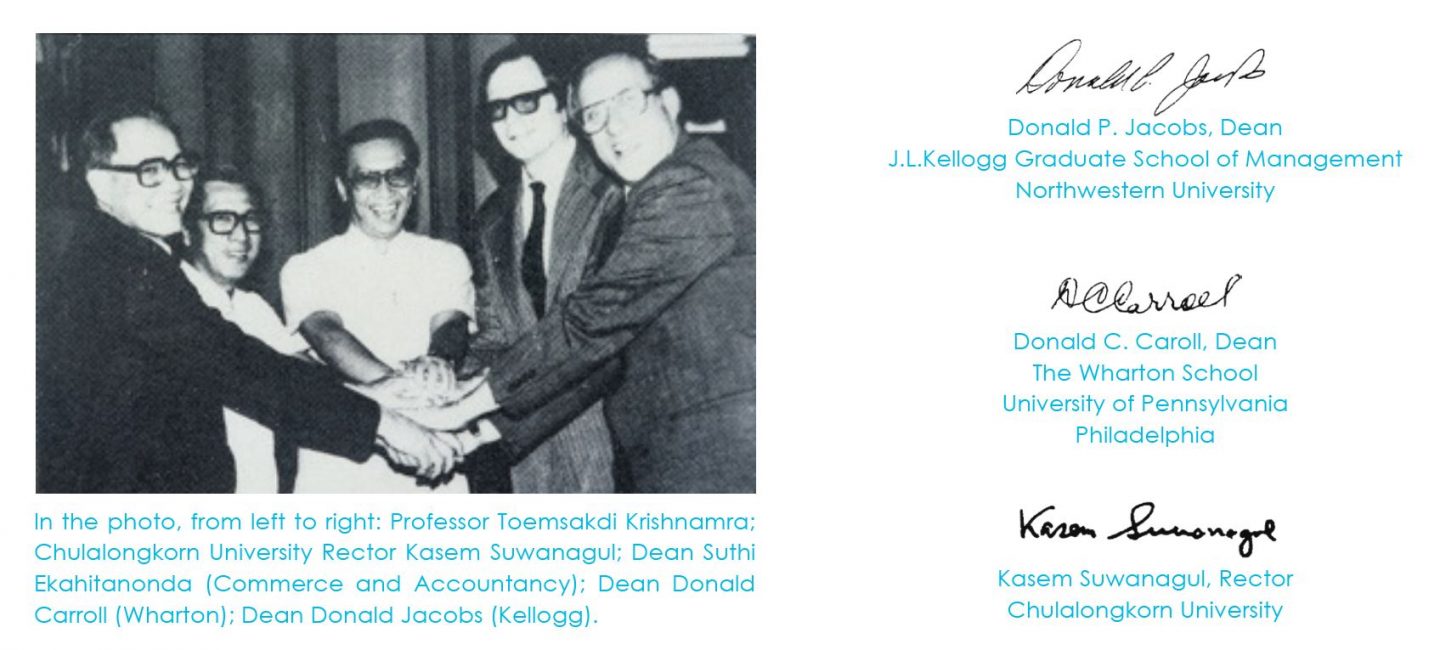
In what has become the model for other business school programs around the world, Chulalongkorn University partnered with the Kellogg School of Management of Northwestern University and The Wharton School of the University of Pennsylvania, two of the leading business schools in the United States: Sasin was the result.
 Originally known as the Graduate Institute of Business Administration (or GIBA), the name Sasin was graciously bestowed by His Majesty King Bhumibol Adulyadej on the auspicious occasion of His Majesty’s 60th birthday on December 5, 1987.
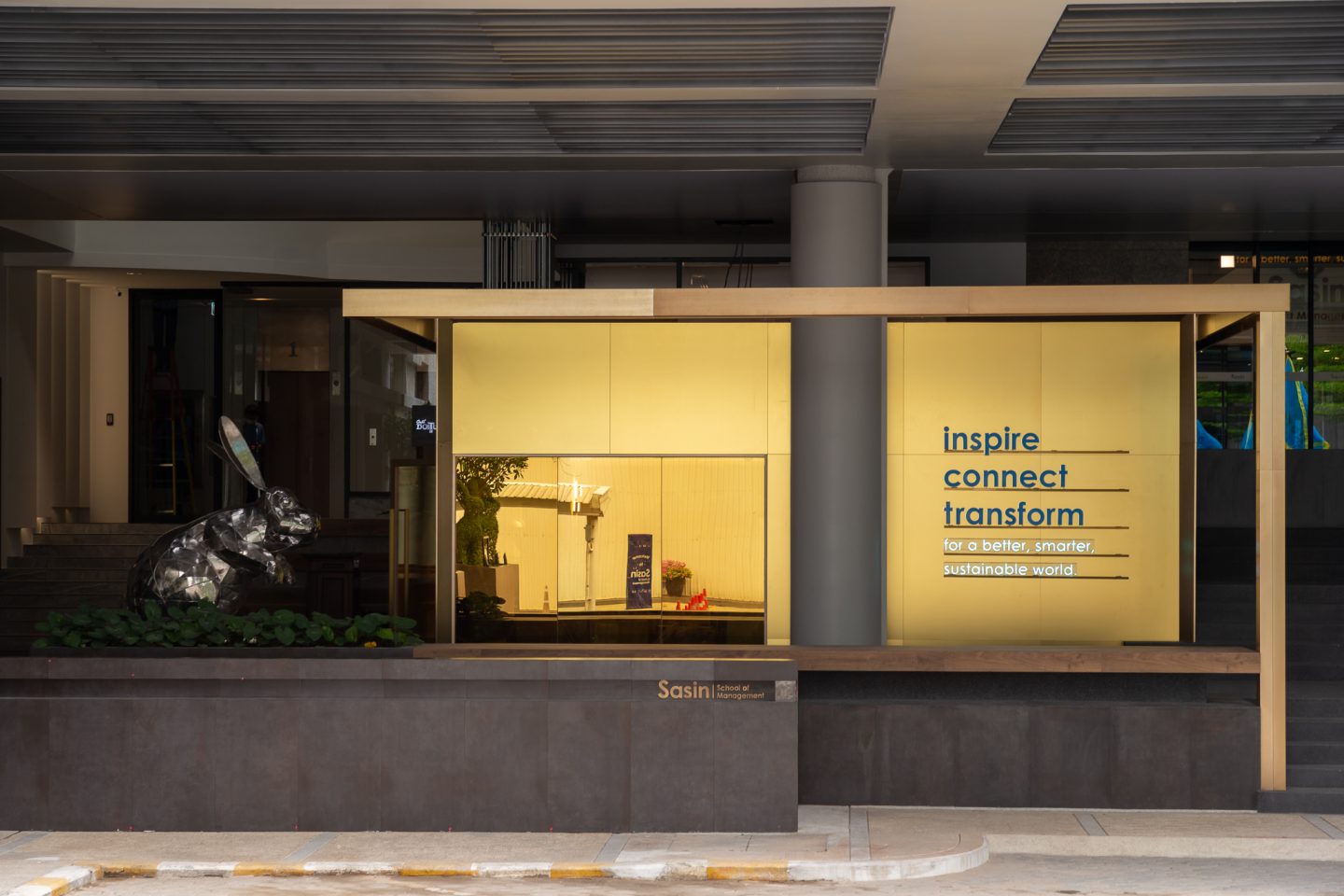
Sasin comes from two Sanskrit words: ‘ศศ’ (sasa) and ‘อินทร์’ (indra). Sasa, meaning rabbit, represents HM The King’s birth year in the Thai 12-year astrological cycle. Indra means chief or king. So, Sasin literally means king of the rabbits.
Originally known as the Graduate Institute of Business Administration (or GIBA), the name Sasin was graciously bestowed by His Majesty King Bhumibol Adulyadej on the auspicious occasion of His Majesty’s 60th birthday on December 5, 1987.
Sasin comes from two Sanskrit words: ‘ศศ’ (sasa) and ‘อินทร์’ (indra). Sasa, meaning rabbit, represents HM The King’s birth year in the Thai 12-year astrological cycle. Indra means chief or king. So, Sasin literally means king of the rabbits.
 On December 20, 1990, His Majesty King Bhumibol Adulyadej, accompanied by Her Royal Highness Princess Maha Chakri Sirindhorn, presided over the dedication ceremony of the Sasa Patasala Building.
Originally known as the Graduate Institute of Business Administration (or GIBA), the name Sasin was graciously bestowed by His Majesty King Bhumibol Adulyadej on the auspicious occasion of His Majesty’s 60th birthday on December 5, 1987.
Sasin comes from two Sanskrit words: ‘ศศ’ (sasa) and ‘อินทร์’ (indra). Sasa, meaning rabbit, represents HM The King’s birth year in the Thai 12-year astrological cycle. Indra means chief or king. So, Sasin literally means king of the rabbits.
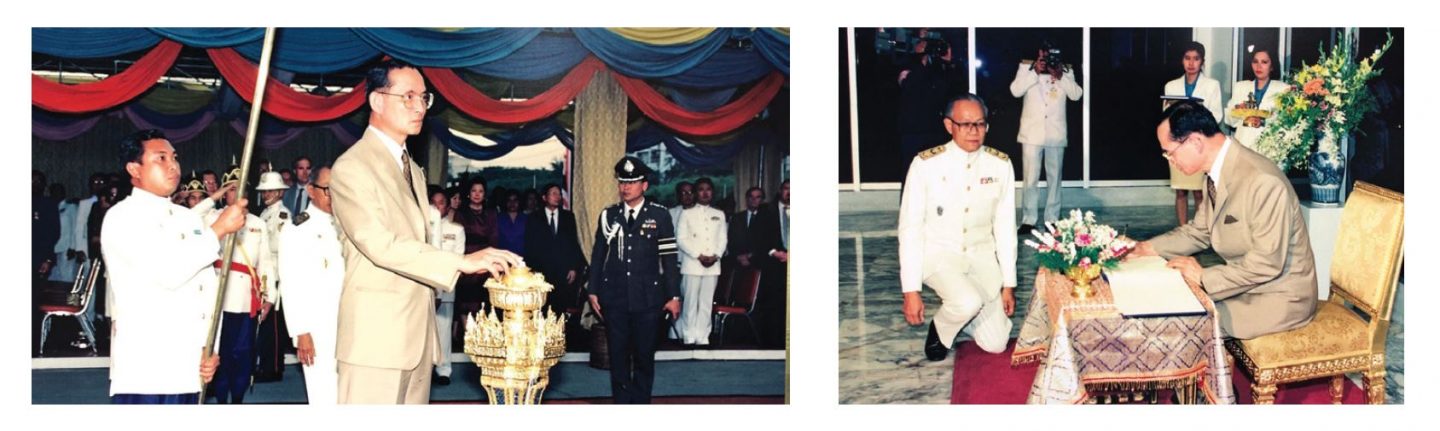
On December 20, 1990, His Majesty King Bhumibol Adulyadej, accompanied by Her Royal Highness Princess Maha Chakri Sirindhorn, presided over the dedication ceremony of the Sasa Patasala Building.
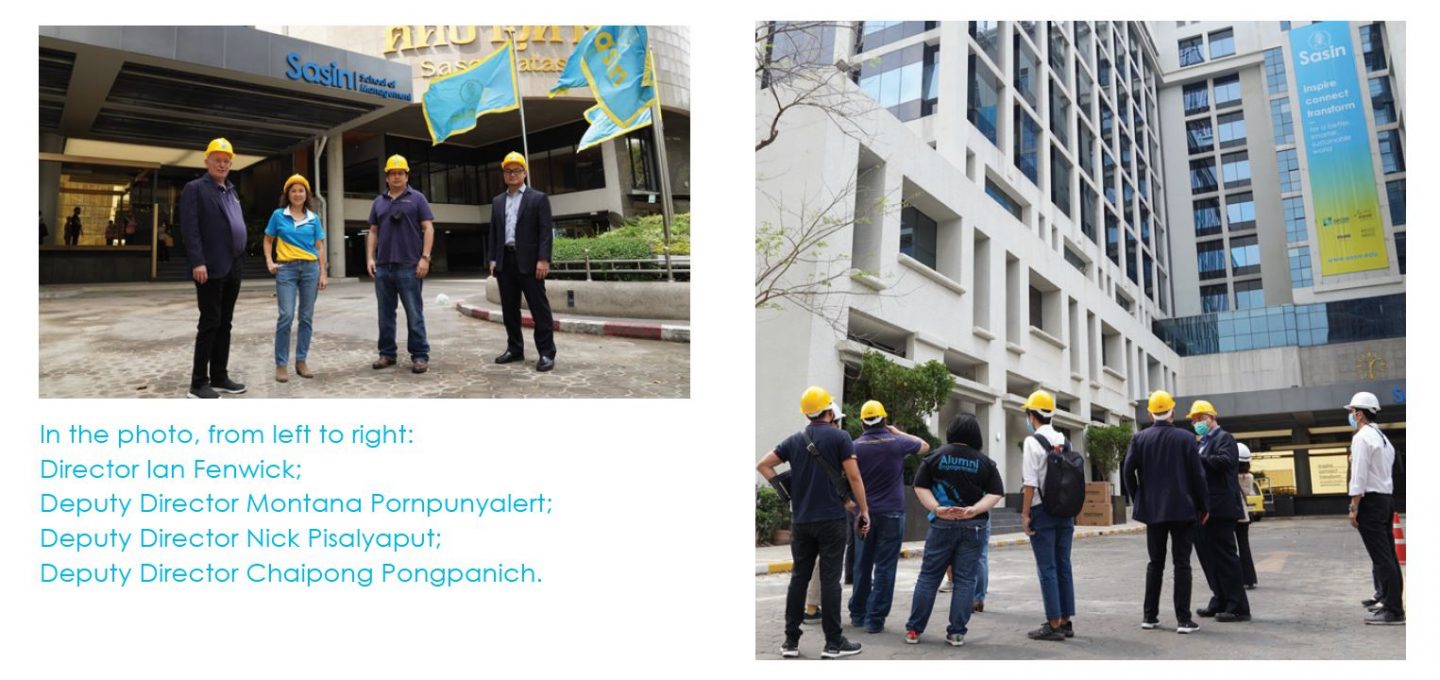
Founding Director Toemsakdi Krishnamra led Sasin through its first 32 years (1982-2014), followed by Dr. Dipak Jain (2014-2017), Khun Paron Israsena Na Ayudhya (2017-2019) and as of 2019, Dr. Ian Fenwick.
Each successive Director of Sasin benefitted from the firm foundations laid down by Professor Toemsakdi Krishnamra. In the same way, the original structure of the Sasa Patasala building, with its solid pillars and beams, frame our recent renovations. Sasin is evolving with a consistency of purpose.
Exponential technologies ensure we will face a world of perpetual disruption in business, in society and, of course, in education. Rather than lament the many changes that engulf us all, we take this opportunity to prepare Sasin not just to survive, but to thrive. This is the driving force of Gen S: Generation Sasin.
Gen S is future-ready with the tools, the skills, and the mindset to succeed in times of constant change. Gen S is resilient, adaptive and impactful. Gen S has the analytical, entrepreneurial and team skills to identify and pursue opportunities. Above all, Gen S realizes the existential imperative of sustainable business practices. If our society is to survive, we need a massive transformation with sustainability — of business, the environment, and social structures — at its core. The physical changes that you see around you, are but the outward and visible signs of the mindset changes that we must achieve.
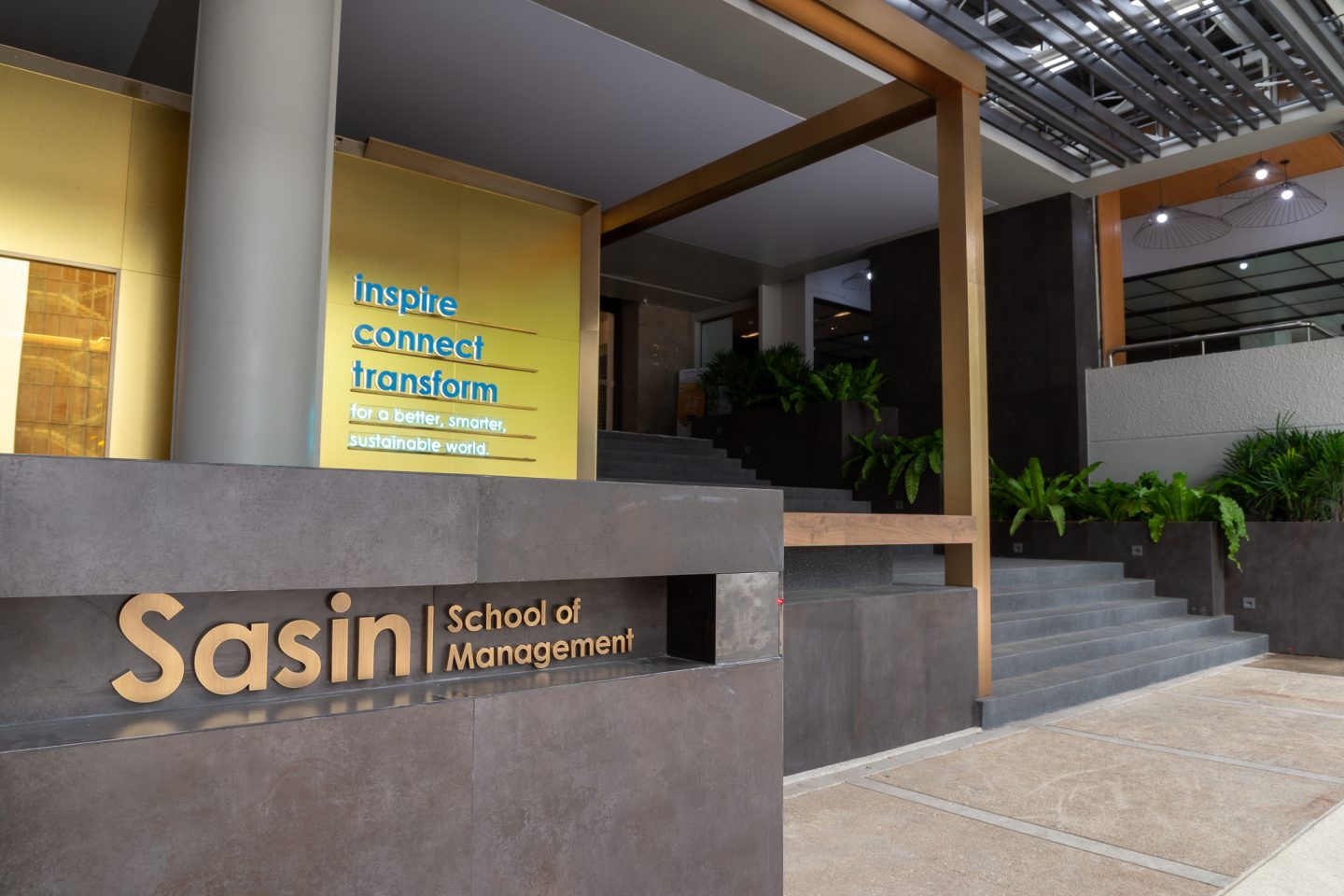
Sasin’s new, flexible spaces, created to foster inspiration, connection, and transformation, are a vital step on our path to a better, smarter, sustainable world.
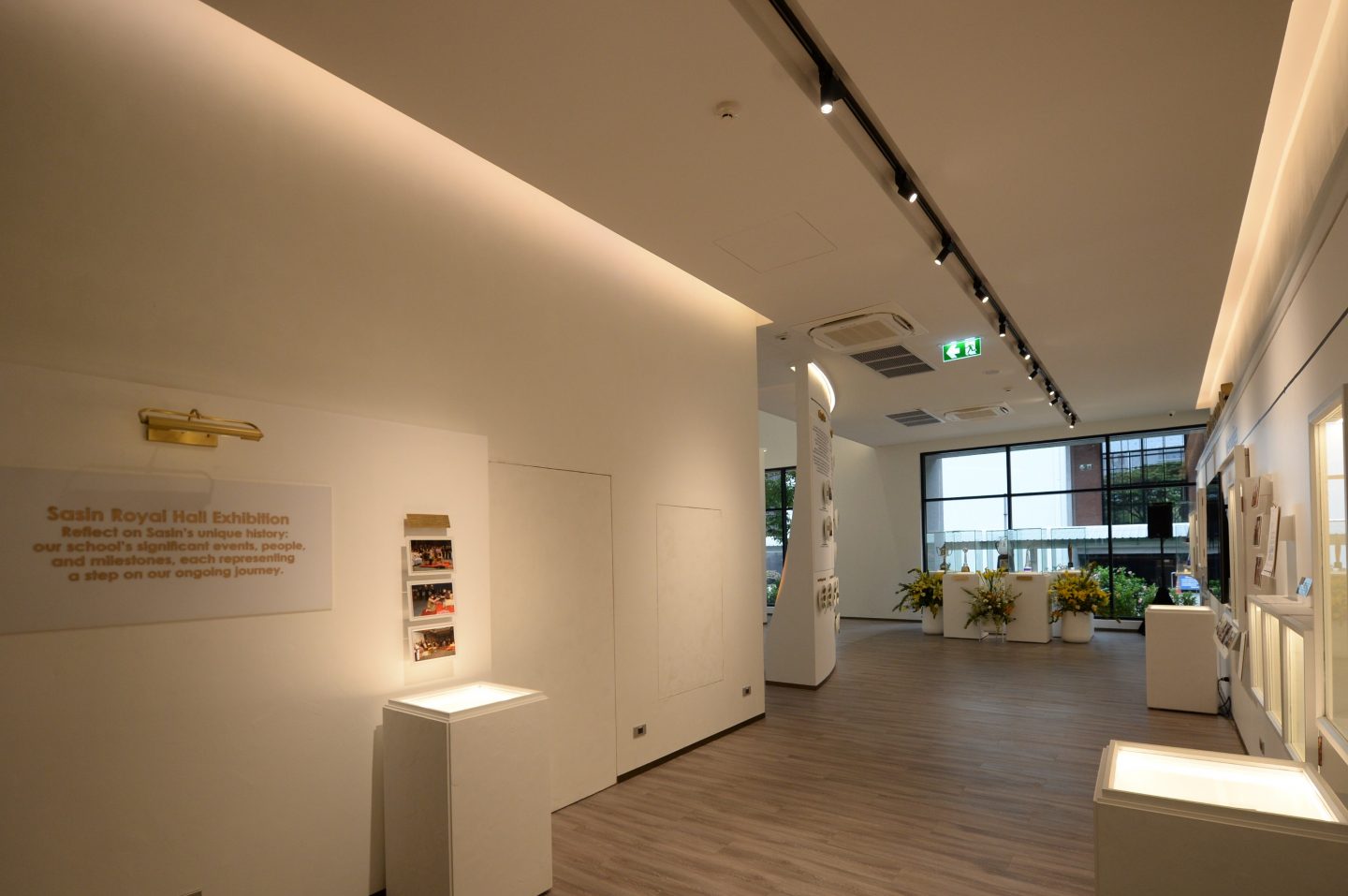
Reflect on Sasin’s unique history: our school’s significant events, people, and milestones, each representing a step on our ongoing journey.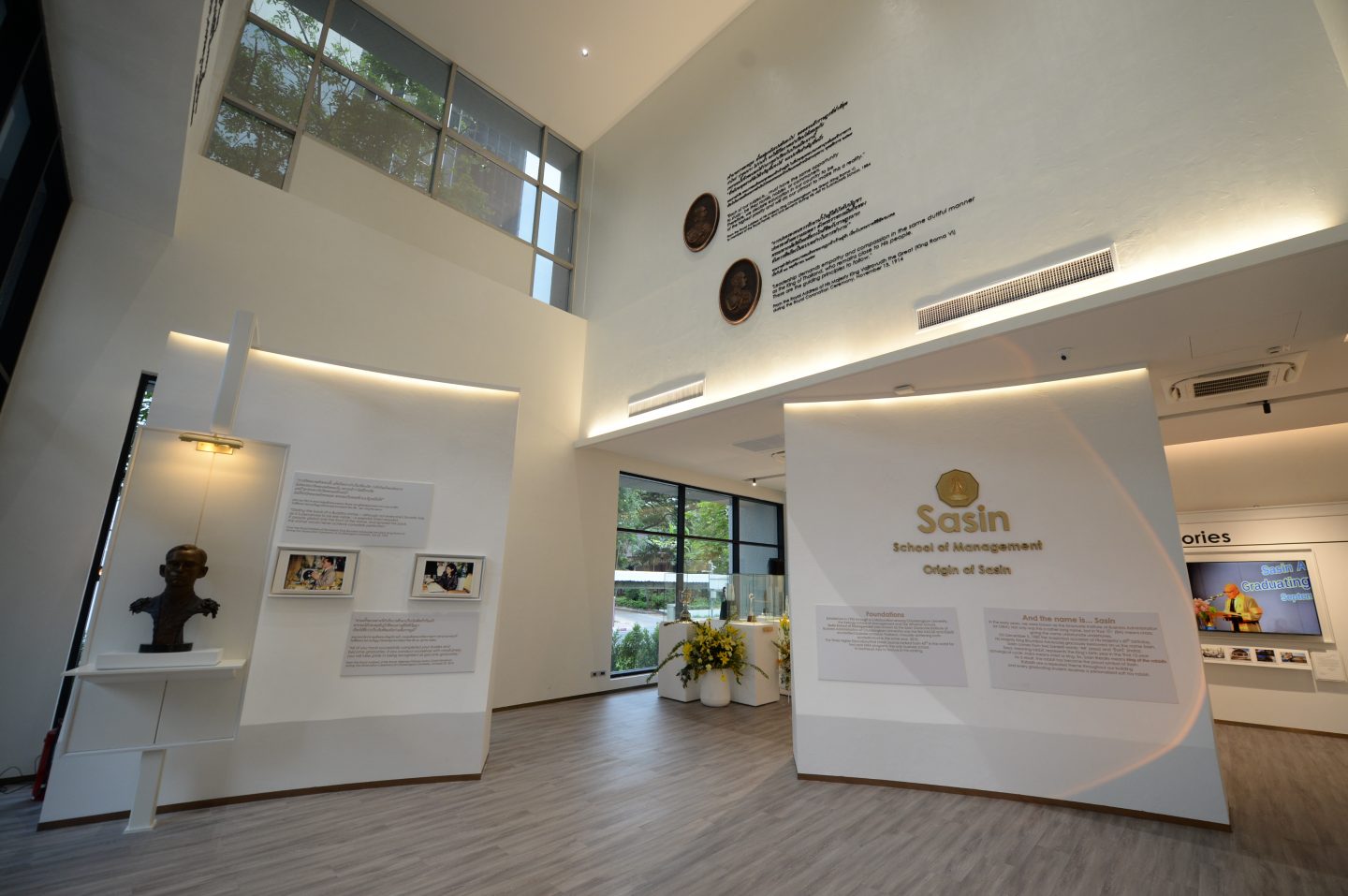
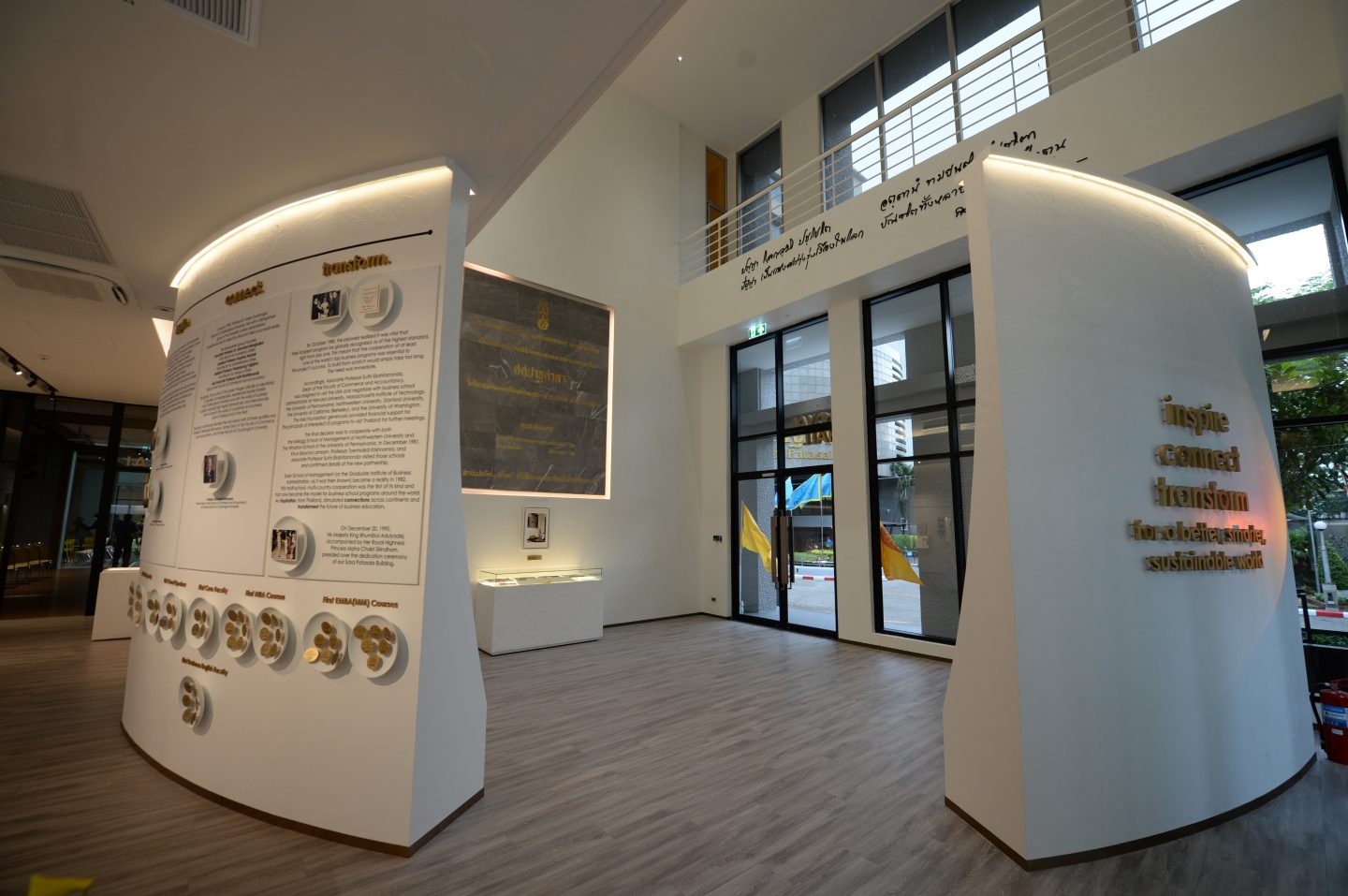
In July 1980, Khun Bancha Lamsam, President of Thai Farmers Bank (now Kasikornbank) and a member of Chulalongkorn University Council, and Dr. Kasem Suwanagul, Rector (President) of the University, discussed the idea of creating top-class, English-language business programs to address the shortage of personnel capable of working with the increasing number of international firms investing in Thailand.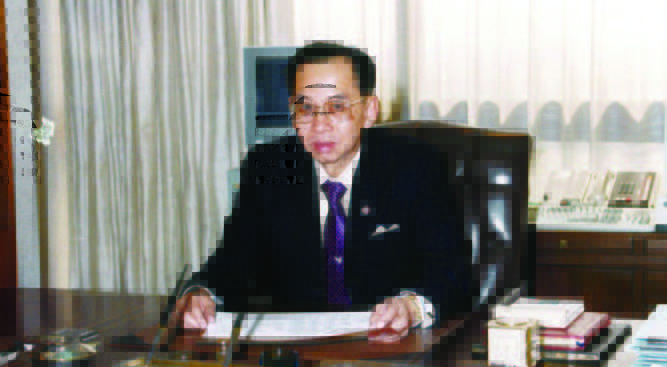 After a series of meetings and a number of trips to the United States, two partner schools were secured: the Kellogg School of Management of Northwestern University and The Wharton School of the University of Pennsylvania. In December 1981, Khun Bancha Lamsam, Professor Toemsakdi Krishnamra, and Associate Professor Suthi Ekahitanonda travelled to the U.S. to confirm the details of the new partnership. Sasin School of Management (or the Graduate Institute of Business Administration, as it was then known) became a reality in 1982.
After the establishment of Sasin, Khun Bancha Lamsam continued to support our school as a major benefactor, a member of Sasin’s Advisory Board, and a strong advocate of our programs. In recognition of his commitment and contributions to Sasin, he received an Honorary Doctorate from Chulalongkorn University in 1985.
We will always be most grateful to Khun Bancha Lamsam, his son and Sasin Advisory Board member, Khun Banthoon Lamsam, and the entire Lamsam family, for their steadfast dedication to business education and to Sasin.
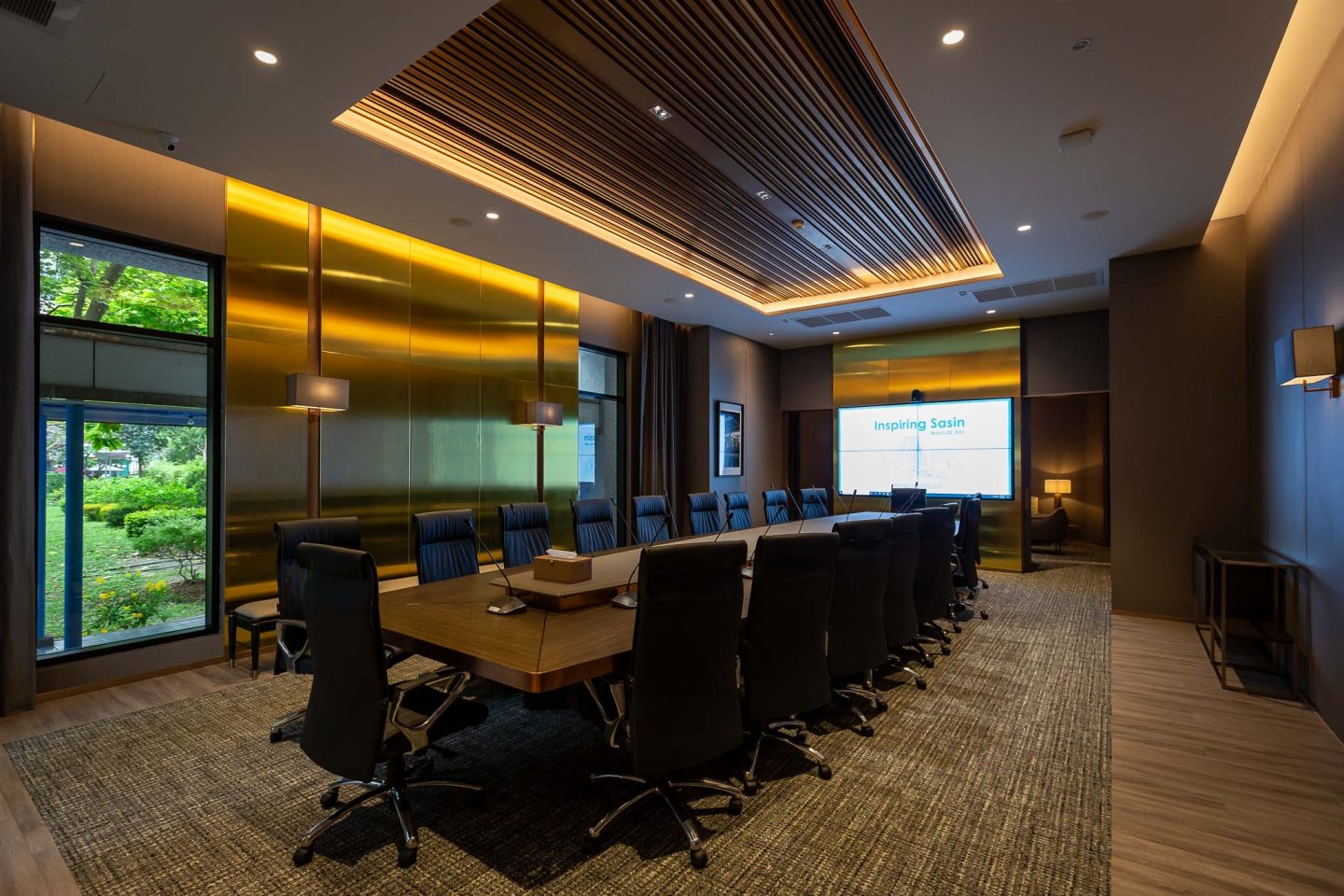
The Bancha Lamsam Suite includes an elegant, modern boardroom and an exclusive lounge.
After a series of meetings and a number of trips to the United States, two partner schools were secured: the Kellogg School of Management of Northwestern University and The Wharton School of the University of Pennsylvania. In December 1981, Khun Bancha Lamsam, Professor Toemsakdi Krishnamra, and Associate Professor Suthi Ekahitanonda travelled to the U.S. to confirm the details of the new partnership. Sasin School of Management (or the Graduate Institute of Business Administration, as it was then known) became a reality in 1982.
After the establishment of Sasin, Khun Bancha Lamsam continued to support our school as a major benefactor, a member of Sasin’s Advisory Board, and a strong advocate of our programs. In recognition of his commitment and contributions to Sasin, he received an Honorary Doctorate from Chulalongkorn University in 1985.
We will always be most grateful to Khun Bancha Lamsam, his son and Sasin Advisory Board member, Khun Banthoon Lamsam, and the entire Lamsam family, for their steadfast dedication to business education and to Sasin.
The Bancha Lamsam Suite includes an elegant, modern boardroom and an exclusive lounge.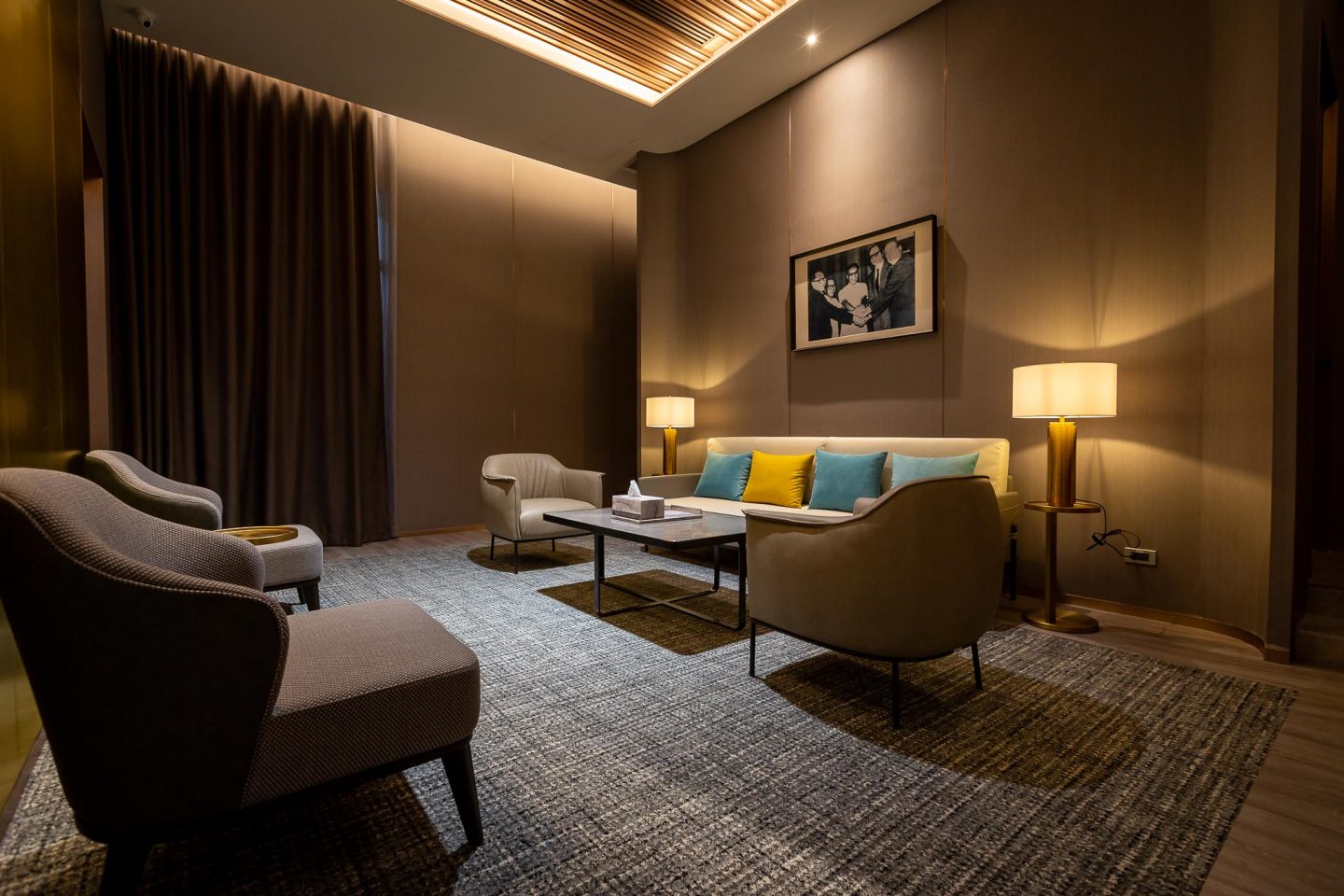
After a series of meetings and a number of trips to the United States, two partner schools were secured: the Kellogg School of Management of Northwestern University and The Wharton School of the University of Pennsylvania. In December 1981, Khun Bancha Lamsam, Professor Toemsakdi Krishnamra, and Associate Professor Suthi Ekahitanonda travelled to the U.S. to confirm the details of the new partnership. Sasin School of Management (or the Graduate Institute of Business Administration, as it was then known) became a reality in 1982.
After the establishment of Sasin, Khun Bancha Lamsam continued to support our school as a major benefactor, a member of Sasin’s Advisory Board, and a strong advocate of our programs. In recognition of his commitment and contributions to Sasin, he received an Honorary Doctorate from Chulalongkorn University in 1985.
We will always be most grateful to Khun Bancha Lamsam, his son and Sasin Advisory Board member, Khun Banthoon Lamsam, and the entire Lamsam family, for their steadfast dedication to business education and to Sasin.
The Bancha Lamsam Suite includes an elegant, modern boardroom and an exclusive lounge.Professor Toemsakdi Krishnamra was Sasin’s Founding Director, a position he held from 1982 to 2014. Under his leadership over 32 years, Professor Toemsakdi managed our growth from dream to reality: becoming the longest accredited business school in Thailand and one of the top-ranked business programs in Asia.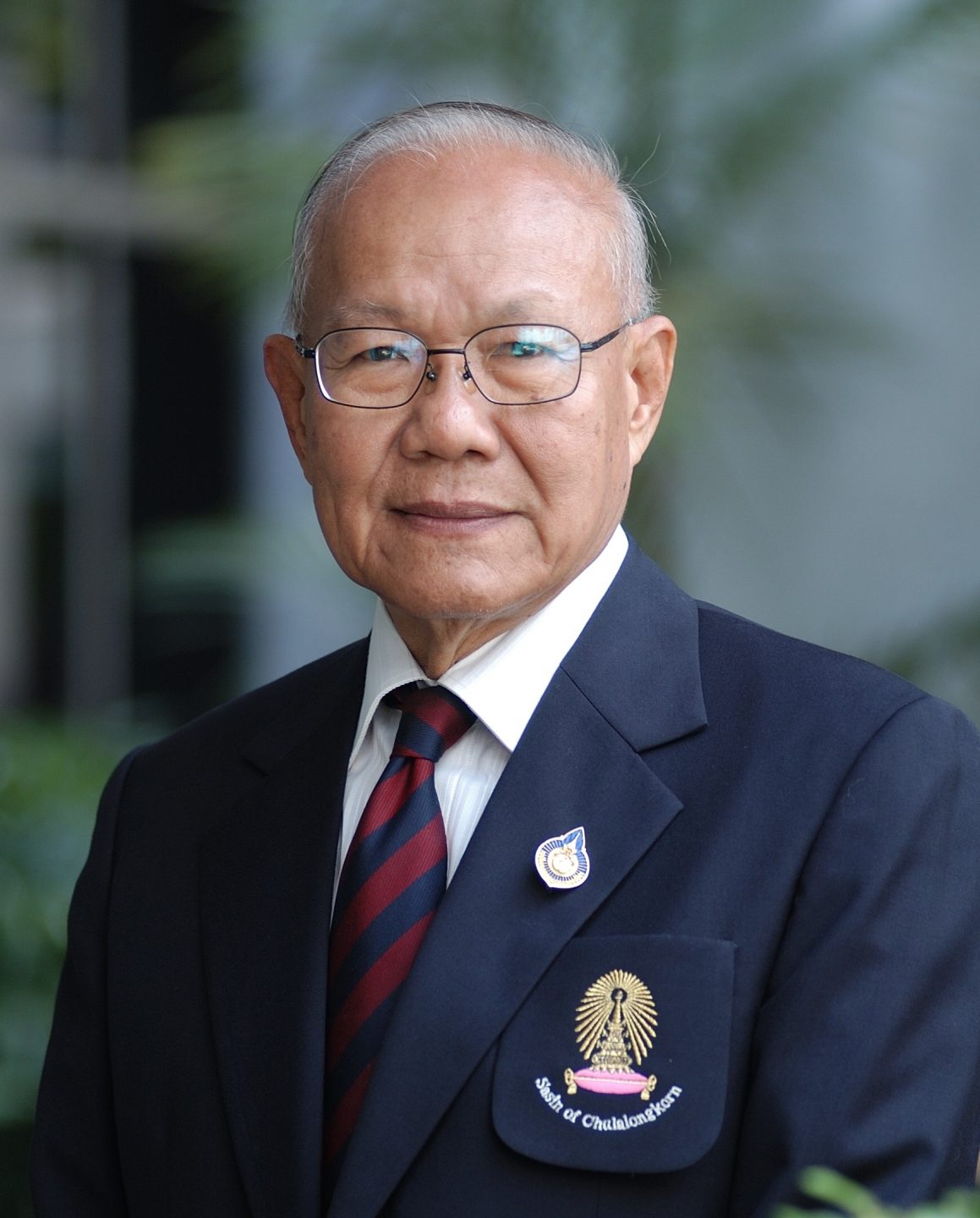 Prior to taking on his role at Sasin, Professor Toemsakdi served as Director of Chulalongkorn University’s Language Institute (1978-1982), Dean of the Faculty of Commerce and Accountancy (1971-1975) and Rector of the University (1975-1978).
On stepping down as Director of Sasin in 2014, Professor Toemsakdi remained active as a Senior Advisor to the leadership of Sasin and served as Honorary Chairman of Deloitte Touche Tohmatsu Jaiyos Co. Ltd., Chairman of AmCor Flexible Co. Ltd, and D.H.A. Siamwalla Co. Ltd.
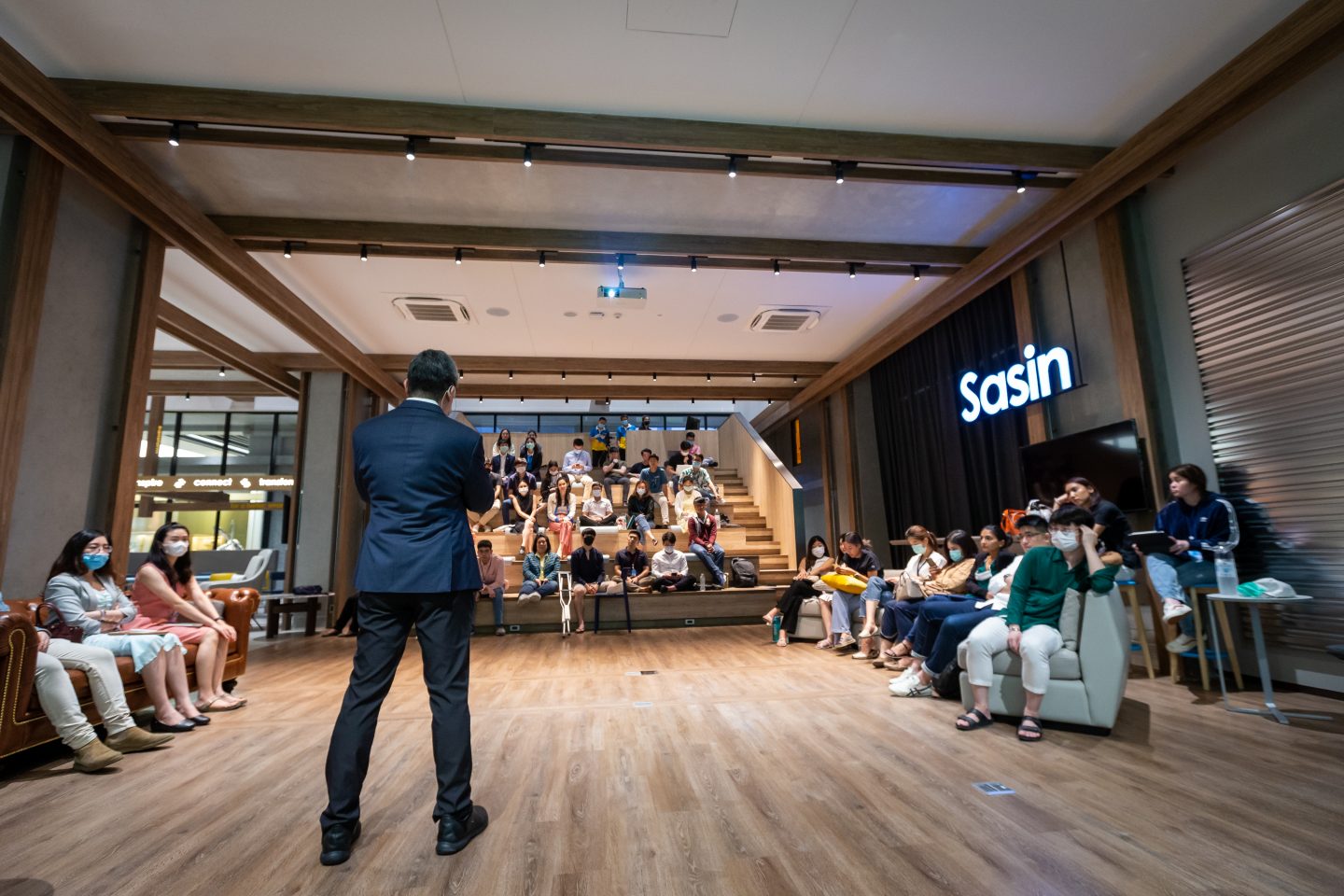
Toemsakdi Krishnamra Hall, the focal point of Sasin’s newly-renovated space, will be used for talks, workshops, and other events, reflecting Professor Toemsakdi’s legacy of blending influential people and important ideas. We will be forever extremely grateful to Professor Toemsakdi, his late wife Khun Saichitr, and the entire Krishnamra family for their dedication to Sasin and support of everyone in the Sasin community.
All that you see at Sasin, we owe to Professor Toemsakdi Krishnamra. In sincere gratitude for his unwavering commitment to management education and to making Sasin the respected, innovative institution it is today, we dedicate this Hall in his name.
Prior to taking on his role at Sasin, Professor Toemsakdi served as Director of Chulalongkorn University’s Language Institute (1978-1982), Dean of the Faculty of Commerce and Accountancy (1971-1975) and Rector of the University (1975-1978).
On stepping down as Director of Sasin in 2014, Professor Toemsakdi remained active as a Senior Advisor to the leadership of Sasin and served as Honorary Chairman of Deloitte Touche Tohmatsu Jaiyos Co. Ltd., Chairman of AmCor Flexible Co. Ltd, and D.H.A. Siamwalla Co. Ltd.
Toemsakdi Krishnamra Hall, the focal point of Sasin’s newly-renovated space, will be used for talks, workshops, and other events, reflecting Professor Toemsakdi’s legacy of blending influential people and important ideas. We will be forever extremely grateful to Professor Toemsakdi, his late wife Khun Saichitr, and the entire Krishnamra family for their dedication to Sasin and support of everyone in the Sasin community.
All that you see at Sasin, we owe to Professor Toemsakdi Krishnamra. In sincere gratitude for his unwavering commitment to management education and to making Sasin the respected, innovative institution it is today, we dedicate this Hall in his name.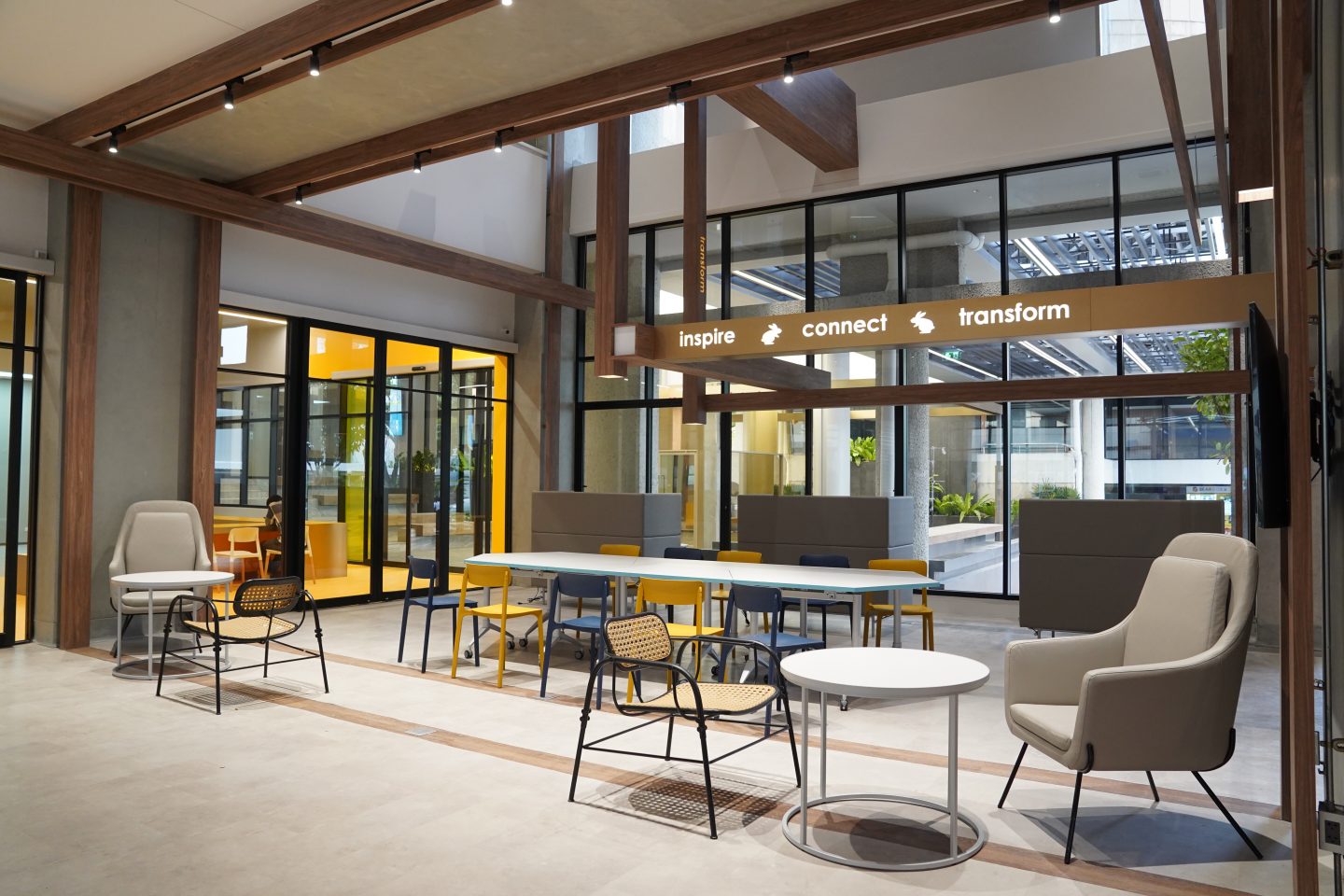
Prior to taking on his role at Sasin, Professor Toemsakdi served as Director of Chulalongkorn University’s Language Institute (1978-1982), Dean of the Faculty of Commerce and Accountancy (1971-1975) and Rector of the University (1975-1978).
On stepping down as Director of Sasin in 2014, Professor Toemsakdi remained active as a Senior Advisor to the leadership of Sasin and served as Honorary Chairman of Deloitte Touche Tohmatsu Jaiyos Co. Ltd., Chairman of AmCor Flexible Co. Ltd, and D.H.A. Siamwalla Co. Ltd.
Toemsakdi Krishnamra Hall, the focal point of Sasin’s newly-renovated space, will be used for talks, workshops, and other events, reflecting Professor Toemsakdi’s legacy of blending influential people and important ideas. We will be forever extremely grateful to Professor Toemsakdi, his late wife Khun Saichitr, and the entire Krishnamra family for their dedication to Sasin and support of everyone in the Sasin community.
All that you see at Sasin, we owe to Professor Toemsakdi Krishnamra. In sincere gratitude for his unwavering commitment to management education and to making Sasin the respected, innovative institution it is today, we dedicate this Hall in his name.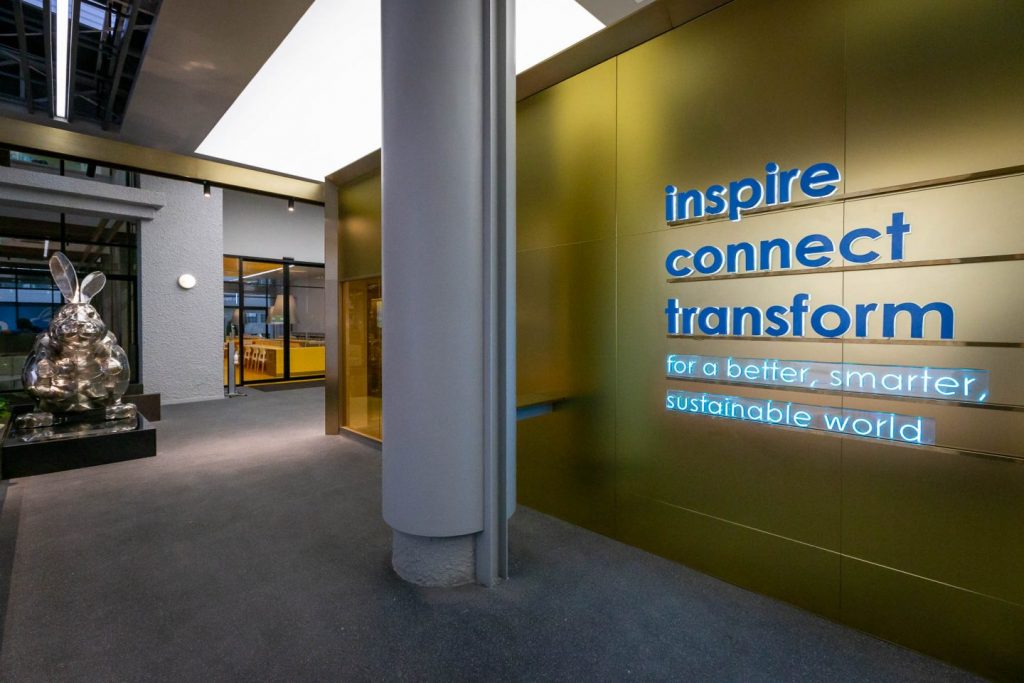
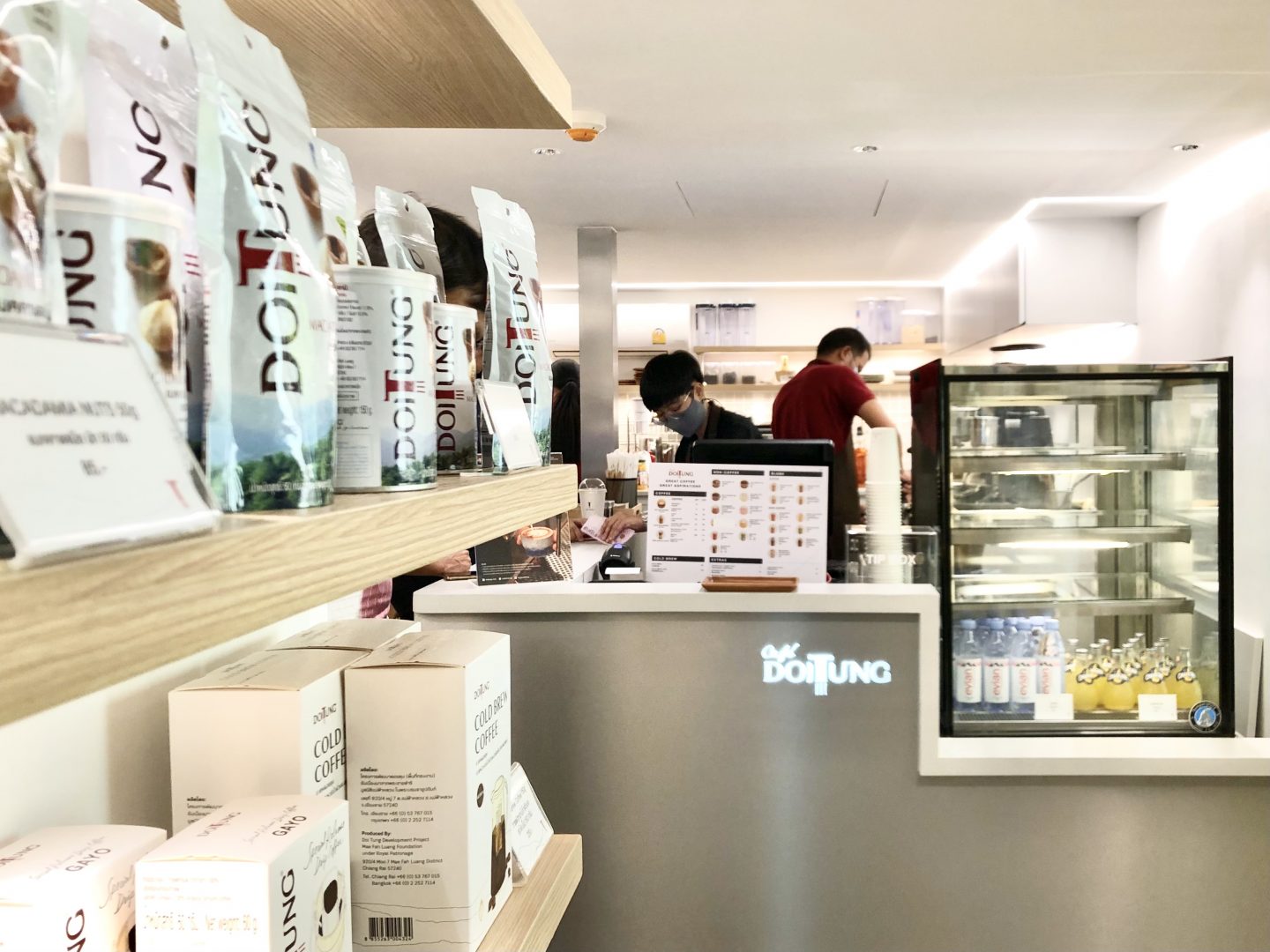
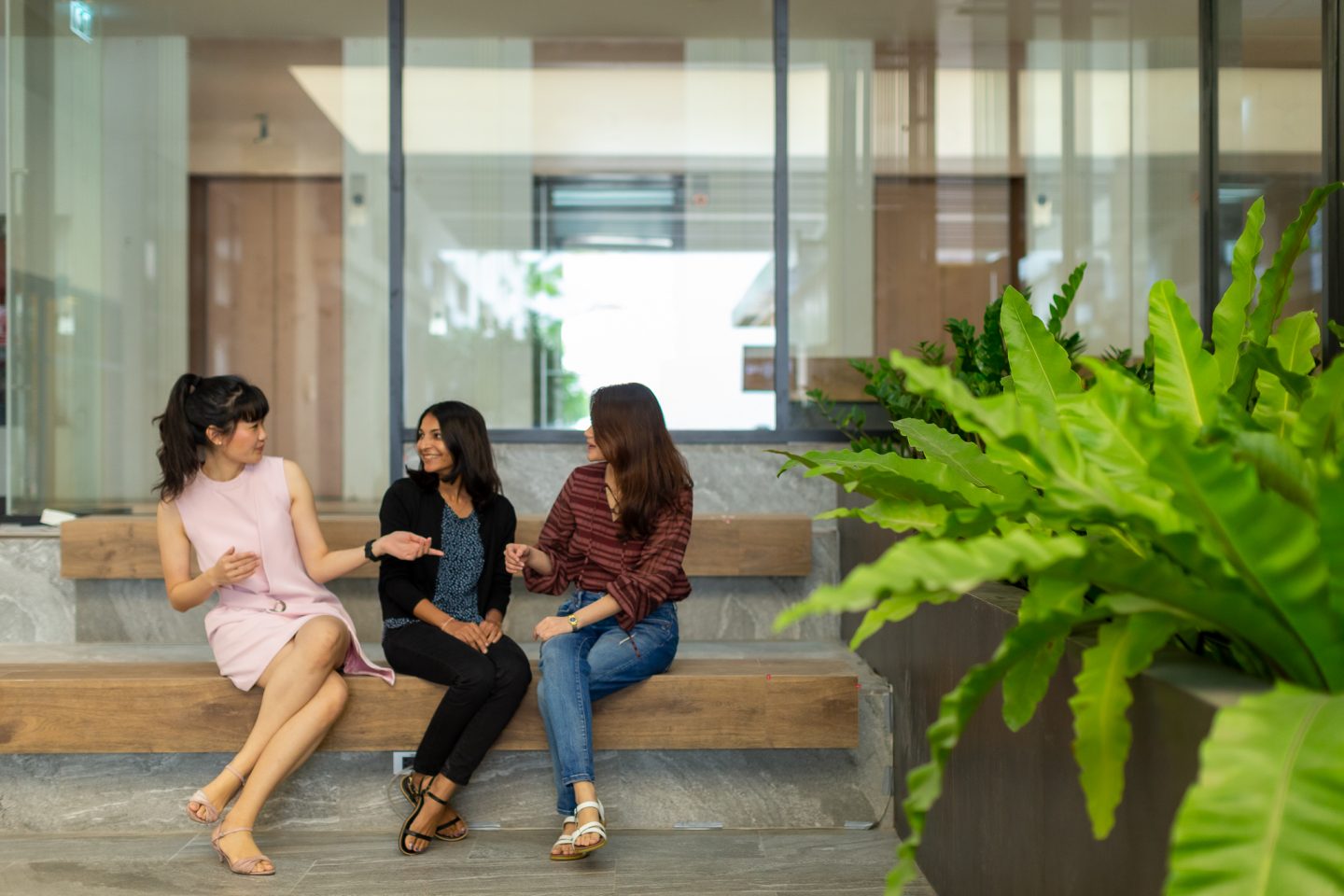
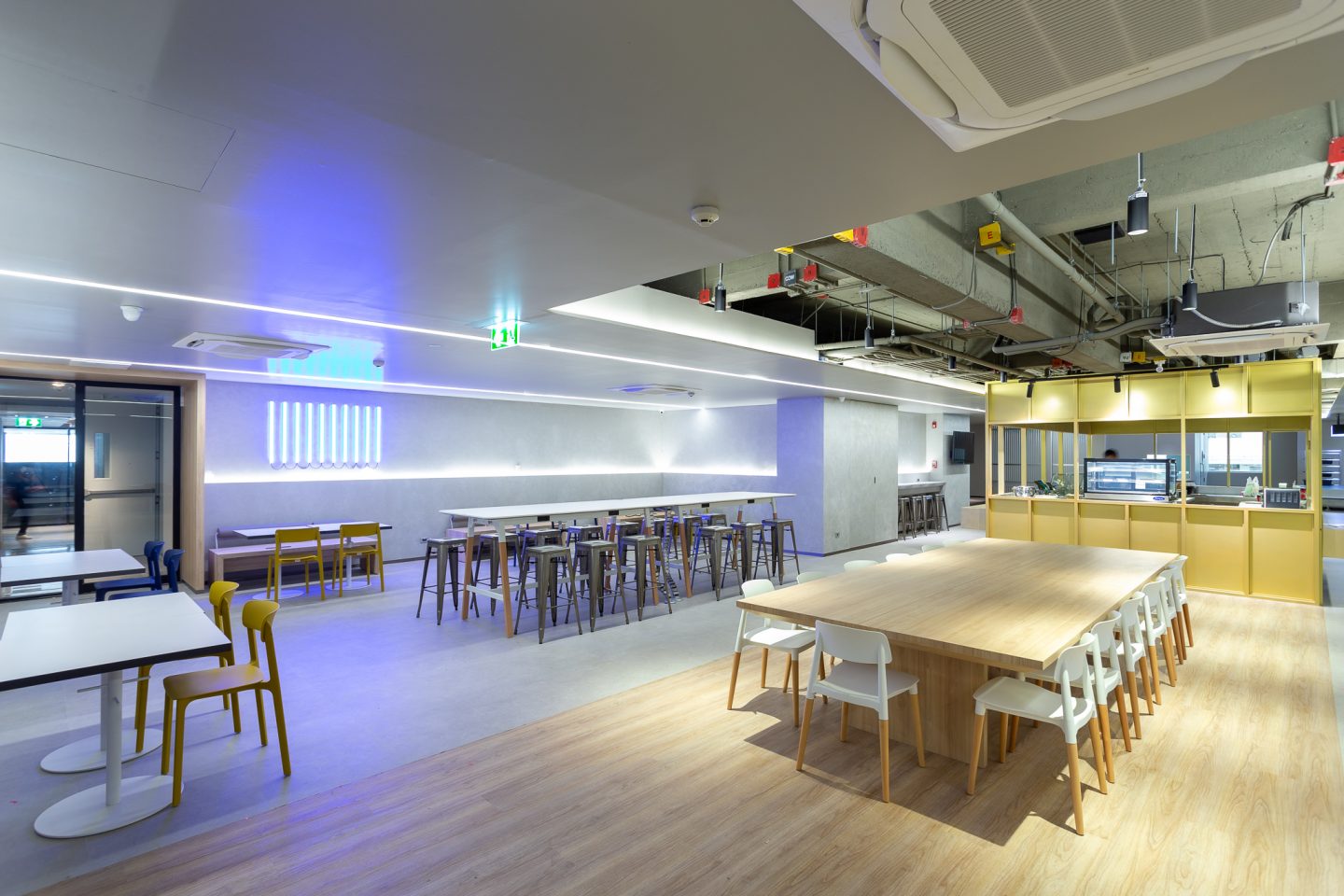
The ultimate social space where members of the Sasin community and guests can eat, hangout, or have a casual meeting.
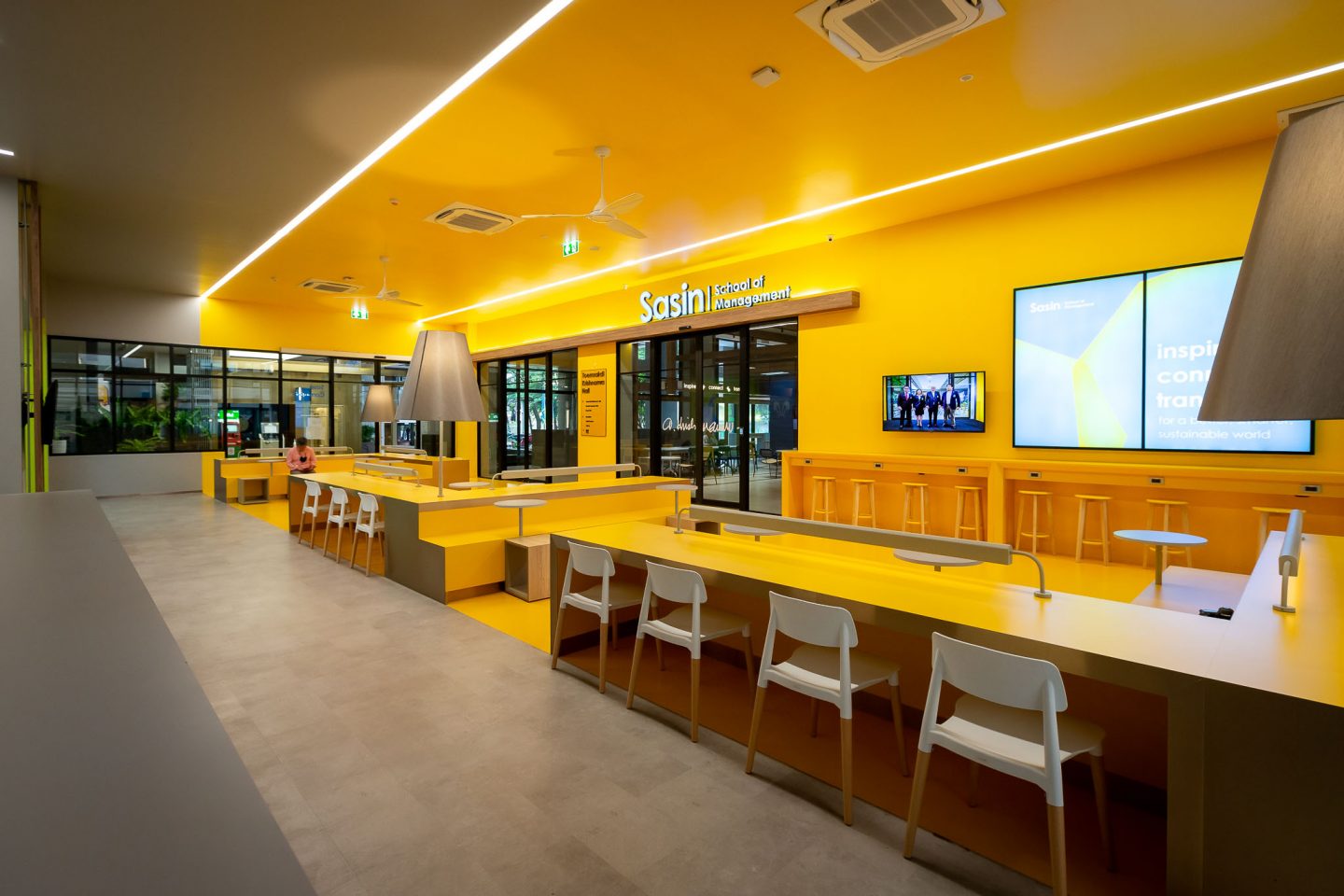
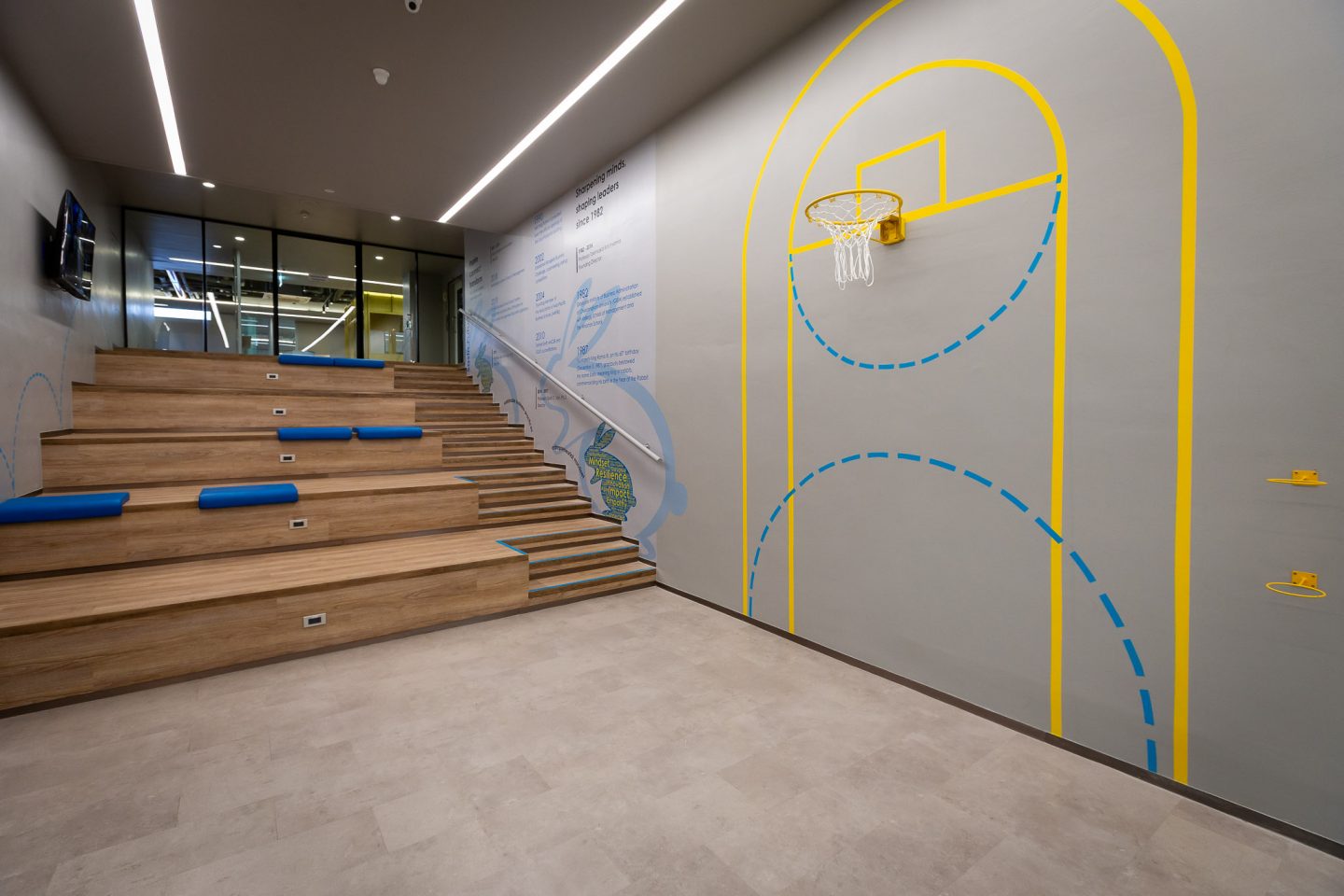
Have an idea that you want to share? Speakers’ Corner is the place to bring your thoughts and ideas to the world… or at least, to the Sasin community!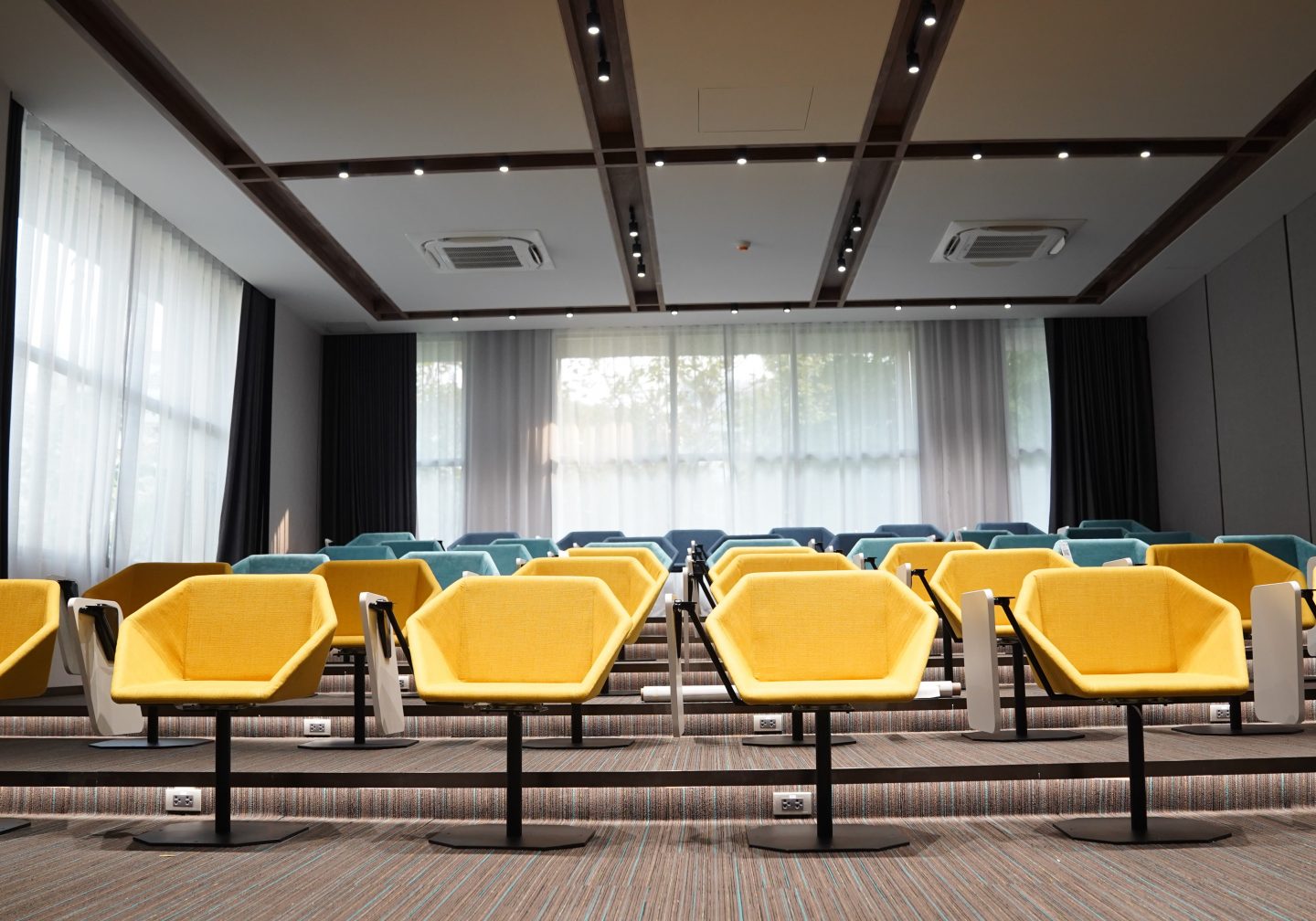
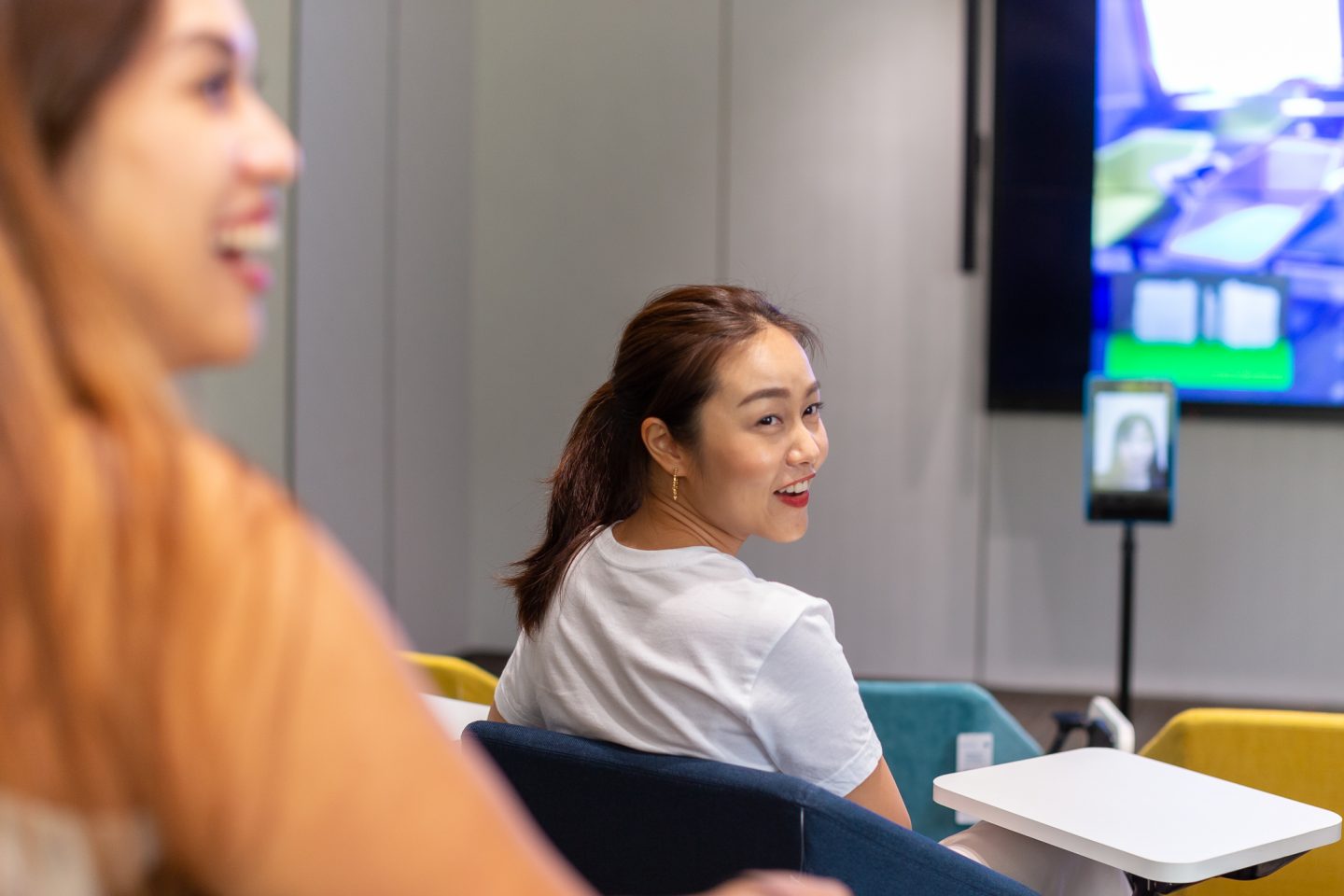
Designed for group meetings with four private meeting rooms and space for training, brainstorming or strategy sessions.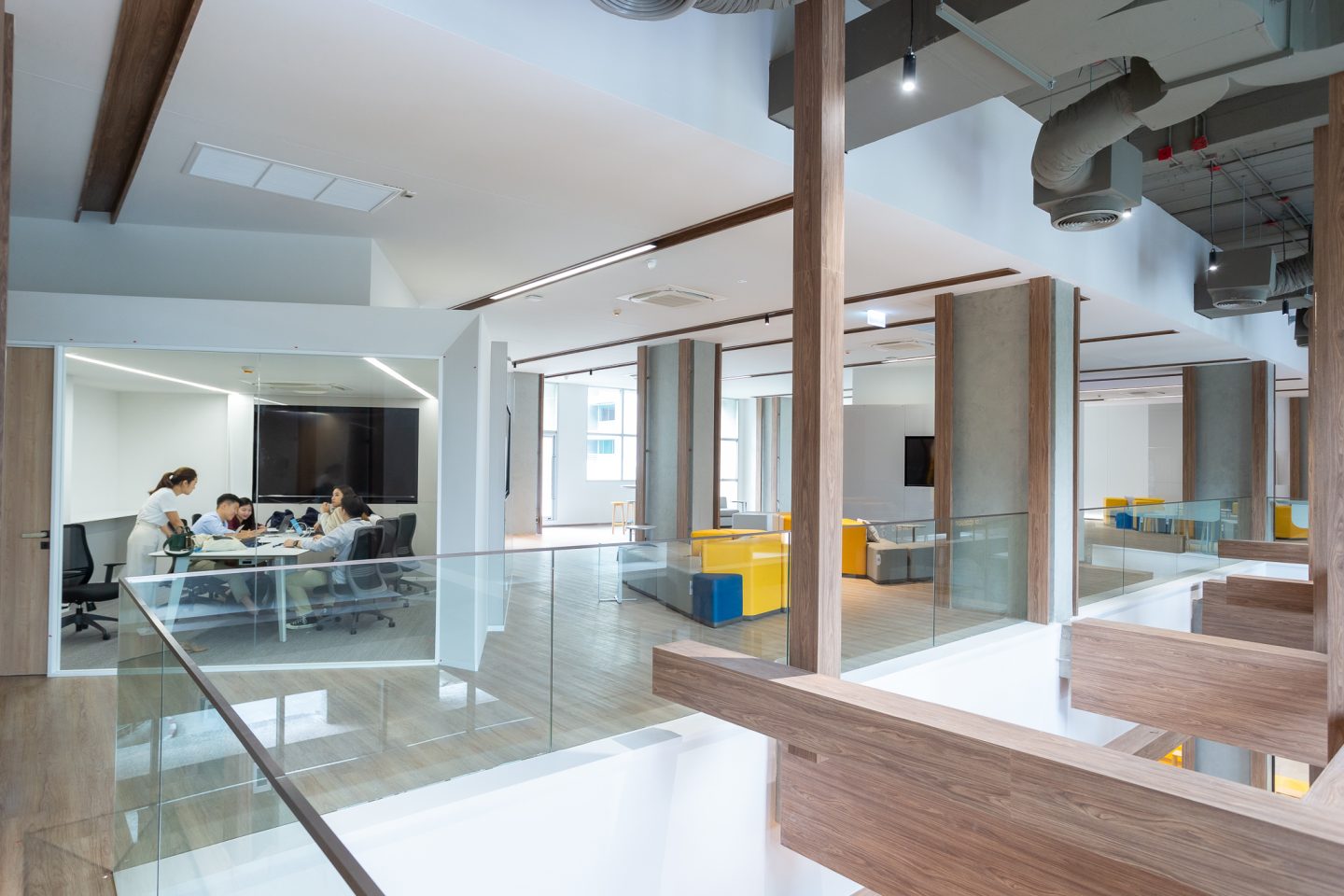
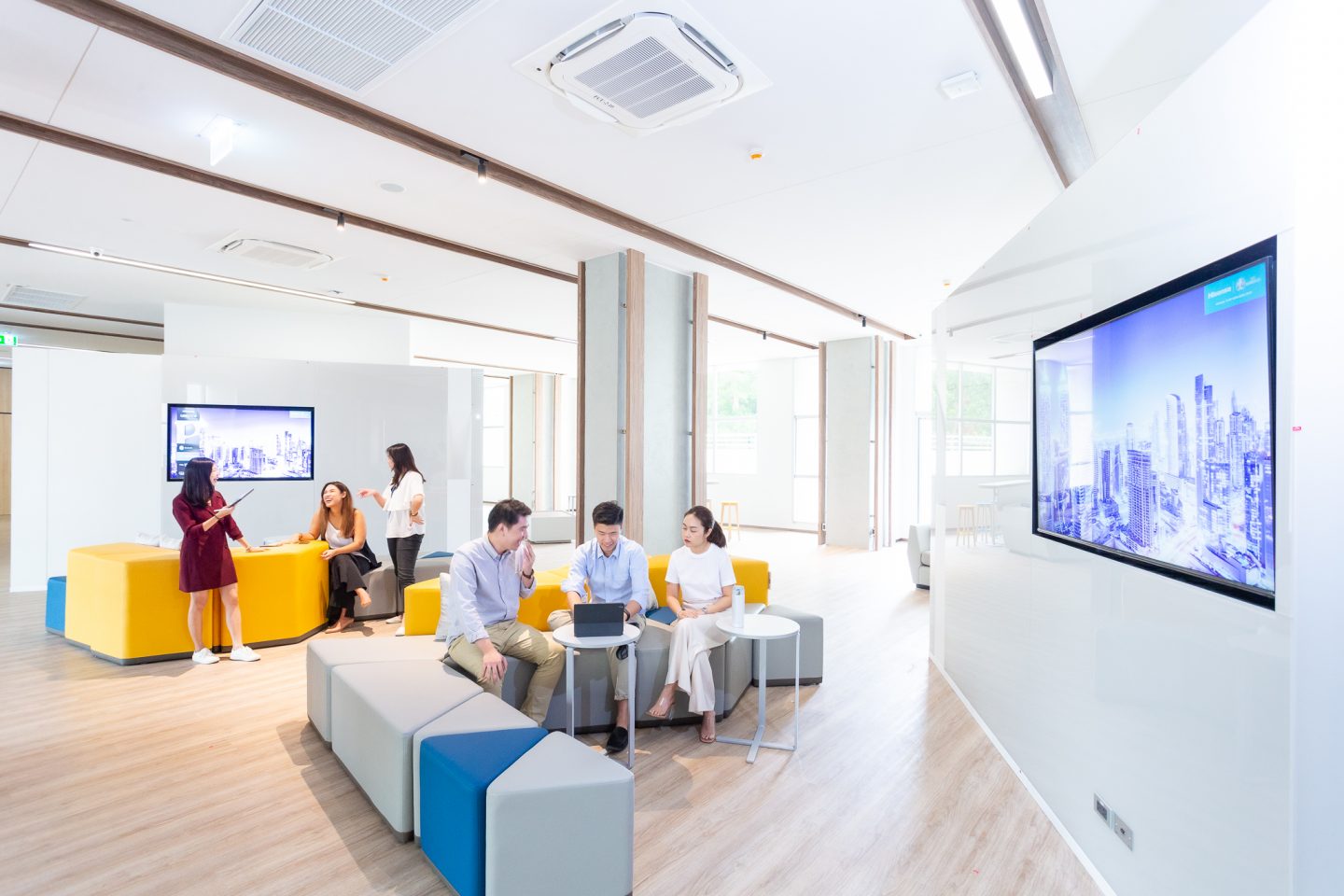
A perfect space for collaboration and lifelong learning!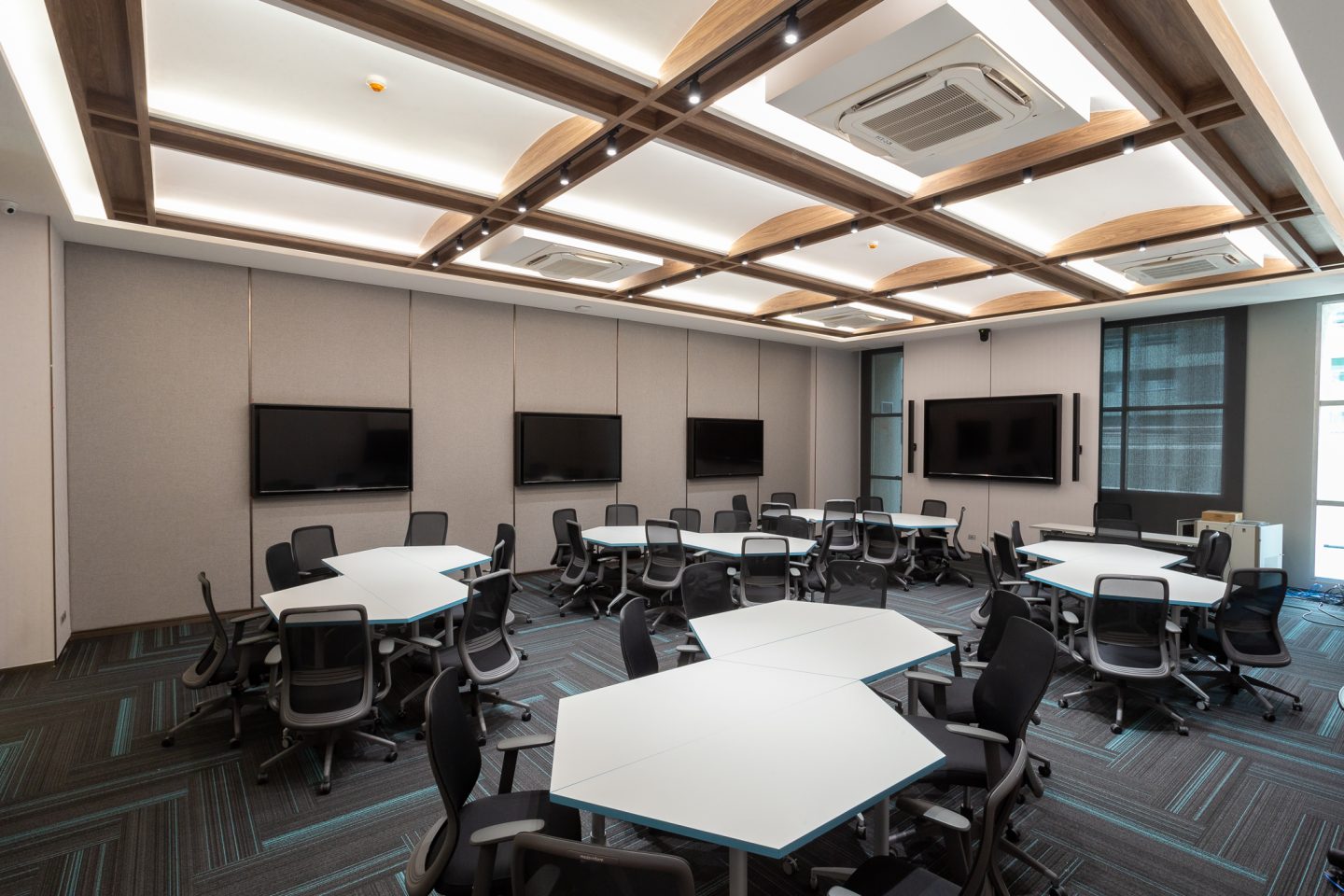
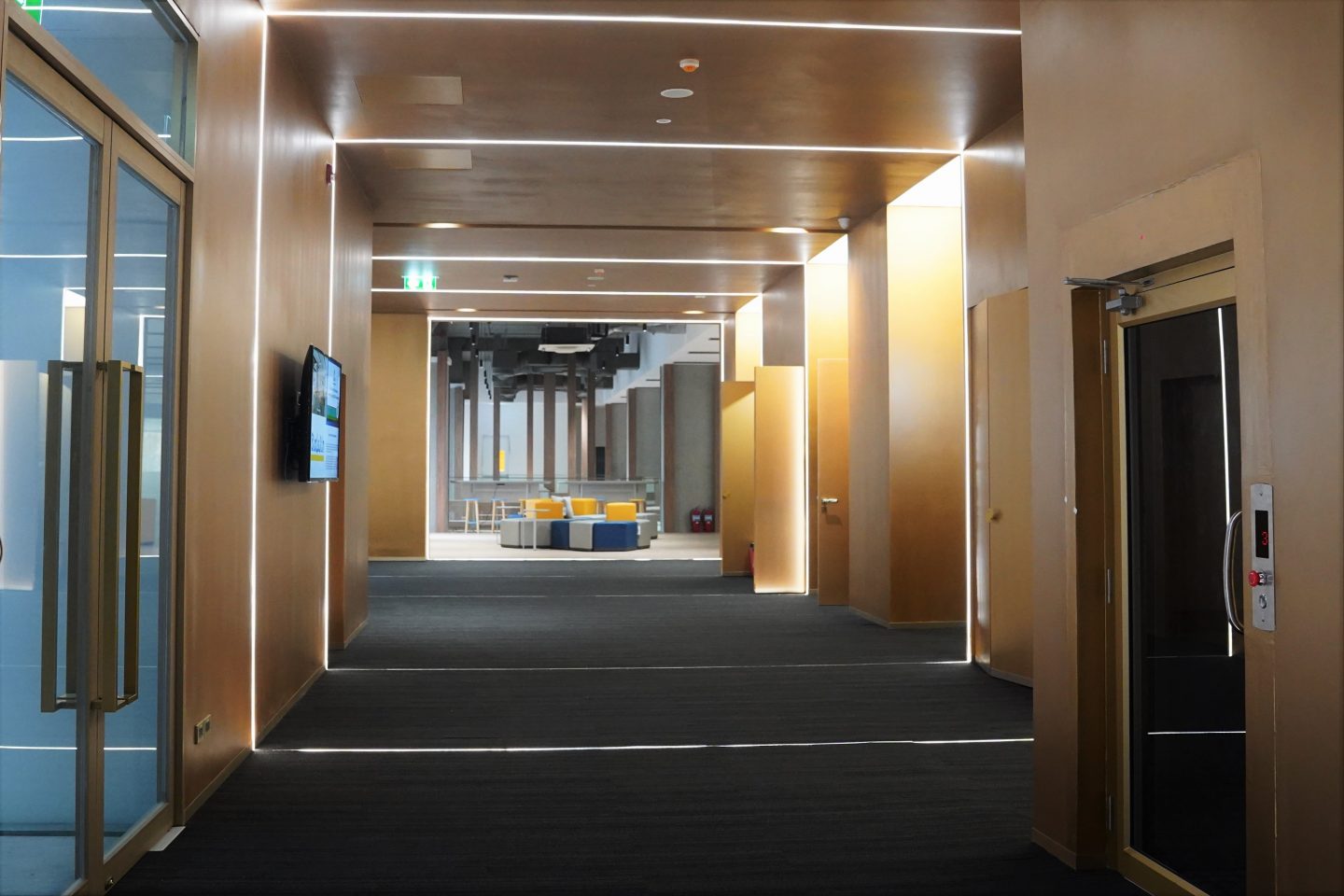
Sasin’s Sustainability and Entrepreneurship Center (SEC) develops leaders who understand and embrace sustainability through an entrepreneurial mindset. Sasin’s focus on sustainability and entrepreneurship, mainstreams sustainability through the start-up world and beyond: convincing entrepreneurs that purpose and positive impact on society are essential.
Our emphasis on sustainable business practices reflects a deeply held belief among our stakeholders that sustainability is an existential imperative. Anyone living or working in Southeast Asia (and Asia) must be very conscious of the potential adverse effects of business on environment and on society.
Sasin must develop mindful leaders, sensitive to the balance of financial gain, environmental impact, and societal development. To achieve well-deserved financial returns, while maintaining environmental and societal integrity, will demand resources deployed in ways never before imagined. That is our aim: sustainability through entrepreneurial mindset.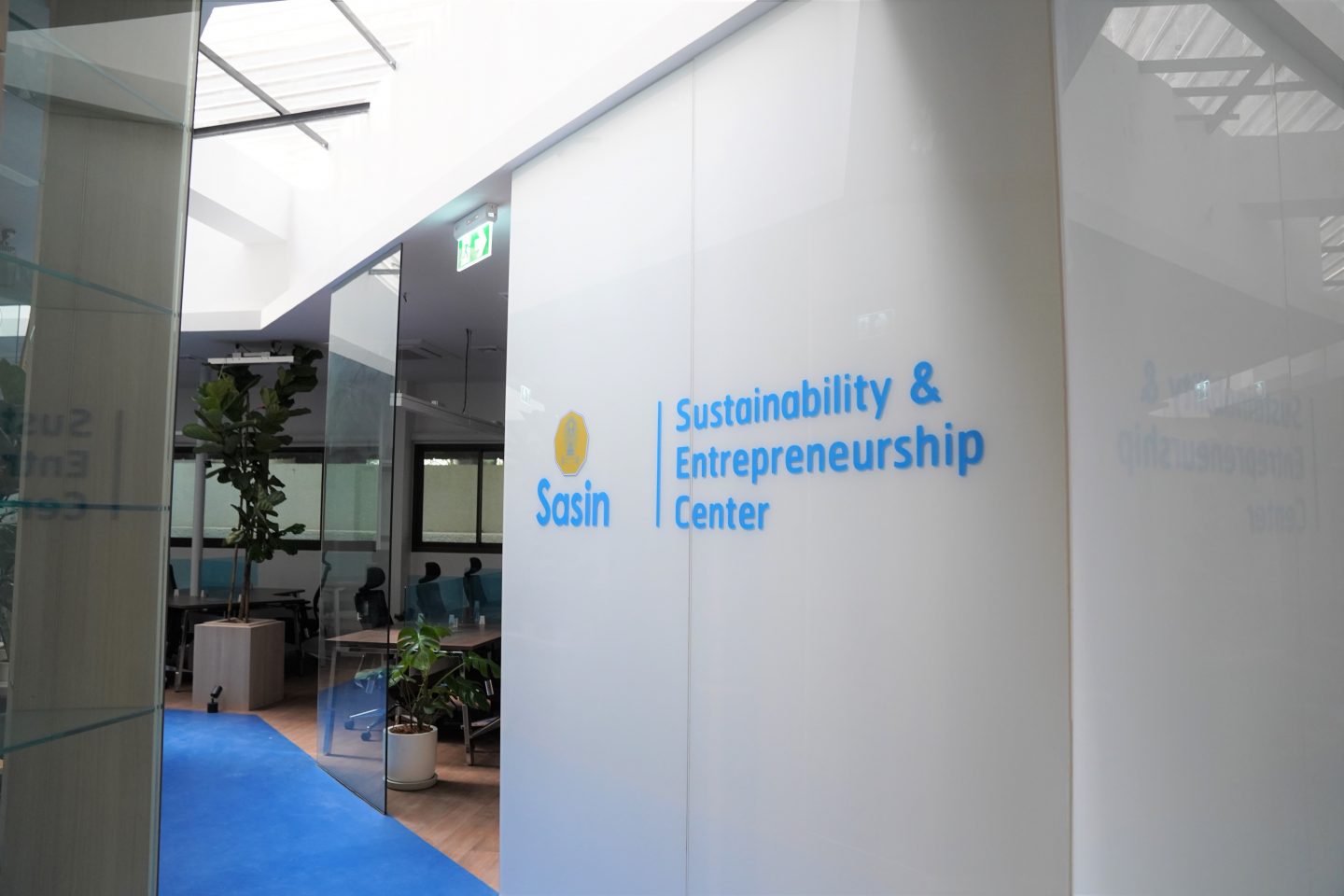
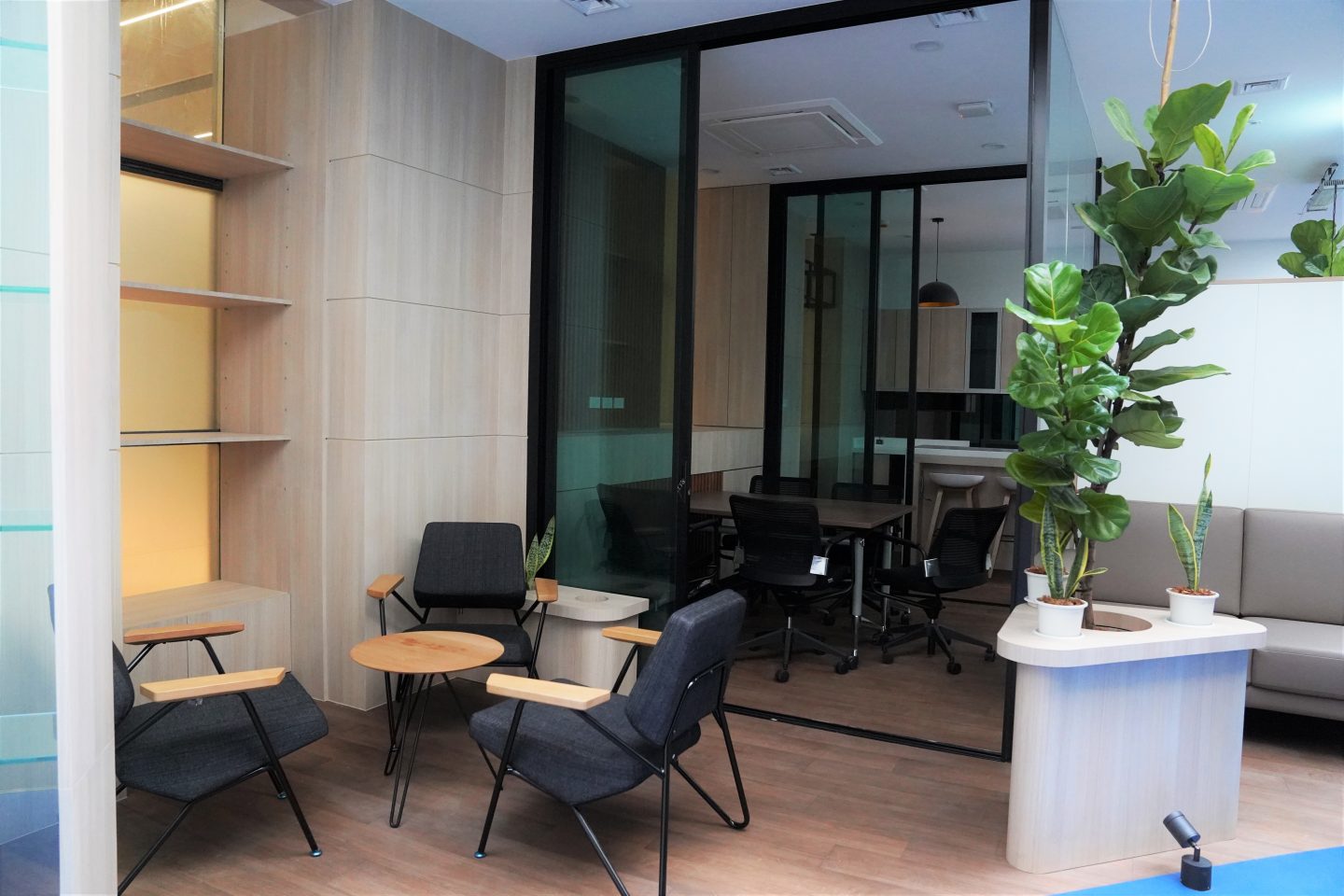
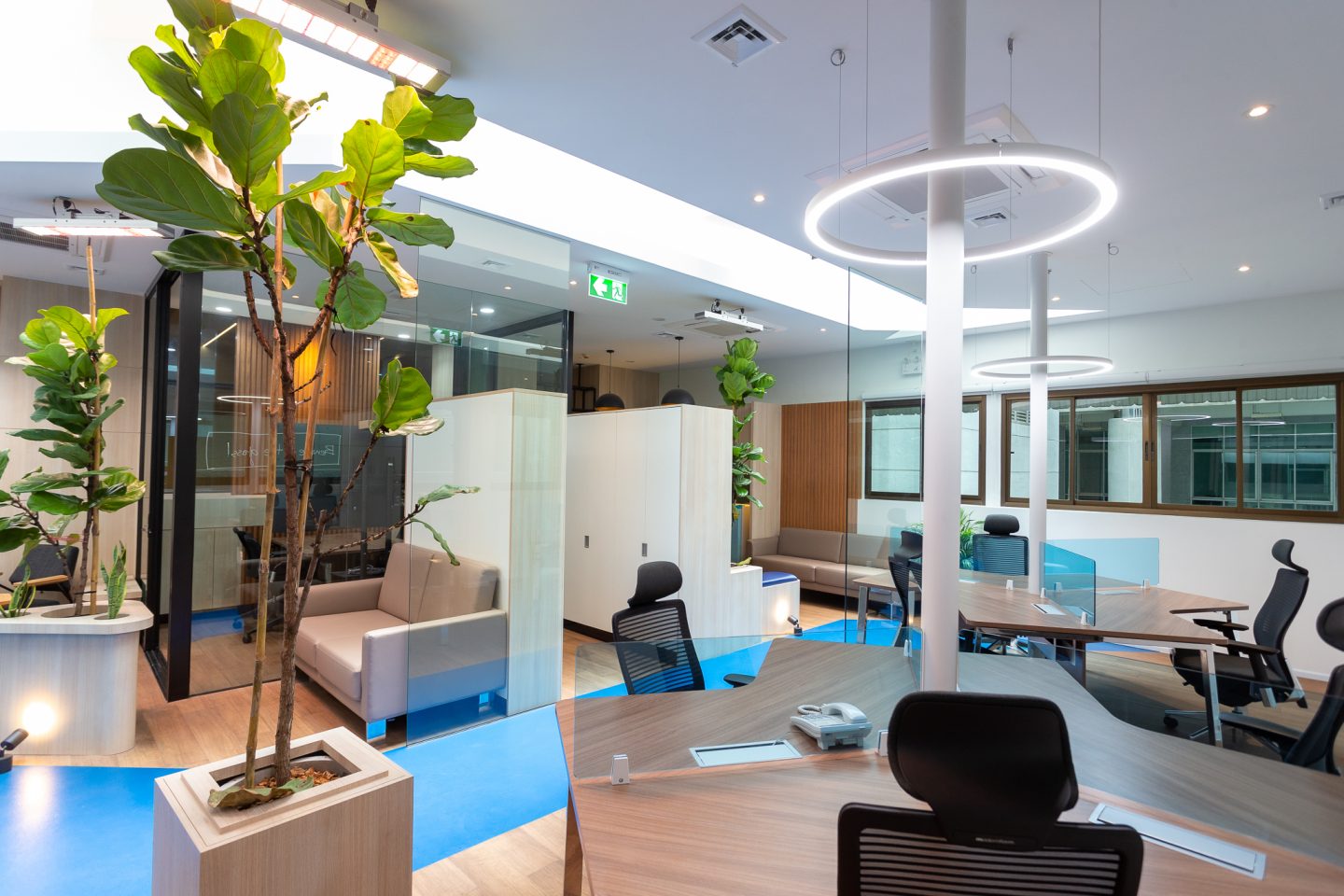
You can explore Sasin’s newly renovated facilities on the first and second floor of Sasa Patasala Building with a 360° virtual self-guided walking tour by BUILK Thailand.
Click here to start the tour
Username: [email protected]
Password: InspiringSasin
Share this article